
NFC-Ready Learning: Bridging the Physical and Digital via Invisible Computing
NFC-based pervasive learning service for children
This paper introduces an NFC-based pervasive learning service designed for children aged 3-8, utilizing Near Field Communication (NFC) and accelerometers in mobile phones. The system allows trainers to associate voice recordings with physical objects via RFID tags, creating an "invisible" tangible user interface (TUI) for interactive educational scenarios.
TL;DR
This research presents a pervasive learning system that transforms ordinary physical objects into interactive educational tools using NFC-enabled smartphones. By replacing screen-based navigation with a "touch, shake, and tilt" Tangible User Interface (TUI), the system enables young children to learn colors, languages, and shapes through direct physical interaction with their environment.
Background: Why Screens Aren't Enough
For children aged 3 to 8, cognitive development is deeply rooted in physical exploration—touching, moving, and looking at objects. Traditional e-learning platforms (tablets, PCs) often create a barrier by requiring children to master complex digital UIs. The author argues for a shift towards Ubiquitous Learning (u-learning), where the technology becomes "invisible," and the interface becomes the physical world itself.
The "Invisible" Methodology
The core innovation lies in the interaction model. Instead of menus and buttons, the system utilizes:
- NFC/RFID Tags: Attached to physical objects (like 3D cubes) to trigger specific audio descriptions.
- Accelerometer Gestures: Shaking or tilting the phone serves as "Confirmation" or "Cancel" commands.
- Voice-Based UI: All feedback is auditory, allowing the phone's screen to remain black to save power and prevent distraction.
System Architecture
The system utilizes a client-server model where the mobile device acts as the sensor hub and the Google App Engine handles the heavy lifting of audio synchronization and "project cloning" for teachers.
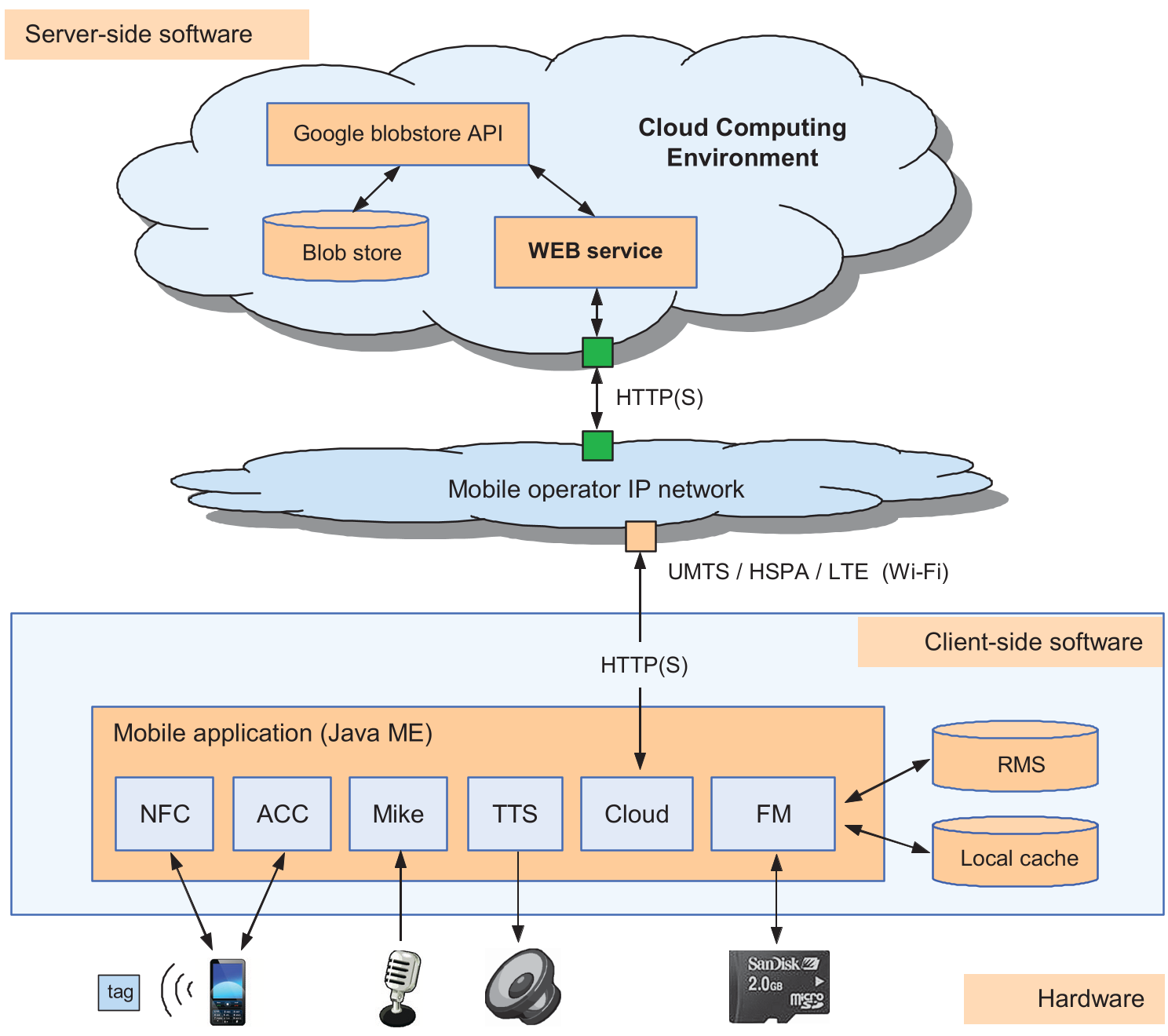 Fig 1: The architecture connects physical NFC tags to a cloud-based audio repository.
The Shake-Recognition Algorithm
To ensure the system doesn't misinterpret normal movements, the author implemented a low-pass filter (IIR filter) to process raw G-force data. By calculating the magnitude vector, the algorithm remains independent of the phone's orientation—a crucial feature for children who might hold the device at any angle.
Experimental Success: The Augmented Cube
The author tested the service using augmented 3D cubes. Each face of the cube featured a different tag:
- Animal Images: Touching the phone to the image plays the animal's name.
- Musical Notes: Plays the actual sound the animal makes.
- Question Marks: Triggers a "Question-Answer" scenario.
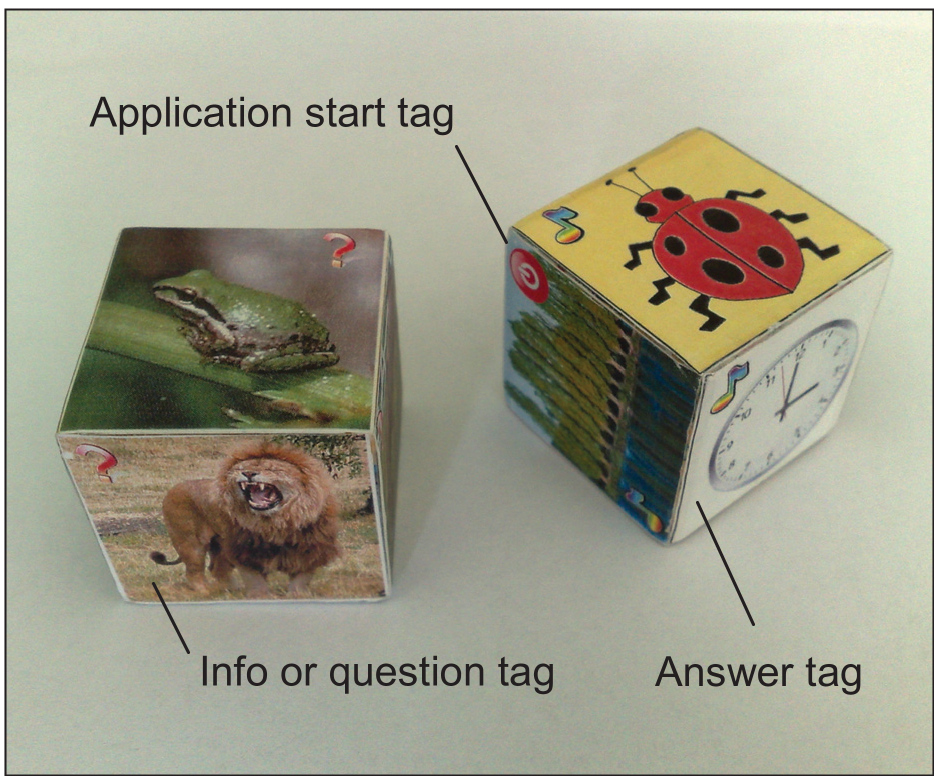 Fig 2: Children interacting with the NFC-augmented learning cubes.
Experimental results confirmed that 3-4-year-olds could navigate these scenarios with minimal instruction. The tangible nature of the interface provided a social experience, as children were seen performing tasks more productively in groups.
Critical Insight & Conclusion
While this 2013 study predates the modern "smart toy" era, its principles remain highly relevant. The move away from Human-Computer Interaction (HCI) toward Human-Human Simulation is a powerful design philosophy.
Limitations: The reliance on Java ME (MIDlets) is now obsolete, and the 120-second recording limit is restrictive. However, the underlying logic of using NFC to "tag" the world for educational purposes is a sustainable roadmap for modern IoT and AR applications.
Takeaway: The future of childhood education isn't on a screen; it's in the seamless augmentation of the physical world we already inhabit.