
No Place Like Home: Engineering Reconnection in the Wake of Disaster
No place like home: pet-to-family reunification aer disaster
The paper introduces "No Place Like Home," a socially networked web and mobile platform designed to facilitate pet-to-family reunification after disasters. It combines digital volunteerism, a reputation-based gamification system, and machine learning to match lost and found pet reports.
TL;DR
"No Place Like Home" is a socio-technical platform designed to solve the tragic separation of pets and families during disasters. By combining digital volunteerism, machine learning, and reputation-based gamification, the system transforms the chaotic process of pet reunification into a structured, scalable micro-tasking environment.
Background & Motivation: The Invisible Victims of Crisis
In the aftermath of Hurricane Katrina, over 200,000 pets were displaced. The chilling reality? 95% never found their way home. This isn't just an animal welfare issue; it is a human one. Pet owners often risk their lives by refusing to evacuate or re-entering danger zones to rescue non-human family members. The authors argue that the lack of institutionalized ICT (Information and Communication Technology) support exacerbates the psychological trauma of disaster survivors.
Methodology: The Anatomy of Digital Volunteerism
The core of the system is a three-tiered framework of "Digital Volunteers" who converge online to process information that professional responders cannot handle alone.
1. The Human-AI Hybrid Pipeline
The system doesn't rely on humans or machines in isolation. Instead, it uses a feedback loop:
- ML Filtering: Algorithms cull thousands of reports to present high-probability matches to volunteers.
- Human Verification: Volunteers perform the nuanced task of visual matching (e.g., recognizing that "Bob" and "Rob" are the same golden retriever).
- Active Learning: Human decisions are fed back into the system to retrain and improve future algorithmic accuracy.
2. Gamification and Social Trust
To ensure data quality, the platform implements a Reputation System similar to StackExchange. High-reputation volunteers gain:
- Greater voting weight in match verification.
- Moderation powers to oversee the work of others.
- Status symbols within the community to maintain engagement.
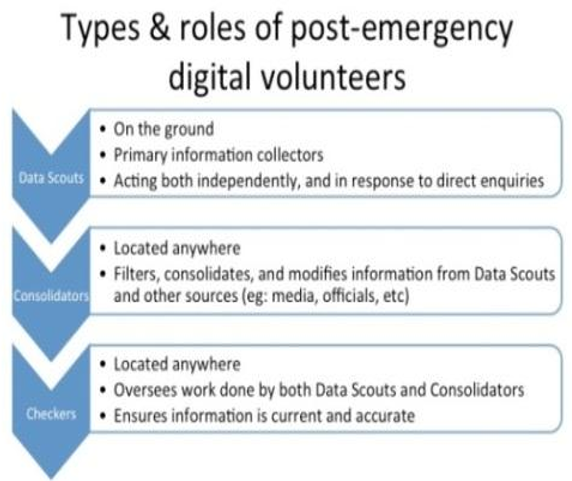 Figure 1: The operational framework for data scouts, consolidators, and checkers.
Experiments & User Insights
The researchers conducted usability testing with a diverse demographic (ages 16 to 71). While the prototype was successful—every participant eventually found the target match—the experiment revealed an unexpected cognitive workload.
- The "Better Match" Fallacy: Even after finding a valid match, users continued to search, fearing they had missed a "more perfect" correlation.
- Temporal Memory Issues: Users struggled to compare multiple potential candidates simultaneously on a standard interface.
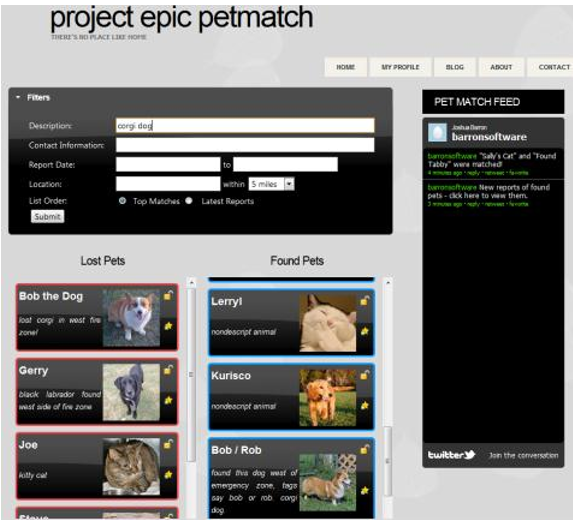 Figure 2: The interface used for the matching task during usability testing.
Critical Analysis & Future Directions
The primary strength of this work lies in its recognition that disaster response is a social phenomenon, not just a technical one. By formalizing roles (Scout, Consolidator, Checker), the authors provide a blueprint for organized spontaneous volunteerism.
Limitations & Evolution:
- High Cognitive Load: The testing showed that matching is mentally taxing. Future iterations plan to include "locking" mechanisms to allow users to "save" promising candidates while they continue to browse.
- Language Barriers: The study highlighted that ambiguity in naming (e.g., "Bob" vs "Rob") requires more robust linguistic search tools.
- Real-world Scaling: While the prototype works, the true test remains a live disaster deployment where data influx is non-linear and chaotic.
Conclusion
"No Place Like Home" proves that ICT can do more than just broadcast information; it can rebuild the emotional foundations of "home" by reconnecting families. As we move into an era of more frequent climate-driven disasters, the integration of crowdsourced intelligence and machine learning will be essential for resilient recovery.
Keywords: Crisis Informatics, Digital Volunteerism, Machine Learning, User-Centered Design.