
Modeling the "Human Factor": How Node Selfishness Reshapes DTN Multicasting
The Impact of Node Selfishness on Multicasting in Delay Tolerant Networks
2011-01-01
Summary
Problem
Method
Results
Takeaways
Abstract
This paper investigates the impact of node selfishness, including individual and social selfishness, on multicasting performance within Delay Tolerant Networks (DTNs). By employing a 3-D continuous-time Markov chain model, the authors derive analytical expressions for message transmission delay and cost under two-hop and epidemic relaying schemes.
## TL;DR
Delay Tolerant Networks (DTNs) rely on the "store-carry-and-forward" paradigm, which implicitly assumes nodes are altruistic. However, real-world nodes are often "selfish." This paper provides the first theoretical framework to quantify how individual and social selfishness impact multicast performance. Intriguingly, it reveals that some forms of selfishness can actually benefit the network by significantly reducing transmission costs at the expense of acceptable delays.
## The Problem: The Myth of the Altruistic Relay
In extreme environments—ranging from deep space to tactical military zones—connectivity is intermittent. DTNs bridge these gaps by treating mobile nodes as data carriers. Most prior work assumes these carriers are happy to spend their limited battery and memory to help others.
In reality, nodes exhibit:
1. **Individual Selfishness**: Refusing to store (copy) or send (forward) messages to save energy.
2. **Social Selfishness**: A preference for helping nodes within their own "community" while ignoring outsiders.
While unicast selfishness has been studied, **multicast**—sending data to a group (e.g., news updates or traffic alerts)—is far more complex to model due to the overlapping paths and multiple destinations.
## Methodology: The 3-D Markovian Lens
To decode this complexity, the authors represent the network state as $(l, m, n)$, where:
* $l$: Count of destinations that have the message.
* $m$: Count of relay nodes in Community 1 with the message.
* $n$: Count of relay nodes in Community 2 with the message.
By modeling contacts as a Poisson process (exponential inter-contact times), they derive a transition matrix $Q$ that accounts for different relaying strategies:
* **Two-Hop Relaying**: Source to relay, then relay only to destination.
* **Epidemic Relaying**: Viral spreading (flooding).
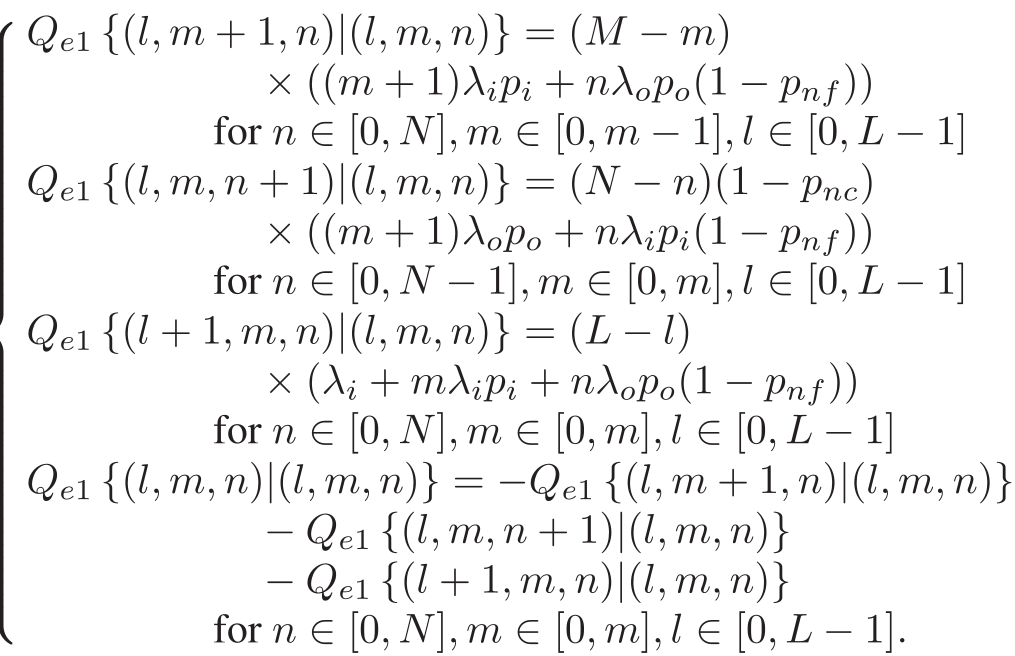
*Fig 1: Transition rate logic for Epidemic Relaying under Social Selfishness.*
## Counter-Intuitive Insights: When Selfishness is "Good"
The study breaks selfishness down into different behavioral probabilities: $p_{nf}$ (not forwarding) and $p_{nc}$ (not copying).
### 1. The Delay-Cost Trade-off
The most striking finding is that **not all selfishness is created equal**.
* **Not Forwarding ($p_{nf}$)**: This is "bad" selfishness. It increases delay because destinations wait longer, AND it increases cost because the source keeps trying to push the message to uncooperative relays.
* **Not Copying ($p_{nc}$)** & **Social Selfishness**: These are "efficient" selfishness. While they increase delay, they drastically reduce the total number of message copies in the network, lowering the "Transmission Cost."
### 2. Relaying Robustness
The authors found that **Two-Hop Relaying is more resilient** to selfishness than Epidemic Relaying. Because Epidemic Relaying relies on a chain reaction of cooperation, a few selfish nodes can significantly stall the "viral" spread, leading to a much higher "Delay Deceleration Factor."
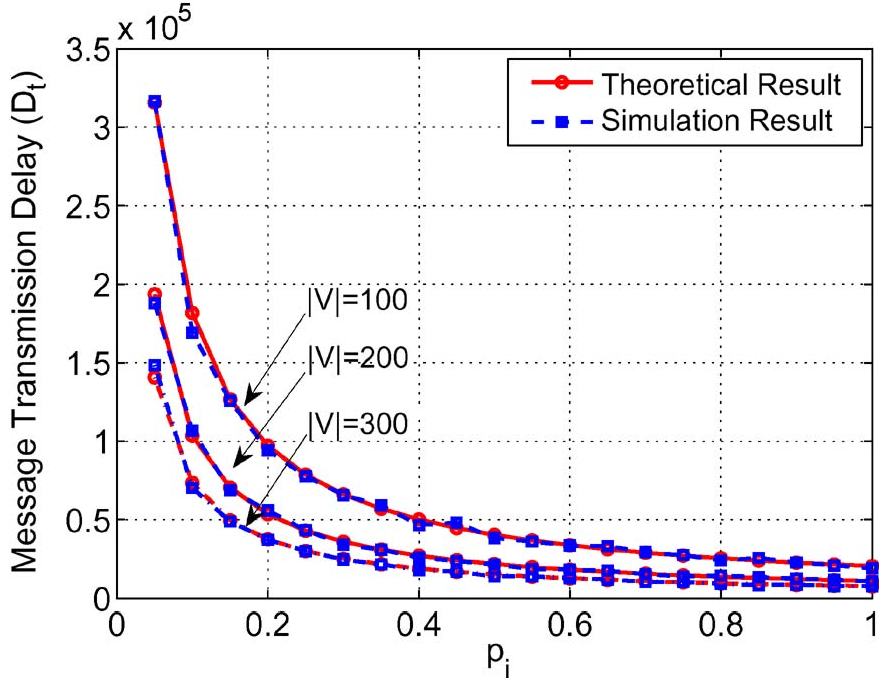
*Fig 2: Comparison between theoretical Markov models and simulation results in various network sizes.*
## Deep Dive into Results
The accuracy of the model was tested against the ONE simulator using real-world taxi traces from Shanghai and pedestrian maps of Helsinki.
* **SOTA Achievement**: The Markov model maintains a high degree of accuracy even in non-random mobility scenarios, with an average deviation of only **9.5%** in two-hop scenarios.
* **Community Impact**: The delay decreases by nearly **50%** when the intra-community transmission probability ($p_i$) increases, proving that social structures are the primary drivers of performance in DTNs.
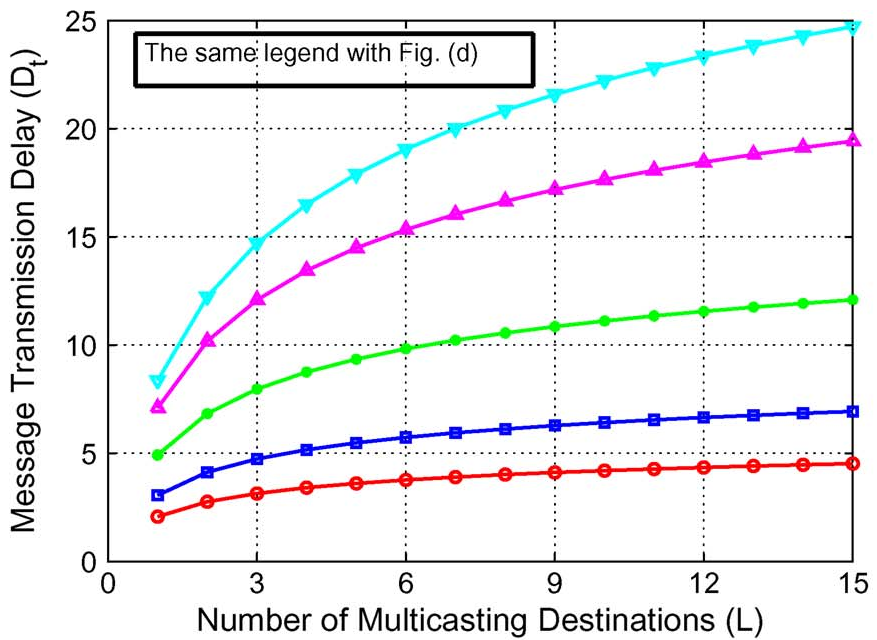
*Fig 3: How the number of multicast destinations (L) amplifies the negative impacts of selfishness.*
## Final Perspective: Designing for Reality
This paper serves as a wake-up call for protocol designers. Instead of trying to "fix" selfishness, we might leverage it. In applications like news delivery where minutes don't matter but battery life does, the "natural" social selfishness of users can act as a built-in congestion control mechanism.
However, the study also highlights a vulnerability: as multicast groups grow, the system becomes exponentially sensitive to uncooperative behavior. For critical systems, incentive mechanisms (like "credits" for forwarding) remain essential to prevent a total collapse of the store-carry-and-forward utility.