
Radial-Trace TFPF: Solving the Window Length Dilemma in Seismic Denoising
Noise Attenuation for 2-D Seismic Data by Radial-Trace Time-Frequency Peak Filtering
The paper introduces a Radial-Trace Time-Frequency Peak Filtering (RT-TFPF) method for denoising 2-D seismic data. By applying the 1-D TFPF algorithm along radial-trace directions instead of conventional time-series channels, the method achieves superior random-noise attenuation and signal preservation while overcoming the long-standing sensitivity to window length (WL).
TL;DR
Researchers have developed a modified Time-Frequency Peak Filtering (TFPF) approach that operates along radial traces rather than standard time channels. This shift in perspective dramatically reduces signal distortion, provides higher Signal-to-Noise Ratio (SNR) gains (up to 7.7 dB vs 4.9 dB for conventional methods), and makes the filter robust against the choice of window length—a problem that has plagued seismic processing for years.
Background: The Window Length Paradox
In seismic exploration, identifying reflection events buried under random noise is the "holy grail." TFPF has emerged as a powerful 1-D tool for this, effectively treating the noisy signal as the instantaneous frequency of an analytic signal.
However, TFPF suffers from a fundamental trade-off governed by the Window Length (WL):
- Short Windows: Preserve high-frequency details but fail to suppress low-frequency noise.
- Long Windows: Suppress noise effectively but "smear" or distort the high-frequency reflection signals (breaking the local linearity assumption).
Previous "adaptive" attempts to solve this resulted in computational inefficiency and "jitter" artifacts due to inconsistent windowing across adjacent samples.
The Insight: Change the Perspective, Not the Filter
The core genius of this paper lies in the Radial-Trace Transform (RTT). Instead of filtering vertically (along time) or horizontally (across channels), the authors filter along radial lines originating from the source.
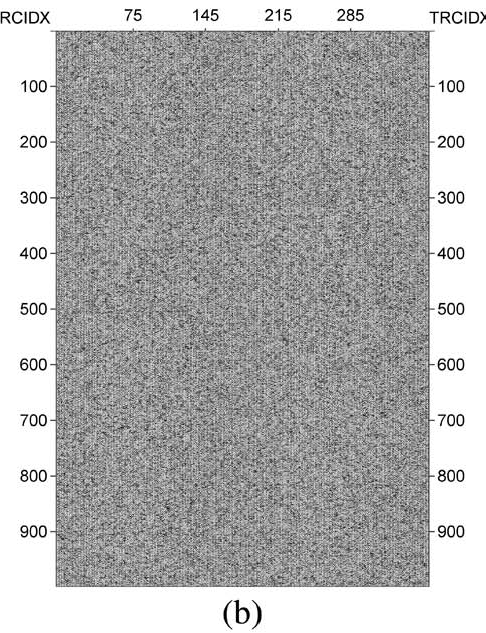 Fig. 1: Conventional filtering follows direction 5, whereas the proposed method can follow directions 1 or 2, where signal linearity is much higher.
Why does this work? Seismic events mapped along radial traces that are sub-parallel to the reflection arrivals exhibit much lower apparent frequencies.
- Enhanced Linearity: At lower frequencies, the signal stays "straighter" within a given time window.
- Reduced Bias: TFPF is mathematically unbiased for linear signals. By aligning the filter with the radial trace, we "linearize" the data before the filter even touches it.
Methodology: RT-TFPF Pipeline
The process follows these steps:
- Encoding: The noisy input is encoded as the Instantaneous Frequency (IF) of an analytic signal .
- Transformation: The data is accessed along radial directions (interpolated coordinates of velocity and travel time).
- Filtering: A Pseudo Wigner-Ville Distribution (PWVD) is used to estimate the peak frequency, which recovers the denoised seismic amplitude.
- Reconstruction: The filtered radial traces are mapped back to the original common-shot gather.
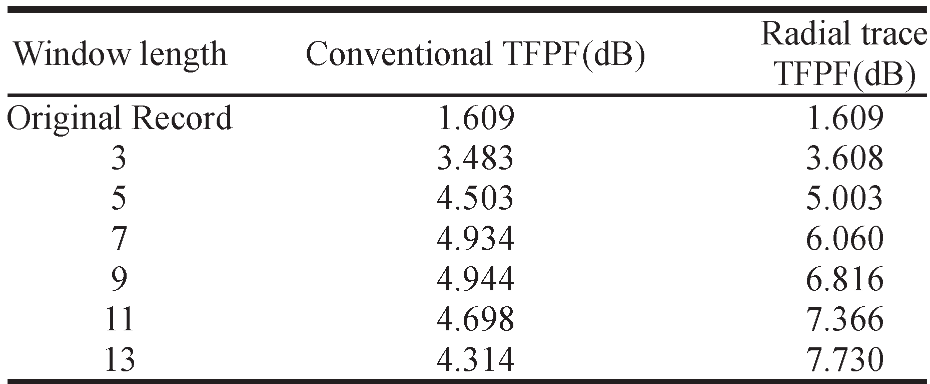 Table 1: Note how Radial-Trace TFPF SNR continues to climb as WL increases, while conventional TFPF performance collapses after WL=9.
Experimental Results
The authors tested the method on synthetic models containing reflection events of 25 Hz and 45 Hz.
- Conventional TFPF: When the window length was increased to 13 to suppress noise, the 45 Hz event was decimated (signal destruction).
- Radial-Trace TFPF: Even with a large 13-point window, the high-frequency components remained crisp and well-preserved.
 Fig. 6: Real field data results. The central panel shows the RT-TFPF result where reflection events become continuous and compact, revealing structures previously hidden by noise.
Critical Insight & Conclusion
The significance of this work is its proof that geometric alignment can simplify algorithmic requirements. By finding the "natural direction" of the signal via radial traces, the authors turned a complex, non-stationary denoising problem into a near-linear estimation task.
Takeaway: RT-TFPF eliminates the need for complex adaptive windowing logic. A simple, fixed-window filter applied in the radial-trace domain outperforms sophisticated time-domain variants, making it a highly practical tool for real-world seismic processing suites.
Limitations: The method relies on the interpolation quality of the radial-trace mapping. Extreme velocity variations in the subsurface might require more complex radial geometries than the 45° inclination used in this study.