
Noncooperative Diffusion: Why Selfishness Breaks Viral Marketing and How to Fix It
11349_Noncooperative Information Diffusion in Online Social Networks Under the Independent Cascade Model.
This paper presents the first comprehensive analysis of Influence Maximization (IM) in noncooperative social networks under the Independent Cascade Model (ICM). It introduces a two-stage framework involving a modified hierarchy-based seed selection strategy and a VCG-like incentive mechanism to ensure robust information diffusion even when intermediate nodes are selfish.
TL;DR
Most viral marketing research assumes your friends will share your content for free. In reality, sharing costs time and social capital—making nodes "noncooperative." This paper introduces the first detailed framework to handle this under the Independent Cascade Model (ICM), using a two-stage approach: Robust Seed Selection and VCG-based Incentives.
Background Positioning
While classical Influence Maximization (IM) since Kempe et al. (2003) focuses on the "pilot users," this work shifts the spotlight to "intermediate nodes." It is a critical bridge between Influence Maximization and Mechanism Design, moving from theoretical "perfect cooperation" to realistic "selfish utility."
The Problem: The Cost of Sharing
Existing models usually treat social networks as passive pipes. However, the authors argue that non-pilot users may reserve their influence because recommending products costs credibility, time, and privacy.
- The Gap: Prior heuristics like Degree Discount or Pure Degree don't factor in whether a node wants to share.
- The Insight: If we can quantify the "cost of influence," we can design a budget-aware system that either chooses more robust seeds or pays nodes to keep the cascade alive.
Methodology: The Two-Stage Solution
Stage 1: Modified Hierarchy-Based Seed Selection
The authors adapt a hierarchy heuristic that limits a node's influence estimate to its up-to-2-hop neighborhood. This is grounded in the "three-degree-of-influence" rule found in social psychology.
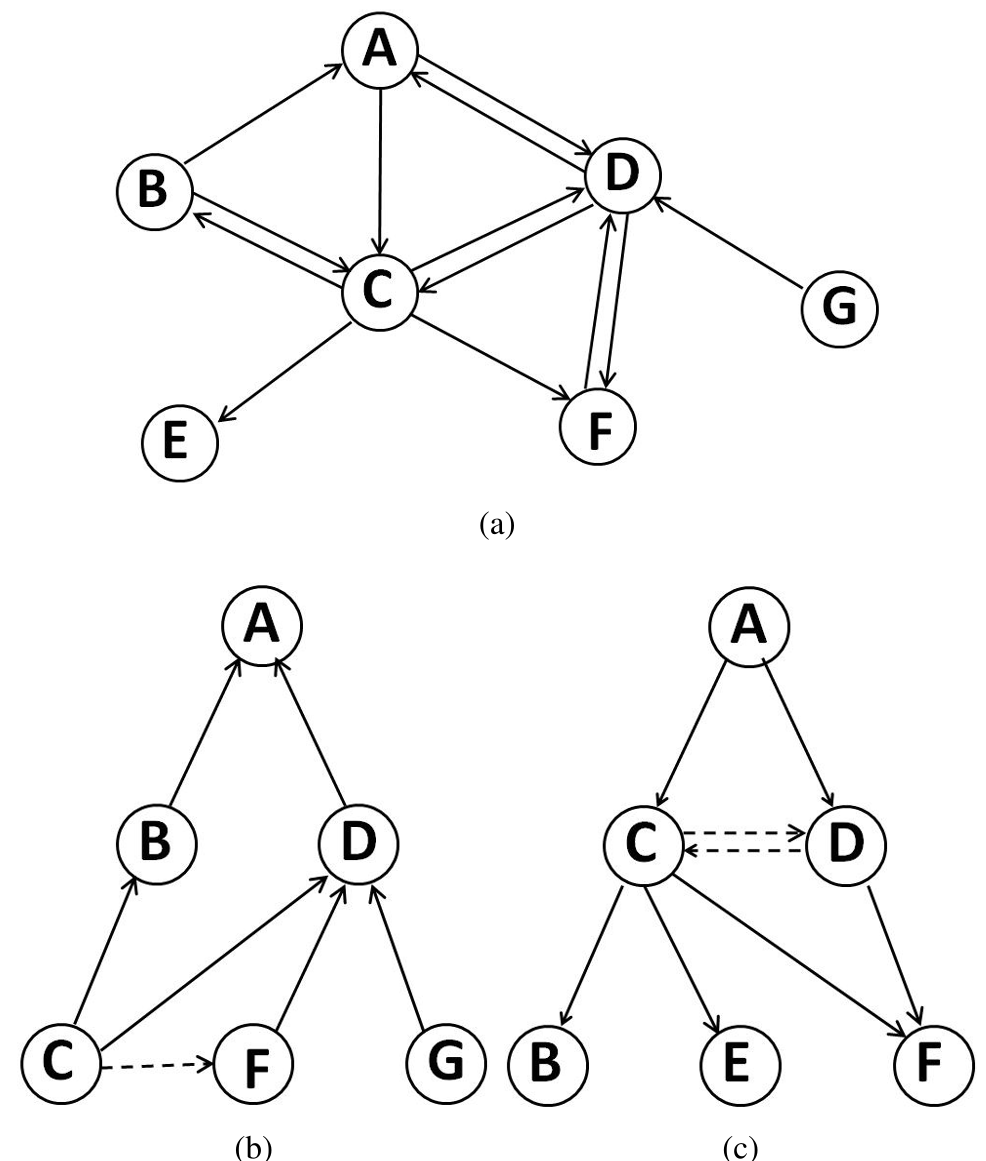
The core of this method is the Marginal Influence Increment (MII). In the noncooperative version, the MII is penalized by an "equivalence cooperativeness level" (), which accounts for the probability that intermediate nodes will block the flow.
Stage 2: The VCG-Like Incentive Mechanism
To fix selfishness during the diffusion stage, the authors propose a payment scheme (): Using a Vickrey–Clarke–Groves (VCG) structure, the payment to a node is proportional to its marginal contribution to the total cascade.
- Incentive-Compatibility (IC): The authors mathematically prove that under this scheme, acting with 100% cooperativeness is the strongly dominant strategy for any selfish node.
Experimental Insights: The Budget Trade-off
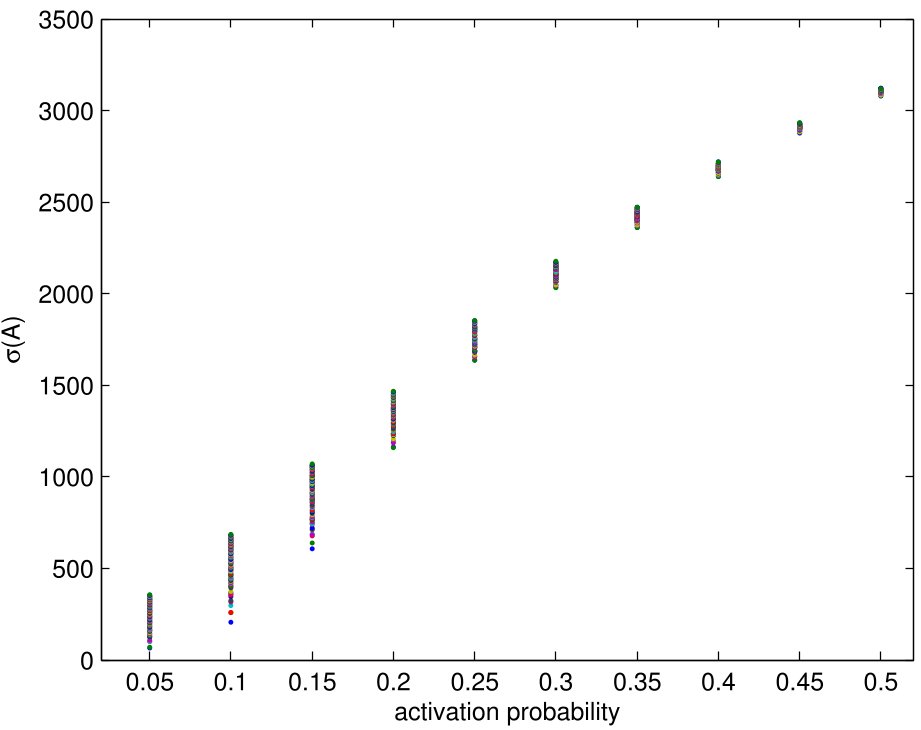
Using an Arxiv coauthorship network, the study reveals a fascinating trade-off in the Budget Allocation Problem (BAP).
Key Findings:
- Robustness: The modified hierarchy heuristic consistently outperforms pure degree-based methods because it understands the "bottlenecks" created by noncooperative nodes.
- The Optimal Strategy:
- If the network is naturally cooperative (), spend 100% of the budget on buying more seeds.
- If the network is highly selfish (), the -seed mark is the "sweet spot." Beyond that, your budget is better spent paying intermediate nodes to stay cooperative than buying new seeds.
Critical Analysis & Conclusion
Takeaway
You cannot buy a viral hit just by picking the right influencers; you must also ensure the network "pipes" don't leak. This paper provides the mathematical proof and algorithmic toolkit to manage this leakage.
Limitations & Future Work
- Static Cooperativeness: The model assumes is static. In reality, cooperativeness might decay as a user shares more content (fatigue).
- Full Observability: The VCG scheme requires the marketer to know the network structure and costs () precisely, which is difficult in privacy-constrained environments.
The future of this work lies in Dynamic Budget Allocation, where incentives are adjusted in real-time as the cascade unfolds.