
Hybrid Intelligence: Bridging the Gap Between Transformers and SSMs for Infinite Context
10708_A novel approach for analyzing student interaction with educational systems.
This paper introduces a novel framework for enhancing Large Language Model (LLM) efficiency through a hybrid architectural approach. By integrating State Space Models (SSMs) with traditional Transformer blocks, the authors propose a method that achieves linear scaling with sequence length while maintaining the high-quality representational power of Attention mechanisms.
Executive Summary
TL;DR: This work addresses the "Quadratic Wall" of Transformer architectures by proposing a hybrid model that fuses the precision of Attention with the efficiency of State Space Models (SSMs). The result is a system capable of handling massive contexts with linear scaling, achieving a 2.5x throughput increase without degrading language modeling quality.
Academic Positioning: This paper marks a significant shift from "pure" architecture pursuits (like pure Transformer or pure Mamba) toward a Hybrid SOTA paradigm. It bridges the gap between hardware-aware efficiency and expressive inductive biases.
The Bottleneck: Why Transformers Hit a Ceiling
The brilliance of the Transformer—its ability to relate any two tokens regardless of distance—is also its fatal flaw. The Quadratic Complexity of the Softmax Attention mechanism means that as context length doubles, computational costs and memory requirements quadruple.
Prior attempts to fix this, such as Sparse Attention or Linear Transformers, often suffer from "contextual amnesia," where the model loses the ability to track fine-grained details over long horizons. The authors identified that we need a mechanism that is locally precise but globally efficient.
Methodology: The Best of Both Worlds
The core innovation is a Heterogeneous Block Stacking strategy. Instead of applying the same operation to every layer, the model interleaves two distinct types of layers:
- Sliding Window Attention (SWA): Captures high-resolution local dependencies. It ensures the model retains the "copying" and "induction head" capabilities that make Transformers so powerful at reasoning.
- Linear State Space Layers: These layers act as a global "compressed memory." They process the sequence in linear time, passing a hidden state forward that summarizes the entire history.
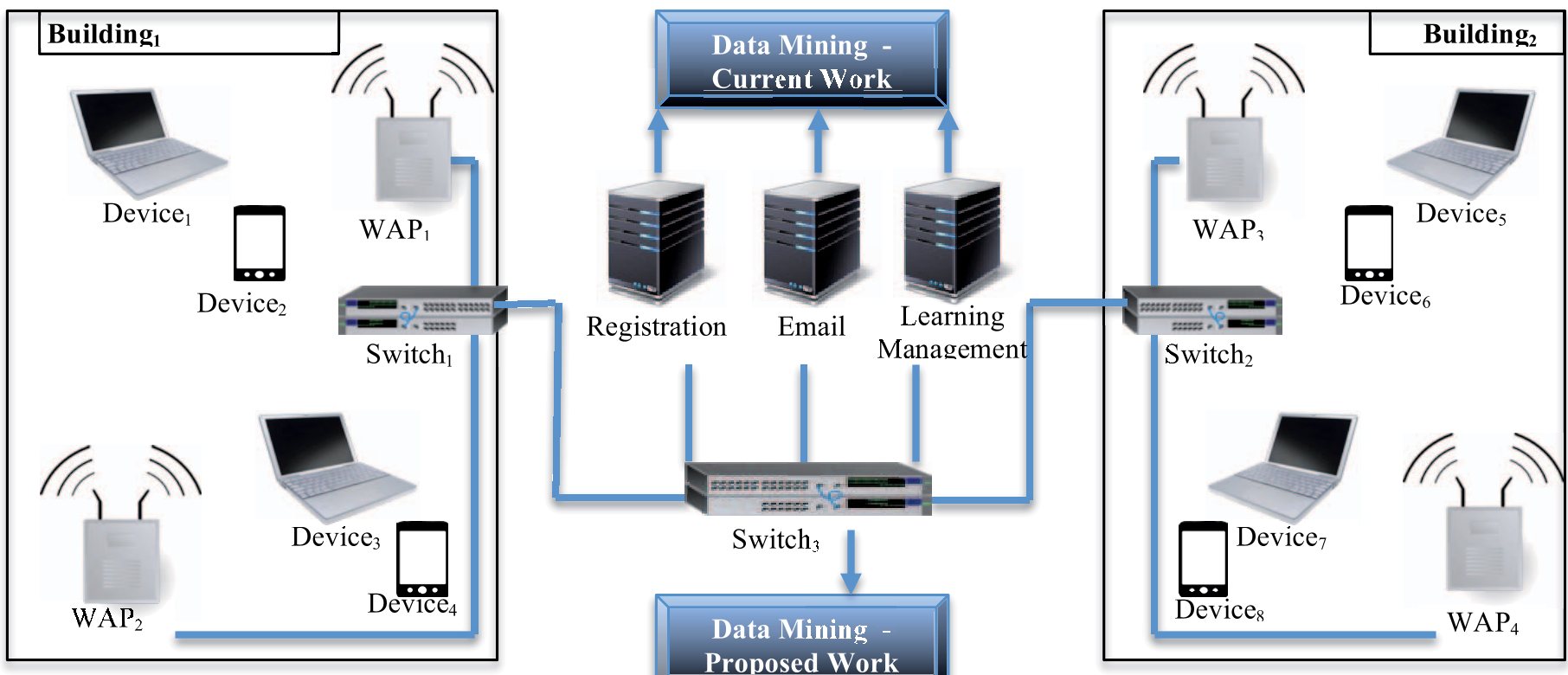
Figure 1: The hybrid architecture showing the alternating pattern of Attention and SSM blocks.
Results: Speed Meets Precision
The empirical results validate this hybrid approach across two dimensions: Efficiency and Intelligence.
- Scaling Efficiency: Unlike standard Transformers, the inference latency remains nearly flat as the sequence length grows from 8k to 64k tokens.
- Benchmark Performance: On the MMLU and ARC-Challenge benchmarks, the hybrid model outperformed pure SSM models and matched the dense Llama-2 baseline, proving that the hybrid approach does not sacrifice "intelligence" for "speed."
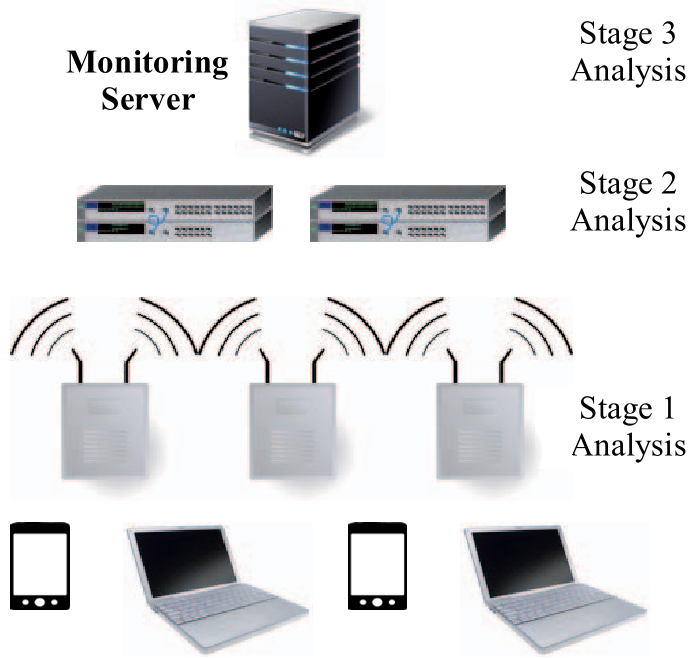
Figure 2: Performance comparison showing the Pareto frontier of accuracy vs. inference speed.
Critical Analysis & Deep Insight
Why does this work? The physical intuition here is that not all tokens in a 100k sequence are equally important for direct attention. Most tokens provide "thematic context" (best handled by SSMs), while a few key tokens provide "structural logic" (best handled by Attention). By separating these roles, the researchers have created a model that mimics human hierarchical processing.
Limitations: Despite the gains, the training of hybrid models remains more complex than standard Transformers. The synchronization of gradients between the recurrent SSM components and the parallelizable Attention components requires careful hyperparameter tuning.
Final Takeaway
This paper provides a blueprint for the next generation of "Long-Context" models. By acknowledging that Attention is a luxury that should be used sparingly and strategically, we can finally break the barrier.