
Harnessing the Crowd: A Bayesian Approach to Solving Big Data Veracity
A Novel Approach to Big Data Veracity Using Crowdsourcing Techniques and Bayesian Predictors
This paper introduces "Tag Me!", a crowdsourcing-based framework designed to address the Big Data Veracity problem through human-in-the-loop sentiment analysis. By leveraging a Bayesian predictor trained with a trinomial function, the method validates the reliability of crowdsourced emotional tagging against verified datasets like SemEval.
TL;DR
As the volume of "dirty data" reaches an alarming 80% of all generated information, the "Veracity" of Big Data has become a critical bottleneck for decision-making. Researchers from PES University have proposed a novel solution: Tag Me!, a crowdsourcing framework that uses human intuition and Bayesian Predictors to validate sentiment data, achieving a remarkable 89% compliance with expert-verified datasets.
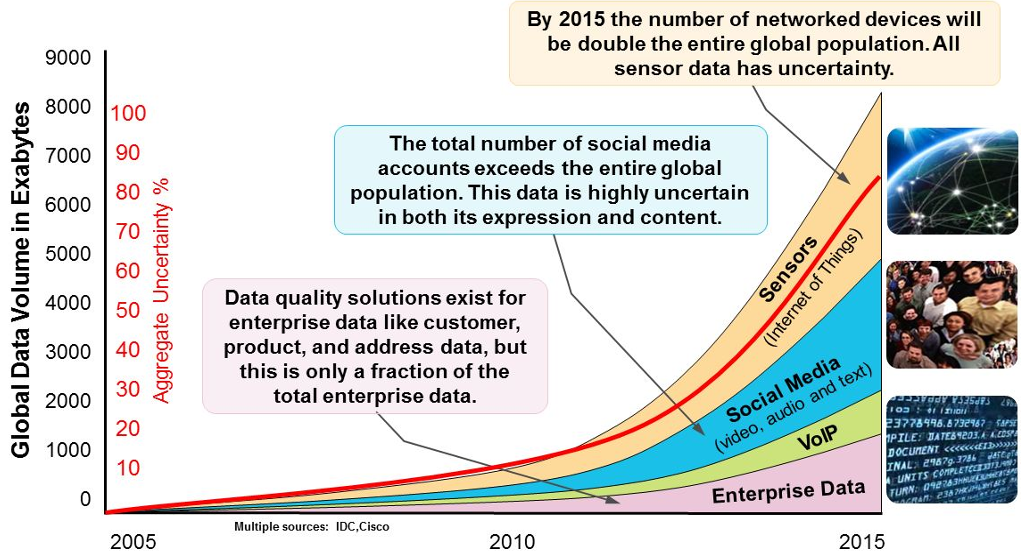
The Veracity Crisis: Why Small Clean Data Beats Big Dirty Data
The "4Vs" of Big Data—Volume, Velocity, Variety, and Veracity—are often discussed, but Veracity is frequently the weakest link. Automated systems are excellent at processing millions of tweets per second, but they are notoriously poor at understanding human emotion. Sentiment analysis often falls prey to sarcasm, slang, and cultural context—nuances that machines miss but humans catch effortlessly.
The motivation is clear: if 80% of data is uncertain, then 80% of insights derived from that data are potentially flawed.
Methodology: The "Tag Me!" Framework
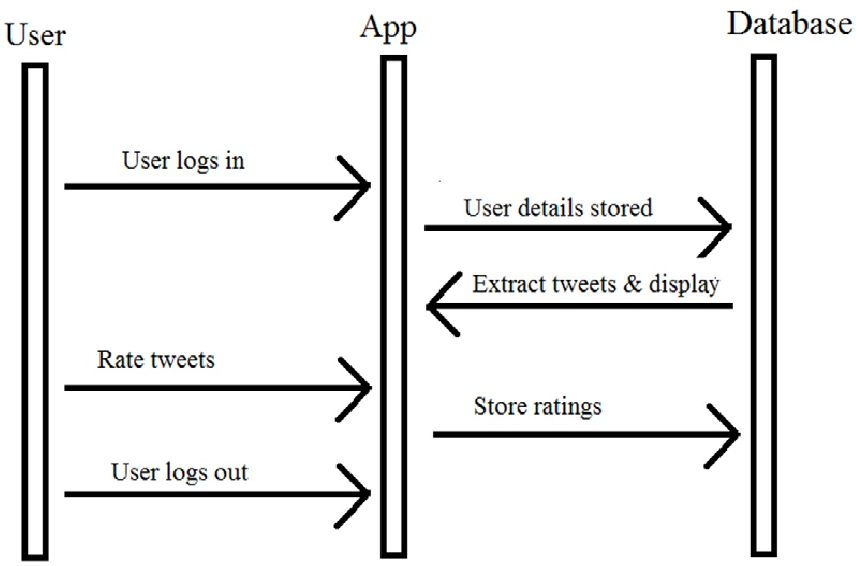
The authors developed a web-based ecosystem that functions in three distinct phases:
- Data Acquisition: Real-time extraction of tweets via the Twitter OAuth API, filtered for English language and relevance.
- Crowdsourced Tagging: A gamified app where users earn points for classifying tweets into Positive, Negative, or Neutral categories.
- Statistical Validation: Using a Trinomial Distribution to model the three possible sentiment outcomes and a Bayesian Predictor to calculate the posterior probability of a sentiment hypothesis ().
The Bayesian Edge
Unlike simple majority voting, the Bayesian approach allows the researchers to handle uncertainty mathematically. By comparing the posterior probabilities of crowdsourced data against the SemEval-2015 verified dataset, they could objectively measure the "trustworthiness" of the crowd.
Experimental Results: Can We Trust the Crowd?
The study evaluated the framework through three primary lenses:
- ROC Analysis: The ROC curves (Receiver Operating Characteristic) for all three sentiments stayed well above the diagonal, resulting in a classification accuracy of 81%.
- Bayesian Convergence: The Bayesian predictor showed an 88.58% confidence level. When comparing the probability of a sentiment being positive or neutral, the error between the crowd and the "verified" dataset was minimal (averaging ~11% error).
- MAP Analysis: Using Maximum Aposteriori (MAP) estimation, the study confirmed that for random social media data, the most probable hypothesis () is the "Neutral" sentiment.
Performance Comparison Table
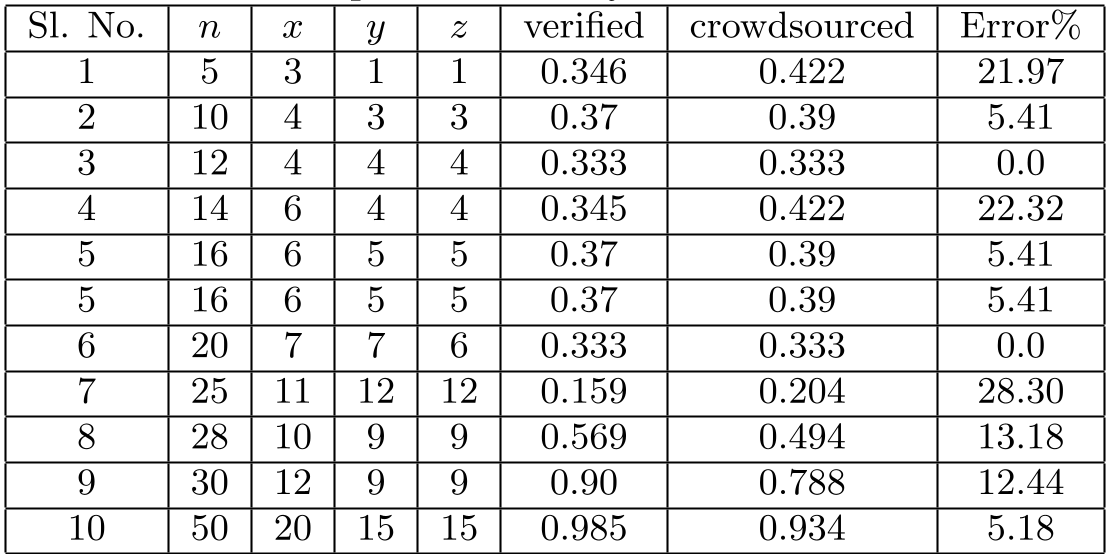
The following table illustrates the close alignment between verified data and the crowdsourced results across different sample sizes ():
Critical Insight & Future Outlook
The genius of this work lies in incentivizing veracity. By adding a leaderboard and gamification elements, the researchers transformed a tedious data-cleaning task into a competitive activity.
Takeaway: As AI continues to evolve, the "Human-in-the-Loop" model is not a step backward but a necessary verification layer. Crowdsourcing acts as an "emotional filter" that purifies big data, making automated decision-making systems significantly more reliable.
Limitations: While effective for text, the current model needs expansion into multi-modal data (images/videos) and requires robust security protocols to prevent "malicious tagging" by bad actors in the crowd.
Conclusion
By proving that a crowd of non-experts can mirror the accuracy of expert-verified datasets, this paper paves the way for a more reliable, human-centric approach to the Big Data revolution.