
Beyond Passwords: Leveraging Social Behavioral Statistics for OSN Security
Novel authentication procedures for preventing unauthorized access in social networks
This paper proposes two novel authentication mechanisms—Chatting Module Authentication and Relationship Circle Authentication—to prevent unauthorized access in Online Social Networks (OSNs). The methods utilize Multi-kernel Fuzzy C-Means (MKFCM) and Group Search Optimizer (GSO) to verify user identity based on internal behavioral statistics.
TL;DR
This research tackles the rising tide of account takeovers in Online Social Networks (OSNs) by introducing two dynamic authentication layers. Instead of relying on easily guessed security questions, it uses Multi-kernel Fuzzy C-Means (MKFCM) and Group Search Optimizer (GSO) to verify users via their private chatting habits and relationship groupings—metrics that are nearly impossible for a hacker to observe or replicate.
Background: The Fragility of Current OSN Gatekeepers
Most OSNs today (including giants like Facebook and Twitter) rely on single-factor password authentication. When a suspicious login is detected, the "fallback" mechanisms—such as identifying friends' photos or providing a birth date—are fundamentally flawed. Friends' photos can be non-human or generic, and birthdays are often public knowledge. The authors argue that a truly secure system must abide by the OSN characteristics: it must be social, dynamic, and account-specific.
Methodology: The Core Intuition
The paper proposes a transition from "What you know" to "How you interact."
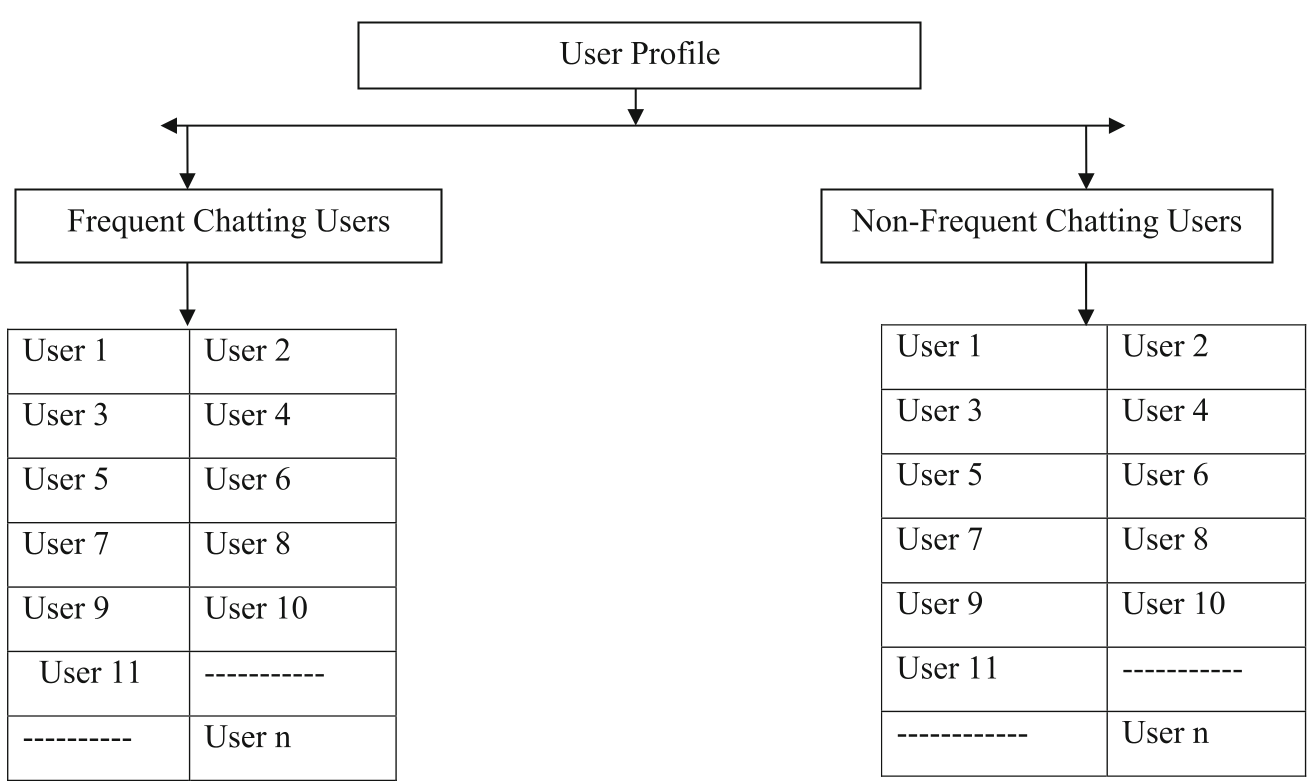
1. Chatting Module Authentication
The system maintains a private counter for every interaction pair. To distinguish between a "close friend" and a "random contact," the authors utilize:
- MKFCM Algorithm: Clustered users into "frequent" and "non-frequent" sets. Using multiple kernels allows the system to be robust against irrelevant features in the data.
- GSO Algorithm: This optimizer selects the most "representative" frequent user to serve as the correct answer in a multiple-choice challenge.
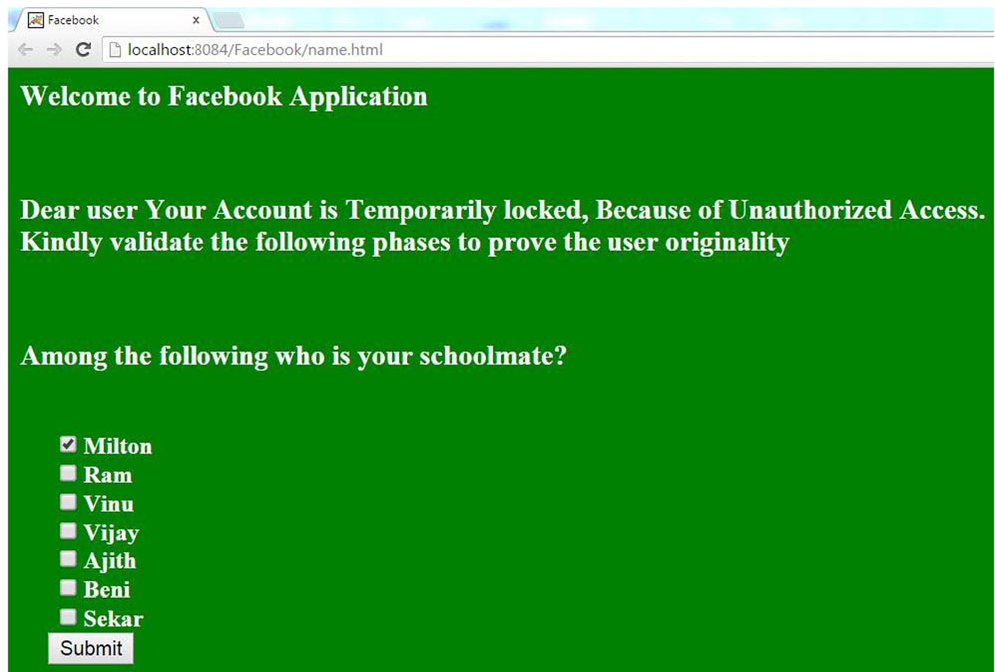
2. Relationship Circle Authentication
Users naturally categorize friends into circles (Family, Colleagues, Schoolmates). While a hacker might see a friend list, they rarely know the private labels or categories the user has assigned to specific individuals.
Experiments and Effectiveness
The core of the paper's argument lies in Probability of Attack Success. By presenting 8 options where only one is mathematically determined to be a "Frequent Chatting User" or a member of a specific "Relationship Circle," the probability of a hacker guessing correctly is:
When both modules are combined, the probability of an unauthorized user bypassing the lock through sheer luck becomes negligible.

Deep Insight & Conclusion
The brilliance of this approach is its Zero-Knowledge aspect regarding the attacker. An attacker can use a keylogger to steal a password, but they cannot retrospectively "steal" the frequency of chats or the mental model the user used to group their friends two years ago.
Takeaway: This work signals a move toward Behavioral Biometrics in the social space. Future systems may not even "ask" questions but rather compare the navigation and interaction style of the current session against historical MKFCM clusters to detect a hijack in real-time.
Limitations:
- New Users: Users with very low activity or small friend circles might not provide enough statistical "signal" for effective clustering.
- User Memory: If a user is highly inactive, they might forget their own grouping conventions, potentially locking themselves out.