
Intelligent MSN Caching: Leveraging Multihop D2D and Mobility in 5G and Beyond
A Novel Caching Framework for Mobile Social Networks in 5G and Beyond
This paper proposes an enhanced caching and delivery framework for Mobile Social Networks (MSN) in 5G and Beyond, utilizing a hybrid unicast-broadcast approach. It introduces a multi-content dissemination strategy that leverages device-to-device (D2D) multihop communication and mobility-aware cache allocation to achieve significant Radio Access Network (RAN) cost reduction and meeting varied QoS latencies.
TL;DR
Mobile Social Networks (MSN) are currently choking 5G infrastructures due to their asynchronous and multi-content nature. This research by Samsung Electronics Bangalore introduces a novel broadcast-based distributed caching framework. By turning high-mobility smart-phones into proactive, multihop cache holders, the system significantly offloads the Radio Access Network (RAN), achieving near-zero RAN costs for popular content under specific QoS constraints.
Problem & Motivation: The Asynchronicity Paradox
While social media giants like Facebook and WhatsApp dominate data traffic, their delivery remains inefficient. Current 4G/5G architectures rely heavily on unicast (point-to-point) links. Even though thousands of users in a small geographical area might be accessing the same viral video, each one fetches it individually.
The challenge is that social media access is asynchronous—users don't watch the same content at the exact same millisecond—which makes traditional synchronous broadcasting (like MBMS) difficult to apply directly. Furthermore, user mobility is often seen as a problem to be solved (handover) rather than an opportunity to be exploited for data dissemination.
Methodology: High-Mobility UEs as Data Seeds
The core innovation lies in a distributed caching mechanism that utilizes the "Counting" signaling process to identify optimal UEs for data holding.
1. Hybrid Dissemination
The system splits social media services into sub-contents. High-popularity, delay-tolerant items are initially spread via opportunistic broadcast to selected devices (seeds), while personalized data remains unicast.
2. Multi-hop and Mobility Filters
The paper introduces two stages of filtering for cache allocation:
- Stage 1 (Operational): Filters UEs based on their readiness (battery/storage) and cluster proximity.
- Stage 2 (Optimization): Prioritizes UEs based on a 3-state Markov chain (Low, Medium, High mobility).
The physical intuition is profound: A high-mobility user acts as a data carrier across different clusters, effectively acting as a mobile bridge that increases the "contact rate" with other UEs, thereby boosting D2D transfer opportunities.
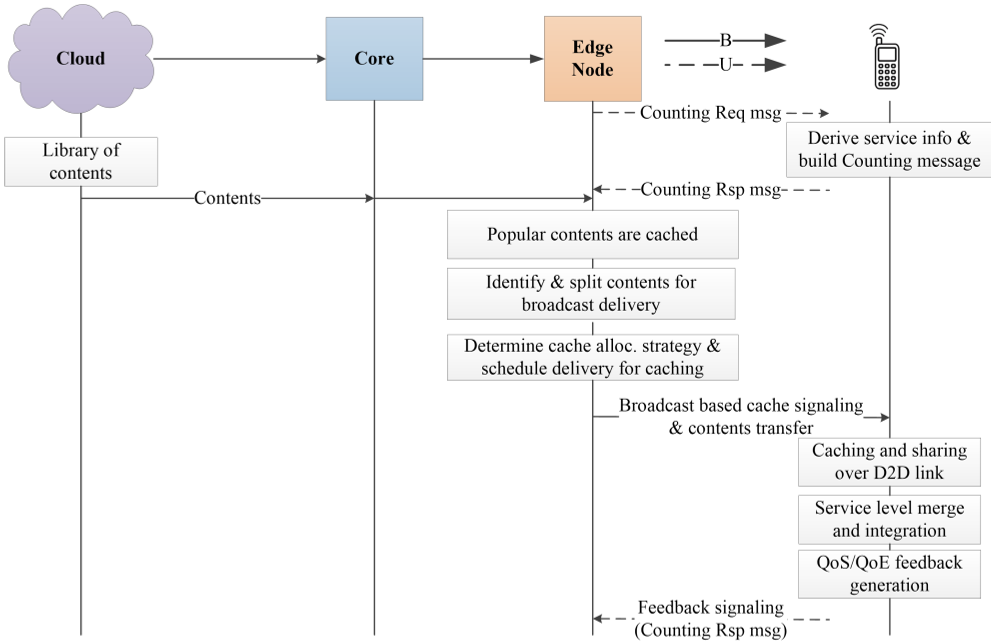 Fig 1: The broadcast-based approach for initial cache building.
Experiments & The Power of Multihop
The researchers modeled the "contact times" between UEs using an exponential distribution and analyzed RAN costs under various popularity profiles (Zipf distribution).
Key Result: Multihop vs. Single-hop
Traditional D2D caching relies on a single jump. This paper proves that proactive multihop (where content spreads through a chain of UEs) significantly enhances "content spread." As shown below, for high-popularity content (), the RAN cost is almost entirely eliminated as the latency deadline increases, because the content spreads so effectively through the crowd.
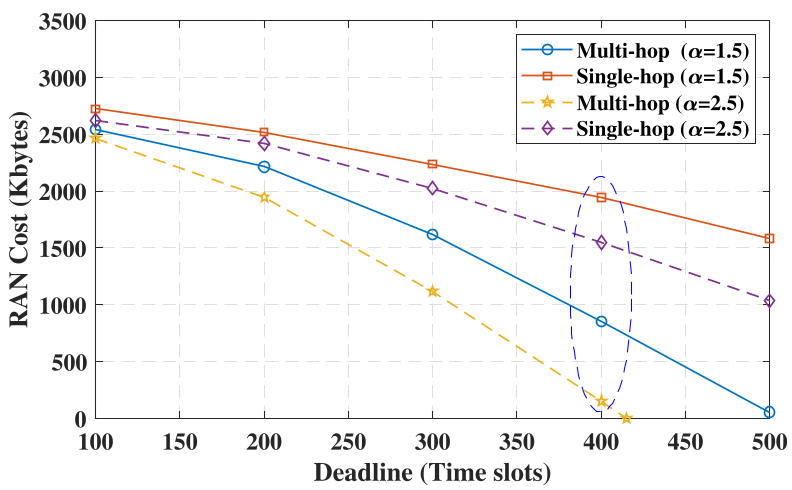 Fig 2: Comparison between Single-hop and Multi-hop transfer efficiency.
The Mobility Advantage
Perhaps the most counter-intuitive finding is the impact of mobility. When the network selects high-mobility UEs as cache holders, the RAN cost drops faster than when low-mobility UEs are used. The mobility of the device compensates for the limited range of D2D links.
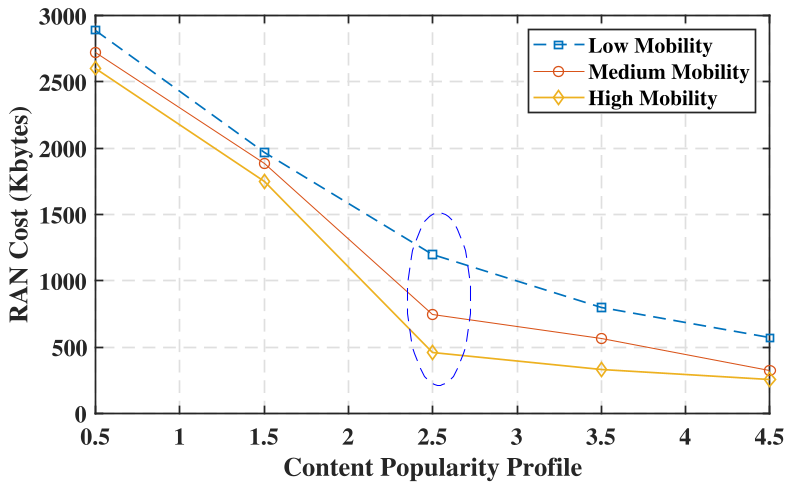 Fig 3: Higher mobility UEs lead to superior RAN resource conservation.
Critical Analysis & Conclusion
Takeaway
This work shifts the paradigm of edge caching from "static base station storage" to a "dynamic, user-centric mesh." By integrating mobility states and multihop probability into the cache allocation strategy, the authors provide a scalable way to handle the social media traffic explosion.
Limitations & Future Work
While the simulation results are compelling, the system relies on users being "willing" to act as cache holders. The paper mentions a "Readiness Field," but the economic/incentive layer (how to reward users for their battery/data usage) is outside the scope of this technical analysis. The authors point toward "consistent learning" (likely Reinforcement Learning) as the next step to automate these allocation decisions in real-time complex environments.
Final Thought
For 5G-Advanced and 6G, the terminal is no longer just a sink for data—it is a node of the infrastructure. This paper provides the mathematical and structural blueprint for that transition.