
Beyond Distance: Unlocking Implicit Style Features with Fuzzy Social Networks (FuCM)
9860_A Novel Classification Method From the Perspective of Fuzzy Social Networks Based on Physical and Implicit Style Features of Data.
This paper introduces the Fuzzy Classification Method (FuCM), a unified framework that incorporates both physical features (e.g., distance, similarity) and implicit style features (e.g., structural correlations) using fuzzy social network analysis. By modeling data samples as nodes in a directed fuzzy network and employing modified PageRank-style dynamics, FuCM achieves SOTA performance on datasets where classification depends on global structural patterns rather than just local proximity.
TL;DR
Researchers have developed FuCM (Fuzzy Classification Method), a novel algorithm that treats data samples not as isolated points, but as entities in a social network. Unlike traditional models that only look at what a data point is (Physical Features), FuCM looks at how it behaves within a global structure (Implicit Style Features). It effectively bridges the gap between local similarity and global topological patterns.
Background: The Limits of "Looking Alike"
In classical Machine Learning, we assume that if two things look similar (small Euclidean distance), they belong to the same category. However, consider a "Motivating Example": letters in different fonts. Physically, a handwritten 'E' might look more like a typed 'L' than another stylized 'E'. Traditional KNN or SVM would fail here because they miss the style context.
The authors argue that data samples possess "interactions" similar to people in a social community. By capturing these interactions, we can classify data based on the style of the group it belongs to, even if it is physically closer to a different cluster.
The Core Innovation: Fuzzy Social Network Dynamics
The FuCM framework operates through a sophisticated transformation of data into a directed graph.
1. Building the Network
Instead of a standard graph, FuCM builds a Fuzzy Social Network where edges only exist if:
- Nodes are within the -nearest neighbors.
- Nodes share the same class label. This ensures that the "topological structure" learned during training is purely representative of the specific style of each class.
2. Fuzzy node Influence (The "PageRank" for Data)
The paper introduces a modified version of the PageRank algorithm to calculate the weight of each node. It uses "Fuzzy User Reputation Scores" and adjusts for Node Density—recognizing that samples in dense areas should have different initial influences than outliers.
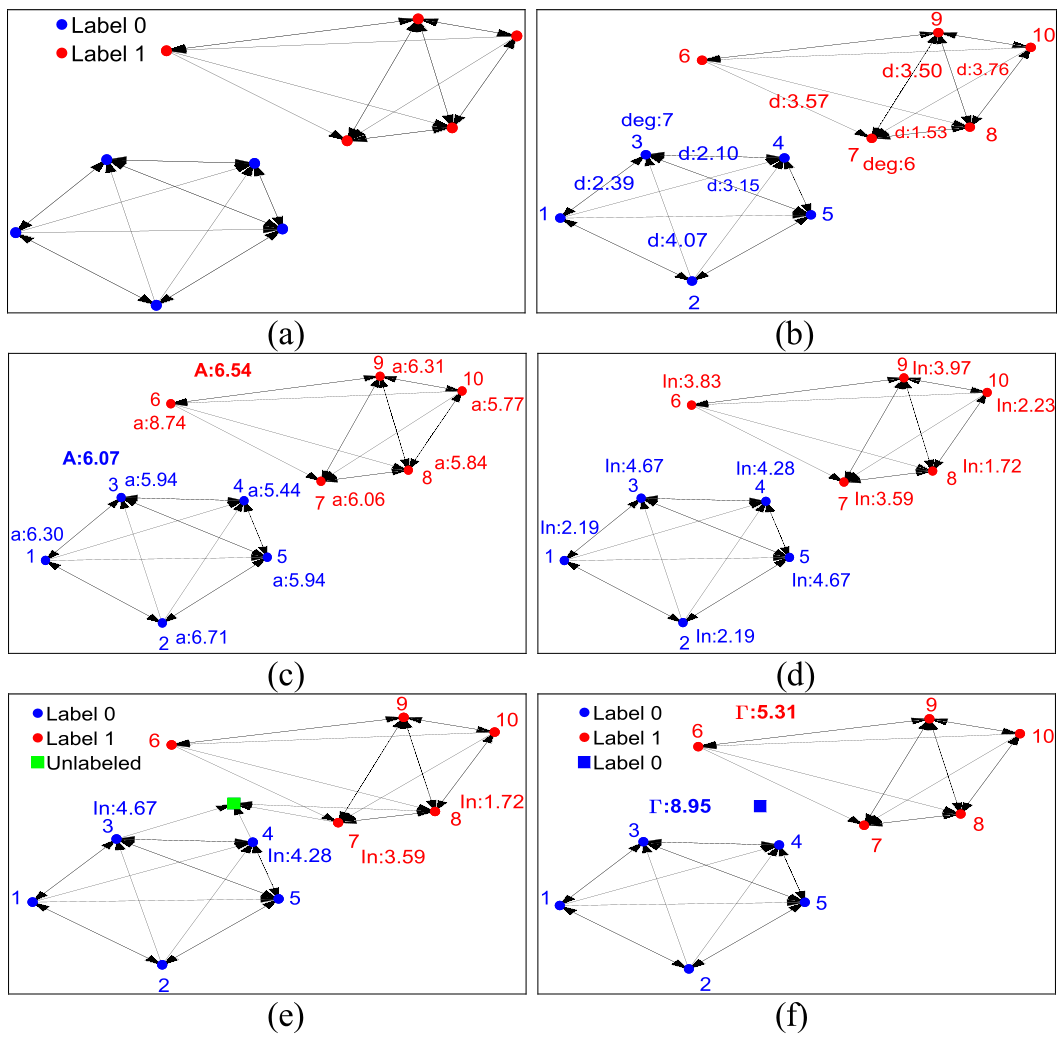 Fig 1: The FuCM Workflow—from KNN-based network construction to final label prediction via double structure efficiency.
3. Double Structure Efficiency
How do you classify a new, unlabeled point? FuCM doesn't just measure distance. It calculates Double Structure Efficiency (): Where is the "Authority" of a subnetwork and is a balance coefficient. This formula allows the model to prioritize a class that has a strong structural "reputation" even if the physical distance is slightly larger.
Experimental Showdown
The authors tested FuCM against nine heavyweights, including LIBSVM, Random Forest, and TSK Fuzzy Classifiers.
Standard Datasets
On 14 UCI and KEEL datasets (where physical features are usually sufficient), FuCM held its own, matching the accuracy of SOTA models like Random Forest. This proves it is a Unified Framework—it doesn't hurt performance on simple tasks while excelling at complex ones.
Style-Dependent Case Studies
The real power appeared in five specific domains:
- Electricity Pricing: Capturing temporal shifts.
- Handwriting Recognition: Identifying the "style" of the writer.
- EEG/Speech Recognition: Differentiating between noisy, overlapping signals by analyzing the "influence" of surrounding data patterns.
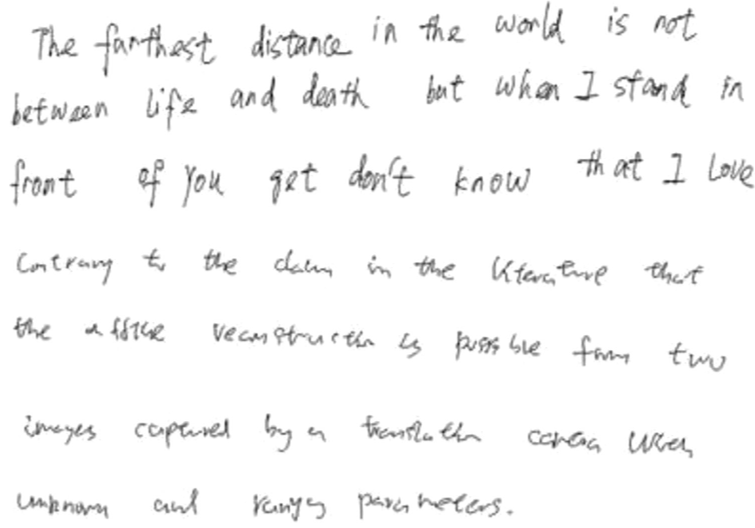 Fig 2: Style variation in handwriting—where FuCM's structural analysis identifies the writer's unique "pulse" regardless of letter shape.
Critical Insight & Future Outlook
The genius of FuCM lies in its minimal assumptions. It doesn't assume a normal distribution of data, nor does it require a pre-defined classification model. It is essentially a "Graph-Intelligence" approach to classification.
Limitations: The computational complexity is roughly during the training stage due to the KNN graph construction. While manageable for medium datasets, massive "Big Data" applications would require approximate KNN techniques to scale effectively.
The Verdict: FuCM opens a new door for AI tasks where "Context is King." By treating data as a social community, we move one step closer to human-like pattern recognition that understands not just the pixels, but the "style" behind them.