
Beyond Peer Trust: Evaluating Social Platforms via Signaling Theory and Crowd Computing
A novel crowd evaluation method for security and trustworthiness of online social networks platforms based on signaling theory
This paper introduces a novel crowd evaluation method for assessing the security and trustworthiness of Online Social Networks (OSNs) by integrating Signaling Theory from economics. It features a formal semantic model using OWL and temporal logic, combined with a Fuzzy Analytic Hierarchy Process (FAHP) to quantify platform-level trust and drive functional evolution.
TL;DR
While most trust models focus on whether User A trusts User B, this paper tackles a more fundamental question: How do we measure if users trust the platform itself? By borrowing Signaling Theory from economics and combining it with Fuzzy AHP, the authors create a formal framework to evaluate social network security and use "crowd intelligence" to guide software version upgrades.
Background: The Platform Trust Gap
In an era of malicious propagation and data breaches, the platform is no longer a neutral bystander; it is the foundation of interaction. However, current evaluation systems are often subjective or purely technical (e.g., uptime). There is a lack of a framework that translates user perception of security features (like login hints or encryption) into a quantitative score that developers can use to prioritize bug fixes.
The Insight: Platform Features as "Signals"
The authors argue that every feature on a social network acts as a "signal" to the user about the platform's underlying quality.
- The Strategy: Use Signaling Theory to classify these cues.
- The Formalism: To prevent ambiguity, the authors use OWL (Ontology Web Language) for static attributes (what the signal is) and Temporal Logic for dynamic behaviors (how the signal reacts to user actions).
Methodology: Converting Fuzzy Feelings into Hard Math
The core of the system is a three-layer evaluation model:
- Signal Classification: Dimensions include Usability, Transparency, Security & Privacy, and Quality Assurance.
- Weight Calculation: Using Fuzzy Analytic Hierarchy Process (FAHP), the model determines which signals (e.g., "Background encryption" vs. "Ad-free content") are most critical to users.
- Crowd Evaluation: Real-world users provide data through a crowd-computing architecture, which is then processed through a fuzzy consistency matrix to eliminate noise.
 Figure 1: The proposed crowd evaluation architecture for OSN security.
Experimental Results: The CyVOD Case Study
The researchers tested their model on CyVOD, a multimedia social network.
Phase 1: Identifying Weaknesses
Initial evaluations of CyVOD V2.0 revealed that while "Digital Copyright Protection" (C13) was rated highly, "Security Warnings" (C10) and "Access Control" (C8) were perceived as weak points.
Phase 2: Iterative Evolution
The platform administrator improved the access control strategy and security hints based on the FAHP rankings.
- The Outcome: Post-upgrade evaluation (V2.0.1) showed a horizontal increase across almost all trust metrics.
- Signal Ranking: The most influential signal for user trust was found to be C6 (Safe guarantee for sensitive information transmission), followed by C5 (Data encryption).
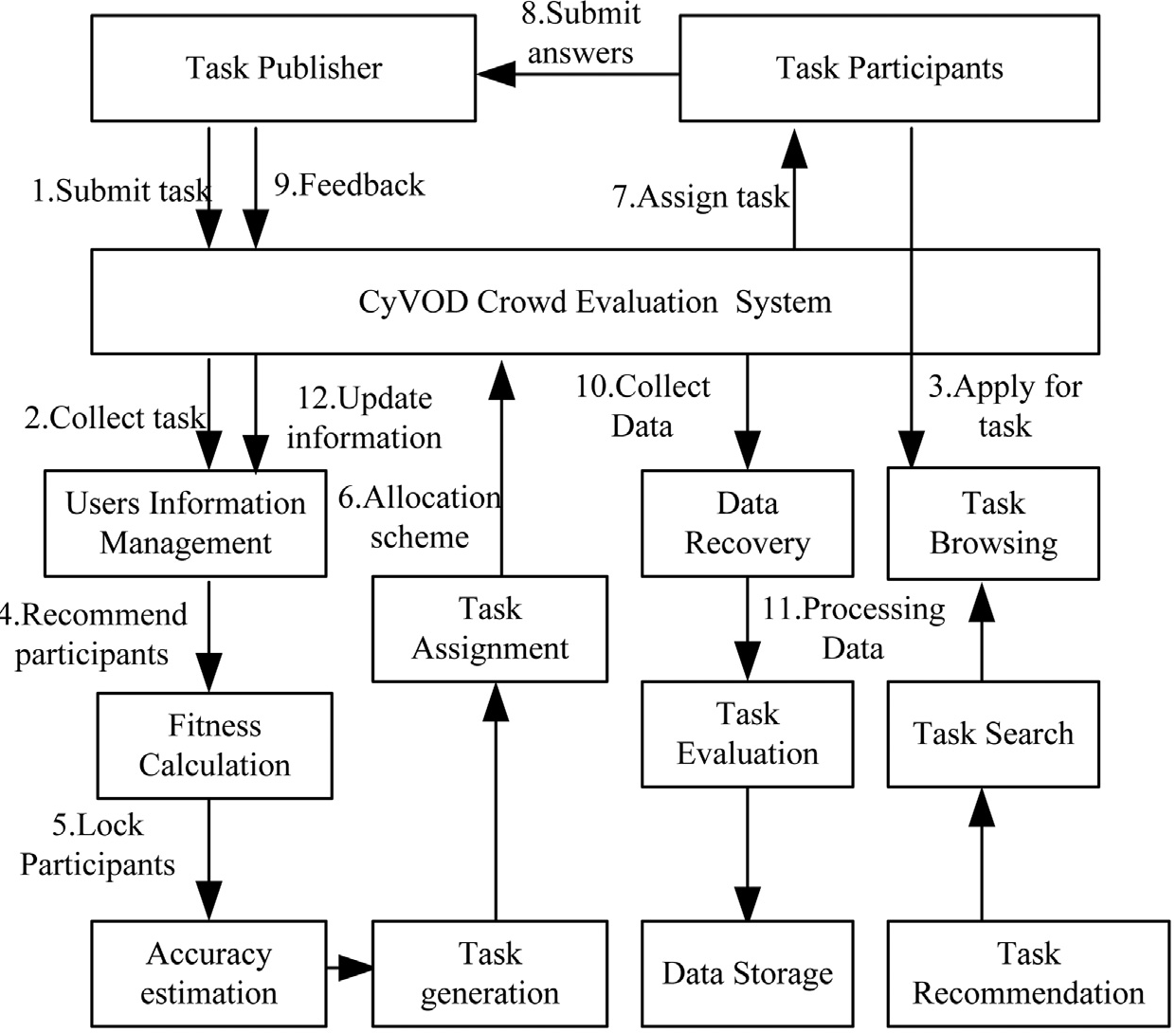 Figure 2: Verification of signal weight and membership degree across different evaluation stages.
Deep Insight: Why This Matters
The brilliance of this work lies in its longitudinal approach (Formula 4 in the paper). It doesn't just provide a snapshot of trust; it calculates the Change Rate of Trust over time and versions.
Key Takeaways for the Industry:
- Trust as a Metric: Security is not just a binary "hacked" vs. "not hacked" state; it is a perceived quality that can be measured using signal weights.
- Adaptive Security: By identifying which "signals" users value most, platform owners can optimize their development ROI, fixing vulnerabilities that have the highest impact on user retention and community health.
Conclusion & Future Work
The paper successfully bridges the gap between economic theory and social network engineering. While the current model relies on manual surveys for crowd data, the authors anticipate a future architecture featuring an automated evaluation task recommender to further scale the evaluation process across massive OSN ecosystems.
Note: This article is an academic analysis of "A novel crowd evaluation method for security and trustworthiness of online social networks platforms based on signaling theory" by Zhang et al.