
Collective Intelligence in Microelectronics: A Novel Crowdsourcing Approach for Defect Detection
A novel crowdsourcing platform for microelectronics counterfeit defect detection
This paper introduces a first-of-its-kind web-based crowdsourcing platform designed for microelectronics counterfeit defect detection. By combining remote 3D visualization of multi-modal microscopy data (X-ray, SEM, Optical) with unsupervised K-means clustering, the system aggregates expert assessments into a "collective insight" to standardize an otherwise subjective process.
Executive Summary
TL;DR: This research addresses the critical security threat of counterfeit microelectronics by launching a web-based collaborative platform. It solves the dual problem of heavy computational requirements for 3D visualization and the inherent subjectivity of human experts. By aggregating multiple expert opinions and using unsupervised learning (K-means) to find consensus, the platform identifies defects that individual labs often miss.
Background Positioning: This work bridges the gap between traditional manual physical inspection and future fully automated AI detection. It acts as a "data engine"—providing immediate utility through remote collaboration while building the labeled datasets required for the next generation of Deep Learning models.
The Problem: The High Cost of Subjectivity
The global supply chain is flooded with non-authentic electronic parts—recycled chips disguised as new, or cloned units with inferior materials. Currently, detecting these requires Subject Matter Experts (SMEs) to pore over Electron Microscopy (SEM) and X-ray scans.
Traditional workflows suffer from two major "points of failure":
- Computational Barrier: 3D microscopy data is massive. Most experts don't have the local hardware to manipulate and rotate 3D volumes fluidly.
- The "Expert Gap": As proven by a SAE G19A "round robin" test, different labs can look at the same chip and reach different conclusions. Some experts find "ghost markings" where others see nothing, leading to inconsistent security standards.
Methodology: Remote Visualization meets Consensus Learning
The authors' solution is a platform that centralizes the data and "crowdsources" the analysis to a distributed network of experts.
1. RemoteViz: Zero-Client Heavy Lifting
Instead of making users download gigabytes of data, the platform uses RemoteViz. The rendering happens on a high-end GPU server, and only the visual stream is sent to the user's browser (HTML5). This allows an expert to inspect a complex X-ray tomograph on a simple tablet or laptop without lag.
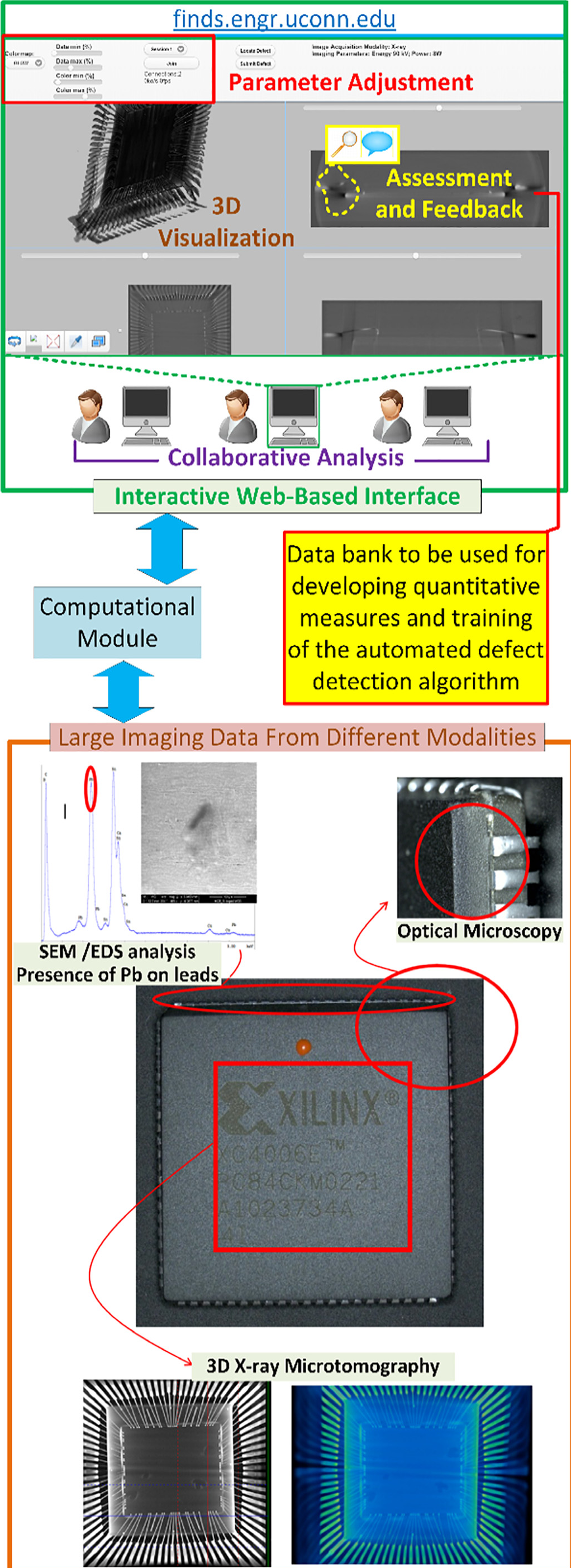 Fig 3: The schematic of the online platform process, from multi-modal imaging to collective data banking.
2. Unsupervised Consensus (K-means)
When an expert finds a defect, they draw a 3D box (ROI) around it. Since there is no "ground truth" (we don't always know if the chip is definitely fake beforehand), the system uses consensus as the gold standard.
The system extracts a 9-dimensional vector for every user-drawn box (position, scale, orientation) and applies K-means clustering. If multiple experts draw boxes in the same coordinate space, a cluster forms, signaling a high-probability defect.
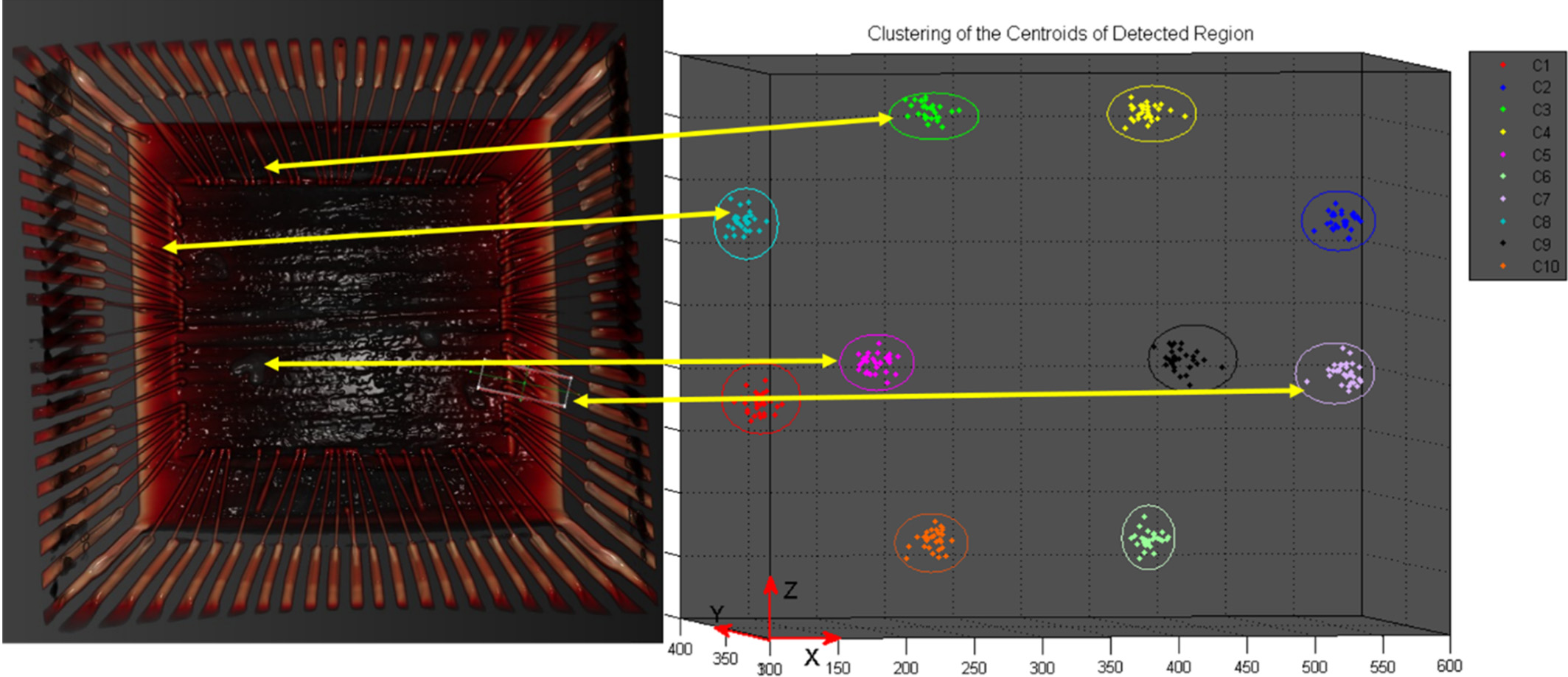 Fig 5: Visualization of feature space clustering where multiple user inputs converge to define a defect region.
Experimental Results: The Power of the Crowd
The study tested 12 counterfeit samples across 35 defect categories (M1-M35). The results were revealing:
- Modality Mapping: The platform helped identify which tools are best for which defects. For example, "Sanding/Grinding marks" (M10) are easily seen in SEM (S) and Optical (O), while "Broken wires" (M25) often require X-ray Tomography (X).
- Error Reduction: By comparing results across different industrial labs, the authors showed that a single lab might detect only a fraction of existing defects. The collaborative platform effectively "fills the gaps" in individual expert knowledge.
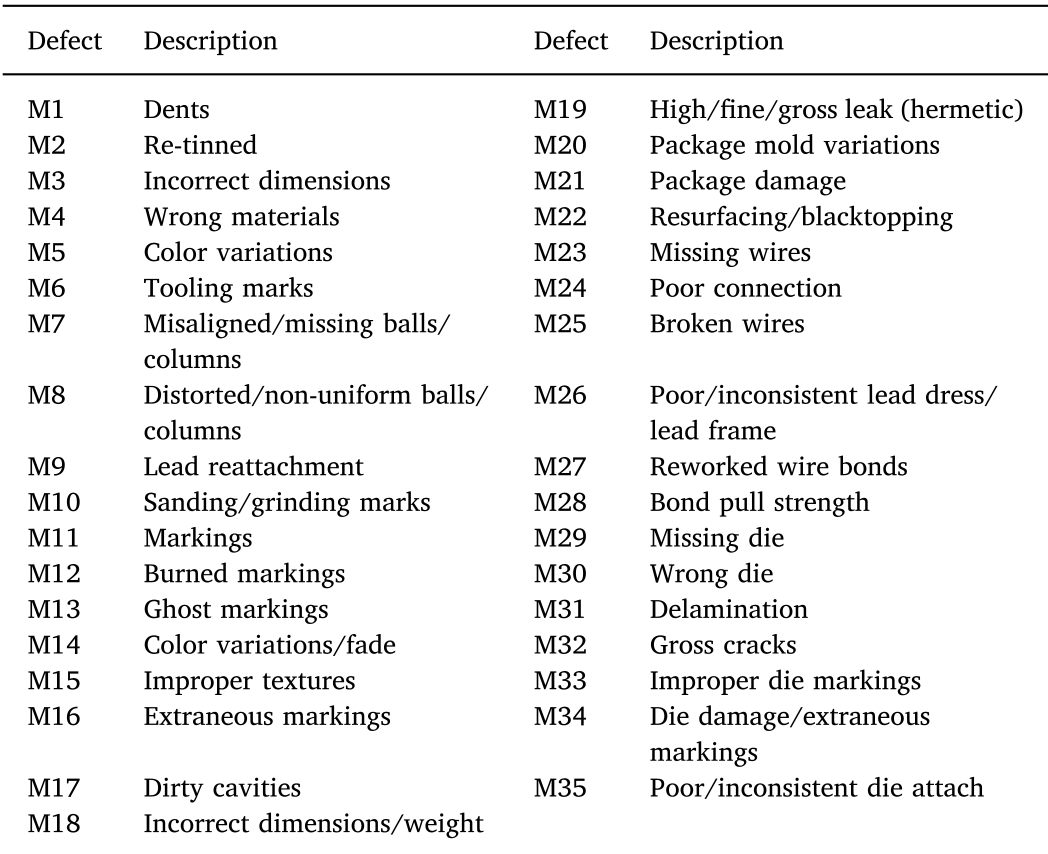 Table 1: The comprehensive list of 35 defect types tracked by the platform.
Critical Analysis & Conclusion
Takeaway
The true value of this work isn't just the 3D viewer—it's the quantification of subjective data. By turning expert "opinions" into coordinate-based data points, the authors have created a framework to measure uncertainty in counterfeit detection.
Limitations
- The Consensus Bias: If a defect is so subtle that a majority of experts miss it, the K-means algorithm will likely discard the one correct expert as an "outlier."
- Latency: Remote rendering performance is highly dependent on network stability, which might be a hurdle for international collaboration.
Future Outlook
The authors are already moving toward Deep Neural Networks. By using this platform to compile a massive "Defect Library," they are solving the biggest hurdle in AI for hardware security: the lack of high-quality, labeled training data. Soon, the "crowd" may not be humans, but an ensemble of pre-trained models.