
Beyond Sentiment: Mapping Patient Influence and Drug Opinion via SOM and Network Analysis
A Novel Data-Mining Approach Leveraging Social Media to Monitor Consumer Opinion of Sitagliptin
This paper presents a hybrid data-mining framework using Self-Organizing Maps (SOM) and Network Analysis to monitor consumer opinions of the diabetes drug Sitagliptin on social media. The method successfully identifies sentiment clusters and "information brokers" within medical forums, providing a structured approach to pharmaco-surveillance.
TL;DR
Researchers have developed a powerful two-step framework to mine social media for patient experiences with the diabetes drug Sitagliptin. By combining Self-Organizing Maps (SOM) for clustering and Network Analysis for influence mapping, the study identifies not just what patients are saying, but who is driving the conversation.
Context: The Digital Pulse of Public Health
In the era of Social Media, patient forums have become a goldmine for pharmaceutical feedback. However, the data is messy, heterogeneous, and vast. Traditional surveys are too slow and small-scale. This paper bridges the gap by treating forum posts as high-dimensional data points that can be clustered and mapped onto social graphs.
The Challenge of Context
One of the core difficulties in sentiment mining is the "negation problem." For instance, a traditional algorithm might see the word "Great" and label a post as positive. But if the patient wrote "I do not feel great," the sentiment is reversed.
The authors solved this by implementing a context-aware tagging system:
- Contextual Tagging: Words are tagged with
_p(positive) or_n(negative) based on surrounding modifiers. "No side effects" results inNo_p, ensuring the "No" contributes to a positive sentiment score.
Methodology: The Two-Pillar Approach
1. Exploratory Analysis via SOM
The authors used a Self-Organizing Map to reduce 28-dimensional word frequency data (TF-IDF) into a 2D visual map. This allowed them to see where the "opinion masses" were gravitating.
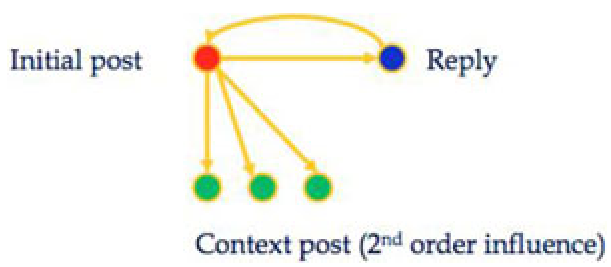 Fig 1: The logic used to convert forum replies into directional network edges.
2. Identifying the "Information Brokers"
Not all forum members are equal. By modeling users as nodes and replies as edges, the authors identified Information Brokers. These are users who:
- Have a high degree of connectivity (Carriers).
- Share an opinion that is representative of their specific cluster (User Average Opinion matching Module Average Opinion).
Key Results: Sentiment and Structure
The SOM analysis revealed a sharp divide in Sitagliptin opinion. Negative clusters were largely driven by side effects (corroborated by clinical research), while positive clusters were linked to successful drug switches recommended by physicians.
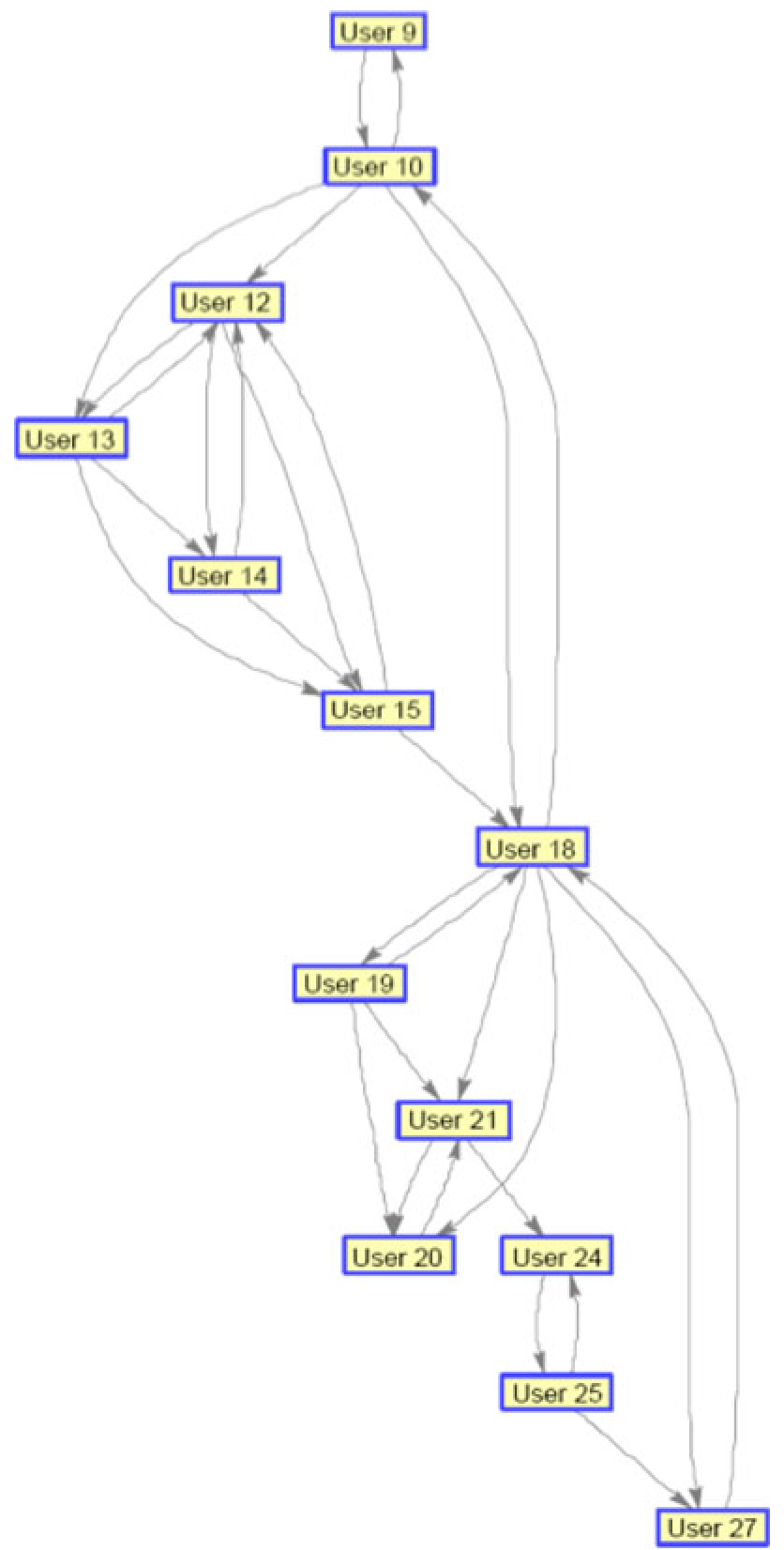 Fig 2: Visualization of strongly connected components within the forum network.
In the DiabetesDaily forum (713 posts), the algorithm isolated six key users who acted as the primary conduits for information. These users weren't just loud; they were "informative," blending personal experience with external research, making them critical targets for pharmaceutical companies looking to understand community sentiment.
Critical Analysis & Future Outlook
This work moves beyond simple "thumbs up/down" sentiment analysis by incorporating Social Topology.
Takeaways:
- Targeted Feedback: Manufacturers can identify the most trusted voices in patient communities to gather high-fidelity feedback.
- Rapid Biosurveillance: This method allows for the early detection of drug side effects before they are formally reported in clinical trials.
Limitations: The study relies on manual labeling for initial validation and uses a specific wordlist which may miss emerging "slang" or informal medical terms. Future iterations could benefit from Large Language Models (LLMs) to automate the semantic understanding of posts while retaining the robust network analysis proposed here.