
Beyond Components: A Two-Fold Safety Logic for Therapeutic Robots
A Novel HAZOP Study Approach in the RAMS Analysis of a Therapeutic Robot for Disabled Children
The paper introduces a "two-fold" HAZOP (Hazard and Operability) study applied to the IROMEC therapeutic robot, designed for children with motor or communication disabilities. By combining a component-centric view with an operations-centric view, the researchers established a comprehensive safety framework that addresses both mechanical failures and unpredictable human-robot interactions.
TL;DR
Ensuring the safety of a robot is one thing; ensuring the safety of a robot playing with a child is an entirely different challenge. This paper retools the industrial HAZOP (Hazard and Operability) study for the IROMEC therapeutic robot. By looking at both what the robot is (components) and what the robot does (scenarios), the authors bridge the gap between mechanical reliability and clinical safety.
The "Unpredictability" Problem
In most industrial settings, human behavior is regulated. In a pediatric therapy ward, it is anything but. Children, especially those with autism or motor impairments, may suck on robotic parts, step on the device, or fail to move away from a moving platform.
Traditional safety standards—like IEC 61508 for industrial electronics or EN 71 for toys—either focus too much on hardware failure or too little on the autonomous "will" of the machine. The researchers realized that analyzing the mobile base platform as a "black box" wouldn't reveal the danger of the robot rolling over a child's hair while "dancing."
Methodology: The Two-Fold Approach
The core innovation is the dual-perspective analysis.
1. The Components View (The "What")
This follows the classical engineering decomposition. The robot is broken down into its base, LiPo batteries, ultrasonic sensors, and actuators.
- Goal: Identify failures like battery leakage, electrical shock, or mechanical fatigue.
- Parameters: Voltage, Temperature, Torque, etc.
2. The Operations View (The "How")
This focuses on the Play Scenarios. The authors analyzed 10 specific games, such as "Follow Me" or "Build the Tower."
- Goal: Identify risks inherent in movement/interaction, such as the robot falling off a table or failing to detect a child's hand on the floor.
- Parameters: Distance to obstacle, Speed, Turning rate.
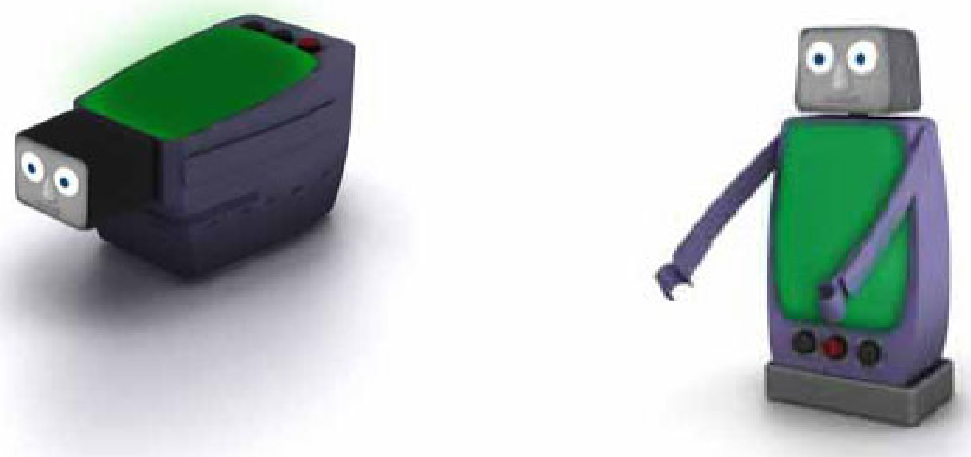 Figure 1: The IROMEC robot in its horizontal (mobile) and vertical (static) configurations.
Identifying Critical Deviations
The study used "Guide Words" (No, More, Less, etc.) to probe for potential dangers. A fascinating finding emerged: some hazards are invisible to hardware checks.
For example, consider the operation O10: Robot stops in front of obstacle.
- Deviation: "NO distance to obstacle" (Collision).
- Finding: The laser scanner might see a child's torso but miss a hand flat on the floor (only 7mm high).
- Solution: The recommendation wasn't just "better sensors," but a physical design change: rounded bottom edges to minimize injury if a collision occurs.
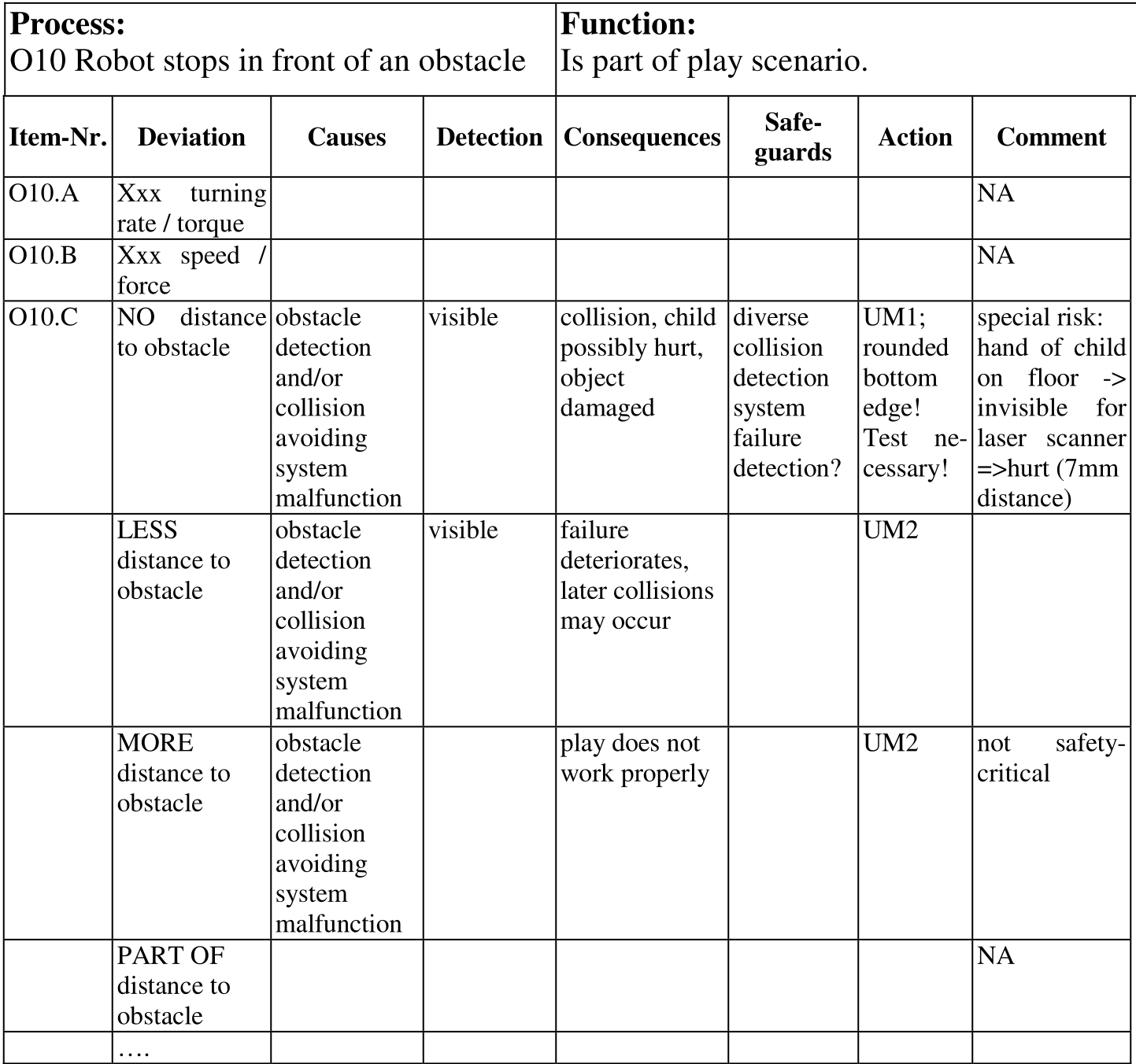 Table 1: Operational HAZOP identifying risks during "Stop at Obstacle" maneuvers.
Results and Design Impact
The two-fold approach provided a safety "net" that caught multiple types of risks:
- From Components: Validated the need for LiPo battery protection and over-temperature detection.
- From Operations: Mandated that the robot arms be made of soft materials and that sensor failures be treated as high-priority "fail-safe" events in the user manual.
Deep Insight: Why This Matters for Future AI
As we move toward a world of "Social AI" and autonomous agents in homes, this paper serves as a reminder that RAMS (Reliability, Availability, Maintainability, and Safety) cannot be solved through code alone.
The interaction between an autonomous agent and a vulnerable human creates a "System of Systems" where the human's unpredictable behavior is a core variable. The IROMEC study demonstrates that the most robust safety protocols are those that anticipate the context of use, not just the specs of the hardware.
Conclusion
This work elevates the HAZOP method from a chemical industry tool to a sophisticated framework for Human-Robot Interaction (HRI). While it results in some "double coverage" (redundancy), in the field of pediatric therapy, redundancy is not a bug—it’s a life-saving feature.