
Particle Dynamics in Social Networks: Modeling Information as Kinetic Energy
A Novel Information Diffusion Model Inspired by Particle-Collision Dynamics for Online Social Networks
The paper introduces the Particle-Model, a novel information diffusion framework inspired by elastic and inelastic particle collision dynamics. It maps social interactions to physical properties like mass, kinetic energy, and damping tracks to simulate how information spreads across Online Social Networks (OSNs) like Sina Weibo and Wiki_Vote.
TL;DR
Information diffusion in Online Social Networks (OSNs) is often modeled through the lens of epidemiology (viruses) or cascades. This paper takes a bold leap into Physics, proposing the Particle-Model. By treating users as particles and information as kinetic energy, it successfully simulates the complex, non-linear forwarding behaviors of real-world platforms like Sina Weibo, outperforming classic models like IC and SI.
Background: Why the "Virus" Analogy Fails
Traditional models like Independent Cascade (IC) or SI (Susceptible-Infected) treat information spread as a binary probability. If Node A is infected, it has a fixed probability to infect Node B. However, human behavior is rarely that simple. Real users have different levels of "influence" (Mass) and "resistance" (Damping). A viral tweet doesn't just jump from node to node; it carries momentum.
The authors argue that existing models fail to capture the "incubation" phase—the period where information builds momentum before exploding.
Methodology: From Elastic Collisions to Social Influence
The Particle-Model redefines the social graph as a physical system of particles on damping tracks.
1. The Physical Mapping
The brilliance of this work lies in its parameter mapping:
- User Influence (): Represented as its Mass, calculated by the out-degree (fans/followers).
- Information Potential (): The Initial Kinetic Energy of the message.
- User Resistance (): The length of the Damping Track. If the energy transfer is too weak to overcome the track length, the information stops.
- Network Structure (): The Average Clustering Coefficient acts as "gravity," affecting how likely the energy is to stay within a local cluster.
2. Collision Mechanics
When user shares information with neighbor , it is modeled as an elastic collision. The state of the neighbor transitions based on the energy balance:
- Spreading State: (Energy exceeds resistance).
- Contacting State: (User saw it but didn't forward).
- Observing State: Pre-collision baseline.
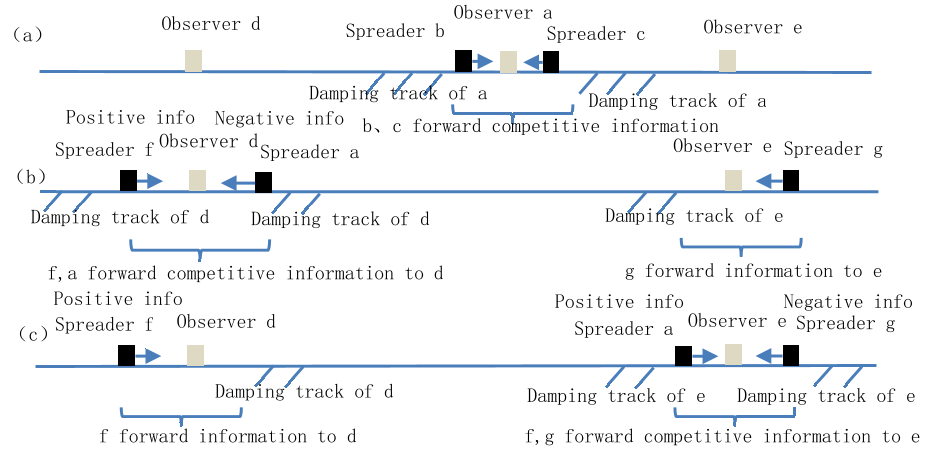 Figure 1: Conceptual mapping of particle collision to social activation.
When multiple sources of information compete (e.g., a rumor vs. a fact-check), the authors apply Inelastic Collision logic, where the final direction and speed depend on the sum of momentum vectors—providing a mathematical foundation for multi-source competition.
Experiments and Results
The authors tested their model against real-world data, including a Chanel advertisement campaign on Sina Weibo and the Wiki_Vote dataset.
Real-World Accuracy
In Experiment 1, the Particle-Model's curve closely mirrored the actual forwarding trend of the Weibo data. Unlike the IC or SI models, which often show a linear or purely exponential rise, the Particle-Model captured the slow initial growth followed by a sharp acceleration (Phase 2), a phenomenon common in social media "trending" topics.
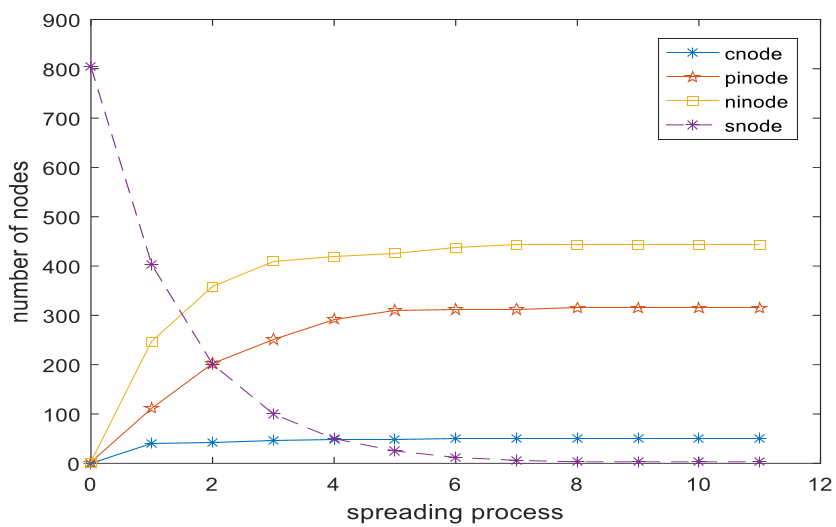 Figure 2: The Particle-Model (yellow) aligns significantly better with actual Weibo data (red) than traditional baselines.
The Role of Clustering
The research highlighted that the Clustering Coefficient () dictates the "scope" of influence. In the Wiki_Vote dataset (), the energy was more concentrated within dense clusters compared to the more sparse Weibo network (), confirming that high-density networks act as "energy traps" for information.
Critical Insight: The Value of Physics-Based Intuition
Why does this work? In the real world, "Influence" is not a static probability; it is a vector. The Particle-Model recognizes that a message from a highly influential user (High Mass) carries more "Impact Momentum."
Limitations:
- The model assumes a relatively static "Mass" for users. In reality, user influence is temporal and topic-dependent (an expert in AI might have "low mass" when talking about cooking).
- The energy decay function could be more sophisticated to account for "information fatigue" over long durations.
Conclusion
The Particle-Model provides a robust theoretical bridge between classical mechanics and digital sociology. For practitioners in rumor control or viral marketing, the takeaway is clear: the initial "Initial Influence" () and the "User Activity" () are the primary levers for controlling diffusion speed. By injecting "competitive energy" (counter-rumors), one can effectively halt the momentum of malicious information using the laws of momentum conservation.