
Stego-Comments: Breaking Traffic Analysis via Indirect Social Media Communication
A novel information hiding scheme based on social networking site viewers’ public comments
This paper introduces a novel linguistic steganography framework that hides secret messages within public comments on Social Networking Sites (SNS) like Facebook and YouTube. The method, called "stego-commenting," combines MS Word's auto-summarization with Huffman-coded synonym substitution to embed data into meaningful, context-aware text.
TL;DR
Researchers have developed a new steganography framework that hides secret messages in plain sight—within the public comment sections of platforms like Facebook and YouTube. By utilizing Auto-Summarization and Huffman-coded Synonym Substitution, the system achieves a superior embedding rate of 9.04 bits/sentence while remaining virtually invisible to traffic analysis by eliminating direct contact between the sender and the receiver.
Problem & Motivation: The Danger of Direct Contact
In the world of digital surveillance, it isn't just what you say that gets you caught—it's who you talk to. Traditional steganography focuses on hiding data within a medium (like a chat message), but if an adversary sees Alice and Bob constantly exchanging files, they become immediate targets for investigation.
The authors identified two fatal flaws in current methods:
- Traffic Traceability: Direct communication between parties is a "smoking gun" for investigators.
- Linguistic Unnaturalness: Many synonym-substitution methods produce "clunky" text that fails basic statistical checks.
Methodology: Hiding in the Crowd
The proposed method leverages the "public square" of social media. Instead of Alice messaging Bob, Alice leaves a public comment on a popular video or post. Bob, who monitors the same post, extracts the message.
The Embedding Workflow
- Context Extraction: The sender copies a set of existing public comments () from a chosen post.
- Auto-Summarization: Using MS Word's Auto-Summarization tool, a compact version of these comments is created. This ensures the topic of the stego-comment matches the surrounding conversation.
- Huffman-coded Synonym Substitution: A database of synonyms () is prepared. Huffman coding is applied based on word frequencies to assign shorter bit-strings to more frequent words, optimizing capacity.
- Stego-Comment Generation: Secret bits are embedded by choosing specific synonyms to construct the final comment ().
 Fig 1: The proposed embedding flow, showing the transition from public comments to summarized stego-text.
Experiments & Results: Superior Efficiency
The researchers compared their method against established linguistic steganography techniques. Their approach significantly outperformed predecessors in terms of Bit Rate.
| Technique | Bit Rate (bits/sentence) |
|---|---|
| Bolshakov (2004) | 0.00375 |
| Winstein (1999) | 6.00 |
| Liu et al. (2007) | 5.42 |
| Proposed Method | 9.04 |
Steganalysis Validation
To test if the comments appeared "human," the authors used a String Similarity Tool utilizing fuzzy comparison functions. The results indicated that the stego-comments were statistically similar to the summarized version of original comments, making them indistinguishable to a casual observer or a basic automated filter.
 Fig 2: Similarity matrix comparing original comments (C1-C5) and stego-summaries (S1).
Tactical Advantage: Traceability Analysis
The most profound contribution of this work is the Indirect Communication Path. As shown in the figure below, Alice (User A) and Bob (User B) never interact. An adversary tracing Alice's IP would only see her interacting with a public Facebook server; an adversary tracing Bob would see the same. There is no direct link to trigger an investigation.
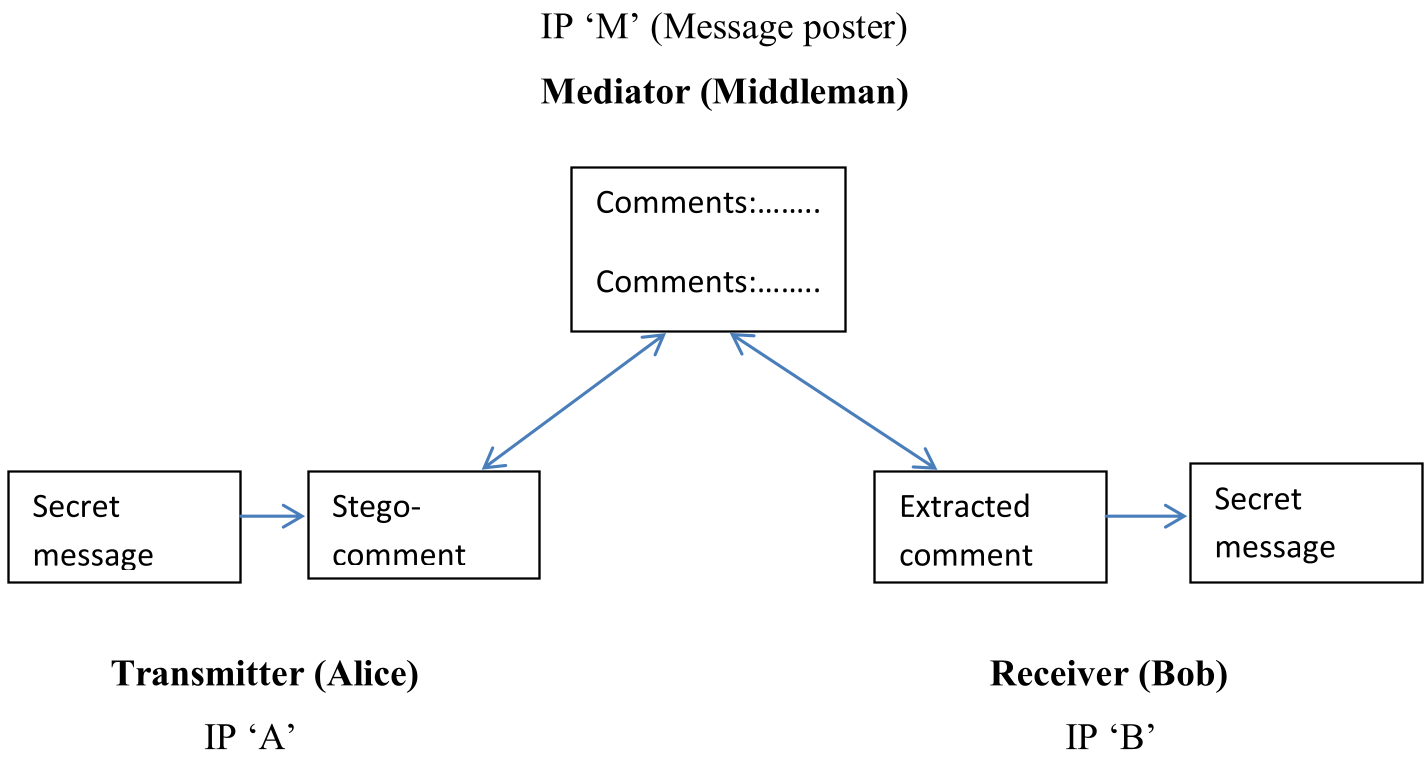 Fig 3: The indirect communication model bypassing IP-based traffic analysis.
Critical Insight & Conclusion
This paper shifts the steganography paradigm from "how to hide data" to "how to hide the relationship." While the use of MS Word's 1997-era summarization tool might seem dated, the underlying logic is sound: contextual relevance is the best camouflage.
Limitations: The system relies on a pre-shared synonym database and Huffman tree between the parties. If an adversary gains access to this database, the "hidden" nature of the text could be unraveled. Future work should focus on utilizing dynamic, LLM-generated summaries to make the text even more indistinguishable from modern human internet slang.
Takeaway: Effective steganography in the 2020s must account for metadata and traffic patterns, not just the payload content.