
Brand Crisis as Entertainment: Decoding the Psychology of Social Perception
A Novel Mental State Model of Social Perception of Brand Crisis from an Entertainment Perspective
This paper introduces a novel mental state model for social perception of brand crises by synthesizing "psychology of entertainment" theories with social media dynamics. The researchers utilize agent-based simulation and multi-way parameter sensitivity analysis to model how consumer perceptions transition from negative exposure to emotional states like "relief" or "disengagement."
TL;DR
Why do we "doomscroll" during a brand scandal? This paper argues that brand crises are effectively a form of entertainment. By applying theories from the Psychology of Entertainment, the authors build a mental state model that explains how consumers move from distress to relief—and how brands can manipulate these "scripts" to recover their reputation.
Background: Beyond Simple Reputation Management
In the age of social media, a single photo—like a Taco Bell employee licking food—can trigger a global firestorm. Traditional crisis management focuses on what the brand said. This research focuses on how the audience feels, treating the public not as judges, but as an audience engaged in a narrative conflict.
The "Why": The Psychological Instinct to Watch a Trainwreck
The authors identify four psychological drivers that turn a crisis into an interactive "show":
- Intrinsic Motivation: Crises are novel and challenging, satisfying our need for "relatedness" as we discuss them online.
- Unpleasant Distress: Watching a brand fail creates tension. According to Excitation Transfer Theory, the higher the tension, the greater the "relief" (and potential positive feeling) when the crisis is resolved.
- Moral Judgment: Consumers cast the brand as a "character." If a "villainous" brand is punished, the audience feels satisfaction.
- Justice: Public satisfy their intrinsic need for justice by seeing a resolution (e.g., the employee being fired).
Methodology: The Mental State Transition Logic
The core of the paper is a state-transition model. It tracks two types of consumers:
- Neutral Observers: Move from Neutral → Unpleasant Distress → Expectation → Relief (Positive or Negative).
- Positive/Loyal Consumers: Experience Cognitive Dissonance. They want to like the brand but hate the news. They either find excuses for the brand (retaining positive bias) or flip to the "unpleasant distress" path.
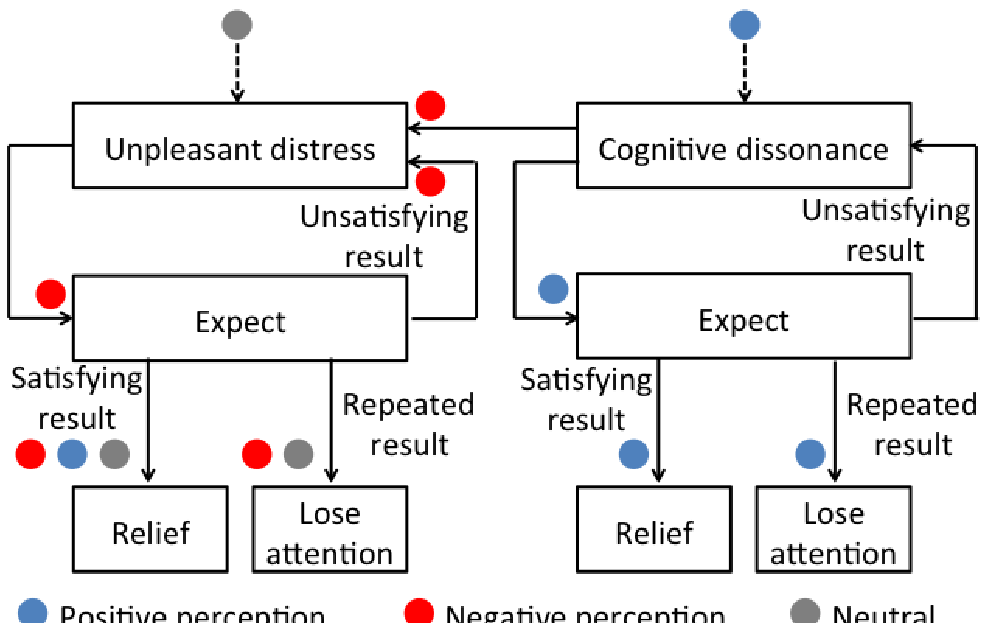 Figure 1: The proposed mental state transitions from neutral/positive origins to final states of relief or disengagement.
Experiments: Simulating the Outbreak
The researchers used an Agent-Based Simulation to test how these mental states spread across a network of 1,000 agents. They varied factors like "Vulnerability to eWOM" and "Strength of Influence."
Key Findings from Sensitivity Analysis:
- Case 1 (Brand Impact Only): Without active positive intervention, agents have equal chances of ending up "negatively relieved" or "neutrally relieved."
- Case 2 (Active eWOM): When positive Word-of-Mouth (from loyalists) is introduced, there is a massive shift toward "Positive Relief."
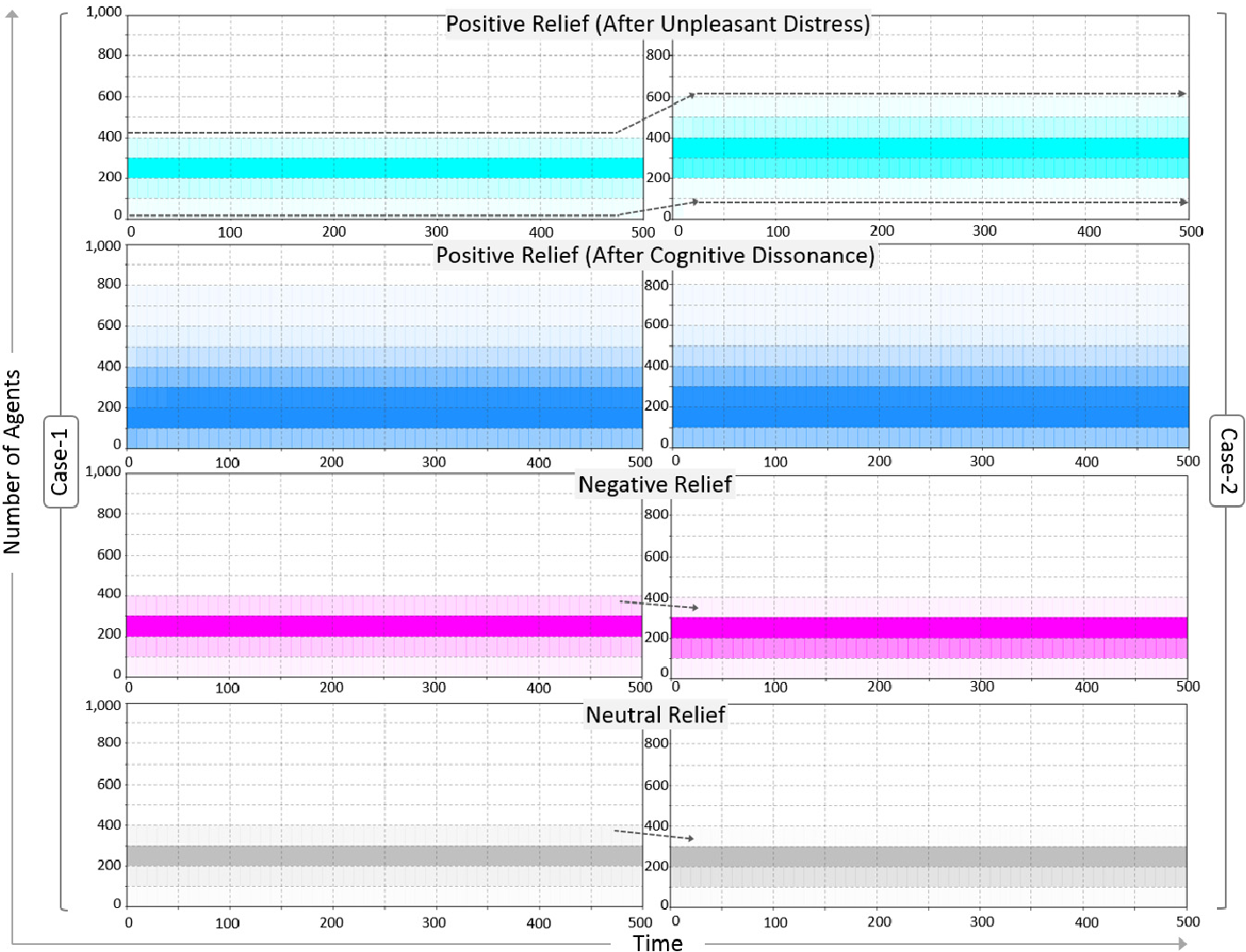 Figure 2: Monte Carlo simulation results showing the trajectory of public perception over time under different scenarios.
Deep Insight: Crisis as an Opportunity
The most counter-intuitive takeaway is that conflict attracts attention. If a brand handles a crisis appropriately (addressing the "Justice" theme), it can actually emerge with higher brand awareness and positive perception than it had before the crisis. This is because the "Excitation" generated by the crisis is "transferred" to the satisfaction of the resolution.
Critical Analysis & Future Outlook
While the model is theoretically sound, its parameters (, , ) are simplified. Reality is often noisier—trolls, competing narratives, and "cancel culture" can keep consumers in a "loop of exasperation" longer than a simulation might suggest.
Future Work: Integrating actual social media sentiment data (from X/Twitter or TikTok) into these Agent-Based Models could allow brands to simulate "what-if" scenarios before they release a public apology.
Conclusion
Marketers should stop fearing the "noise" of a brand crisis and start understanding the narrative arc consumers are looking for. By satisfying the crowd's need for justice and leveraging loyalists to break the negative feedback loop, a brand can turn a social media disaster into a masterclass in audience engagement.