
BAGS: Resurrecting Image Forensics in the Age of Social Networks
A Novel Method of Cropped Images Forensics in Social Networks
The paper introduces a forensic method for detecting cropped images shared on social networks using a novel feature called Block Artifacts Grayscale (BAGS). It specifically addresses the performance degradation of traditional forensic tools caused by social network processing (resizing, re-compression, and filtering), achieving high accuracy in both aligned and non-aligned crop detection.
TL;DR
As images travel through social networks like Facebook and WeChat, they undergo a "laundering" process of resizing, re-compression, and filtering that erases traditional forensic fingerprints. This paper introduces Block Artifacts Grayscale (BAGS), a robust feature specifically designed to detect whether an image has been cropped before being shared online, even when the platform attempts to mask those traces.
Background: The "Social Network" Forensic Gap
Most image forensic research assumes a simple "JPEG-Crop-JPEG" operation chain. In reality, the pipeline is far more hostile. When you upload a photo to WeChat Moments, the platform might resize it, apply a sharpening filter, and re-compress it with a proprietary quality factor.
Existing methods, particularly the Blocking Artifact Characteristics Matrix (BACM), rely on the symmetry of 8x8 block artifacts. When an image is cropped, this symmetry is typically destroyed. However, social network processing creates "grid crossover" or overwrites the original artifacts, making cropped images look like original ones to standard algorithms.
The Core Innovation: Block Artifacts Grayscale (BAGS)
The authors realized that while the symmetry of artifacts might be buried, the intensity and density of these artifacts—when normalized—retain a signature of the original compression.
The Methodology
The authors first compute the standard inter-block and intra-block pixel correlations to generate the BACM (). To overcome the noise introduced by social networks, they define BAGS () as a normalized version of this matrix:
This normalization allows the feature to focus on the relative distribution of block artifacts rather than their absolute values, which are easily skewed by subsequent filtering.
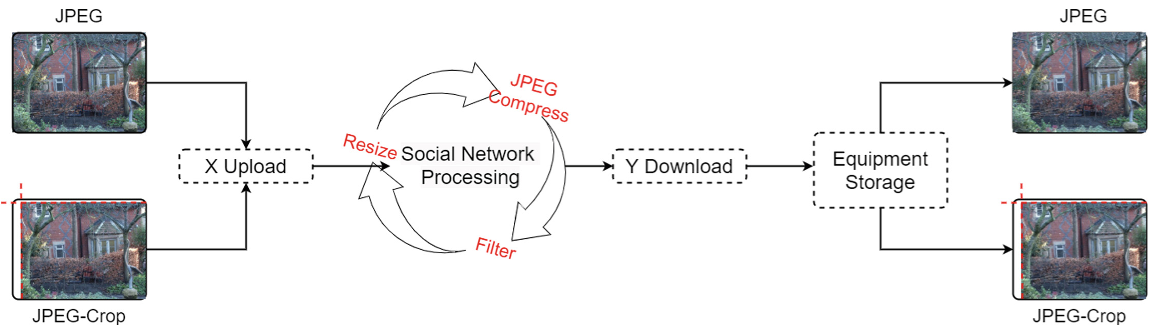 Figure 1: The overall framework, highlighting the complex processing steps within social networks like WeChat.
Why It Works: Aligned vs. Non-Aligned Crops
Detection is notoriously difficult in Aligned Crops (where the image is cut exactly on the 8x8 grid). In these cases, the grid of the new image perfectly overlaps the old one, hiding the crop.
The paper demonstrates that through BAGS, even aligned crops show distinguishable "density" patterns compared to uncropped JPEG images. When an image is exchanged on Facebook, BAGS captures the pixel value offsets that occur because the cropped version's spatial synchronization with the social network's own compression grid is fundamentally different from a clean original.
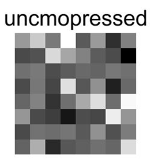 Figure 2: Visualizing how BAGS (right) maintains distinguishable patterns where standard BACM (left) loses clarity under re-compression.
Experimental Results & Social Network Stress Tests
The authors tested BAGS against the UCID dataset across Facebook and WeChat.
- Robustness to Re-compression: Even with a secondary compression factor of QF 50 (very heavy), BAGS maintained 95% accuracy, whereas traditional features like feature14 plummeted in reliability.
- Social Network Real-world Test:
- Facebook: BAGS achieved an accuracy of ~93% across various quality factors.
- WeChat: Perhaps most impressively, they discovered that WeChat's processing differs between Android and iOS. On Android, traditional BACM symmetry is almost entirely destroyed, yet BAGS maintained 93.75% accuracy.
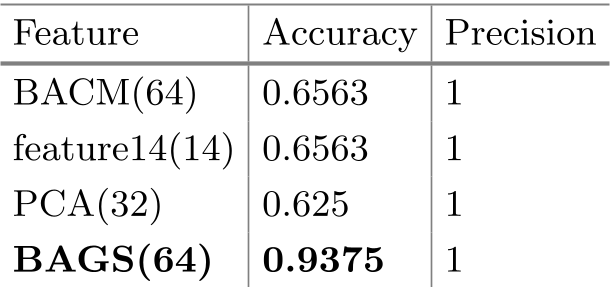 Table 1: Performance metrics showing BAGS significantly outperforming PCA and BACM on the WeChat platform.
Critical Insight & Conclusion
The true value of this work lies in the modeling of "Social Network environments" as a specific forensic challenge. The authors proved that the "BAGS" feature is not just a statistical trick but a way to extract the "ghosts" of original compression artifacts that high-level filters cannot fully erase.
Limitations: The study primarily focuses on cropping. While cropping is the base for many manipulations (like copy-move), the performance of BAGS on more complex local AI-generated inpainting remains an open question for future research.
In conclusion, BAGS provides a vital tool for investigators trying to verify the genealogy of images in an era where social media platforms act as a black box for image metadata.