
HUEM-GAO: Decoding the Market’s High-Value DNA through Utility Mining and Genetic Evolution
A novel methodology for stock investment using high utility episode mining and genetic algorithm
The paper introduces HUEM-GAO (High Utility Episode Mining with Genetic Algorithm-based Optimization), a novel stock investment framework. It combines high utility episode mining to discover profitable event patterns with a Genetic Algorithm (GA) to optimize technical indicator parameters and model selection, achieving significant outperformance over benchmarks like TAIEX and SOTA machine learning models.
TL;DR
Predicting stock movements is notoriously difficult due to the Efficient Market Hypothesis. While many look at how often a pattern repeats, the authors of "A novel methodology for stock investment using high utility episode mining and genetic algorithm" argue that profitability (utility), not frequency, is the key. By combining High Utility Episode Mining (HUEM) with a Genetic Algorithm (GA), they've created a system that discovers hidden "profitable episodes" in technical indicators, delivering returns that significantly outpace standard benchmarks and machine learning models like SVMs.
Context: Frequency is a False Prophet
In the world of data mining, we usually look for frequent patterns. However, in finance, a pattern that happens every day might not make you any money (low utility), while a rare pattern that occurs once a quarter might signal a 20% price jump (high utility).
Existing episode mining methods (like the prior SISTEM framework) failed by treating all occurrences equally. Moreover, technical indicators like Moving Averages (MA) or MACD are highly sensitive to their parameters (e.g., is a 10-day or 20-day MA better?). Most traders pick these numbers arbitrarily.
Methodology: The HUEM-GAO Architecture
The HUEM-GAO framework operates in a four-stage pipeline:
- Event Extraction: Raw price data is converted into "Complex Events" using five technical indicators: MA, MACD, KDJ, BIAS, and Candlesticks.
- Sequence Construction: These events are organized into a temporal sequence where simultaneous events can occur at the same time point.
- High Utility Episode Mining: Unlike traditional mining, this algorithm seeks episodes where the sum of associated "utility" (future price rise) exceeds a threshold.
- Genetic Optimization: This is the "brain." The GA optimizes the chromosome (binary string) that represents which indicators to use, their internal parameters, and the mining thresholds.
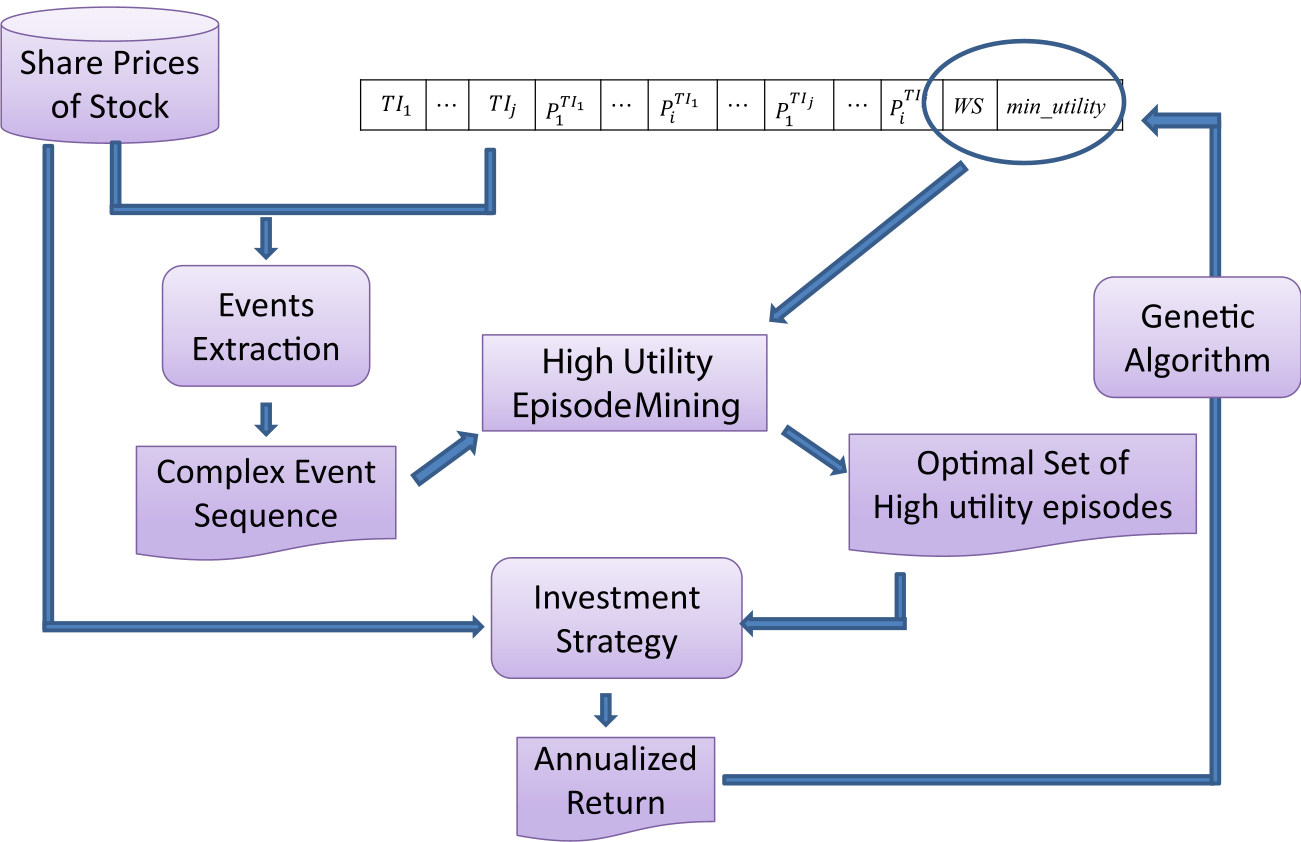 Figure 1: The overarching framework showing the feedback loop between GA optimization and Episode Mining.
The Core Insight: Utility over Frequency
The "Utility" of an episode is defined by the total return generated when the specific sequence of events occurs. By optimizing for Annualized Return (AR) in the GA's fitness function, the model evolves to ignore "noise" and focus on sequences that historically lead to high-growth windows.
Experimental Showdown
The authors tested HUEM-GAO against a battery of baselines: Buy & Hold (B&H), SVM, Neural Networks (NN), and CART (Decision Trees).
Key Results on TAIEX & TAIFEX
- Annualized Return: In TAIEX testing, HUEM-GAO achieved 18.50%, nearly triple the 6.55% of the Buy-and-Hold strategy.
- Precision: The model demonstrated a superior ability to identify "Rise" events that actually outperformed the benchmark, showing higher precision than black-box NN approaches.
- Consistency: Across 31 distinct "Temporal Validation" (TV) windows, HUEM-GAO remained the most robust performer.
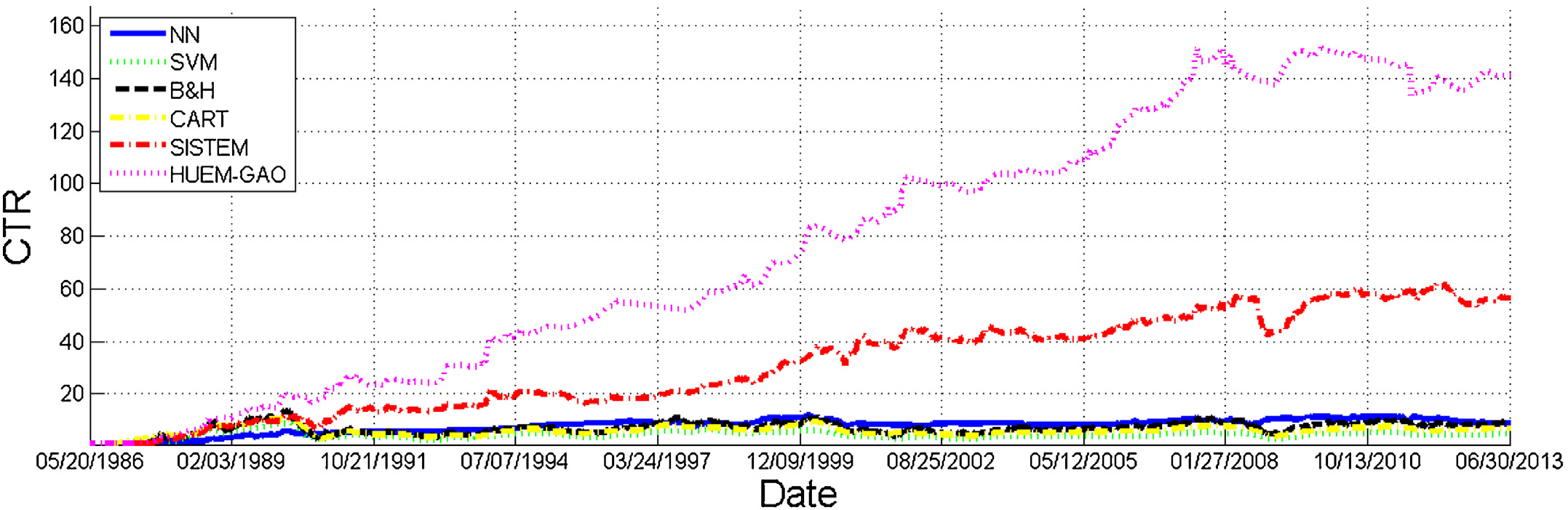 Figure 2: Performance comparison over 26 years. HUEM-GAO (top curve) shows exponential divergence from standard ML models and the benchmark.
Critical Insights & Takeaways
- Interpretability: Unlike Neural Networks, HUEM-GAO produces "rules" (episodes). A trader can actually see the sequence of technical signals that triggered a "buy," providing much-needed transparency in financial decision-making.
- Dynamic Adaptation: Markets change. By using a GA to optimize parameters over temporal windows, the model effectively "re-learns" the best indicator settings for the current market regime.
- Limitations: The computational cost of running GAs alongside episode mining on massive datasets can be high. Furthermore, while the model accounts for returns, it might require additional constraints on "Drawdown" to be viable for risk-averse institutional investors.
Conclusion
This research proves that utility-based mining is a superior philosophical approach to financial time-series than simple frequency mining. By marrying the interpretability of data mining with the global search capabilities of Genetic Algorithms, HUEM-GAO offers a sophisticated, highly profitable alternative to traditional quant strategies.