
Hybrid Intelligence in Career Pathing: A Novel Multidimensional Professionalism Model
A novel multidimensional professionalism evaluation model
The paper proposes a Multidimensional Professionalism Evaluation Model leveraging Logistic Regression and Decision Tree algorithms. It quantifies student competencies using the 5D4L assessment framework to predict employment success and provide personalized career recommendations.
TL;DR
With the transition from elite to mass higher education, the "graduation means unemployment" phenomenon has intensified. This paper introduces a data-mining framework that quantifies student professionalism using Logistic Regression (LR) and Decision Trees (DT) to predict employability and offer personalized self-adjustment strategies.
Background & Motivation
The surplus of graduates in the modern workplace has shifted the focus from mere academic credentials to "professionalism" (Occupation Literacy). However, professionalism is notoriously abstract. The authors argue that by using Big Data and Data Mining, we can move away from subjective evaluations toward a strategic, quantitative model that helps students visualize their competitiveness in the eyes of HR professionals.
Methodology: The Core of 5D4L
The researchers utilize the 5D4L literacy assessment scheme, an authoritative framework that decomposes student quality into:
- 3 Philosophy Levels: Broad conceptual categories.
- 14 Quality Points: Refined behavioral traits.
- 40 Quality Dimensions: Precise, measurable metrics (e.g., loyalty, devotion, kindness).
1. Logistic Regression (The Personal Optimizer)
The model uses LR to calculate the probability of admission for specific roles. By applying the Sigmoid Function, the system converts a weighted sum of professional traits into a value between 0 and 1.
This allows the model to identify "Key Factors"—the specific dimensions where a student's score most significantly impacts their employment probability.
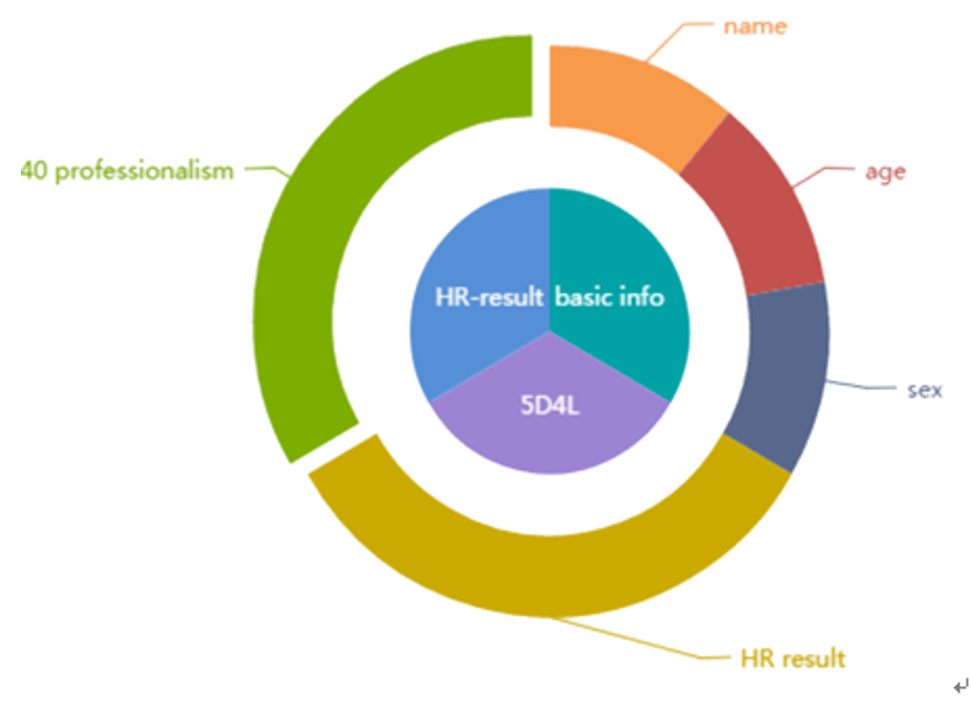 Fig 1. The three-part data structure: Student Info, 40 Professionalism Dimensions, and HR Results.
2. Decision Trees (The Industry Standard)
While LR provides personalized paths, the Decision Tree algorithm uncovers the "Common Requirements." By mapping out decision branches, the model identifies the "Best Branch"—a sequence of qualities (e.g., High Moral + High Loyalty) that represents the ideal candidate archetype sought by enterprises.
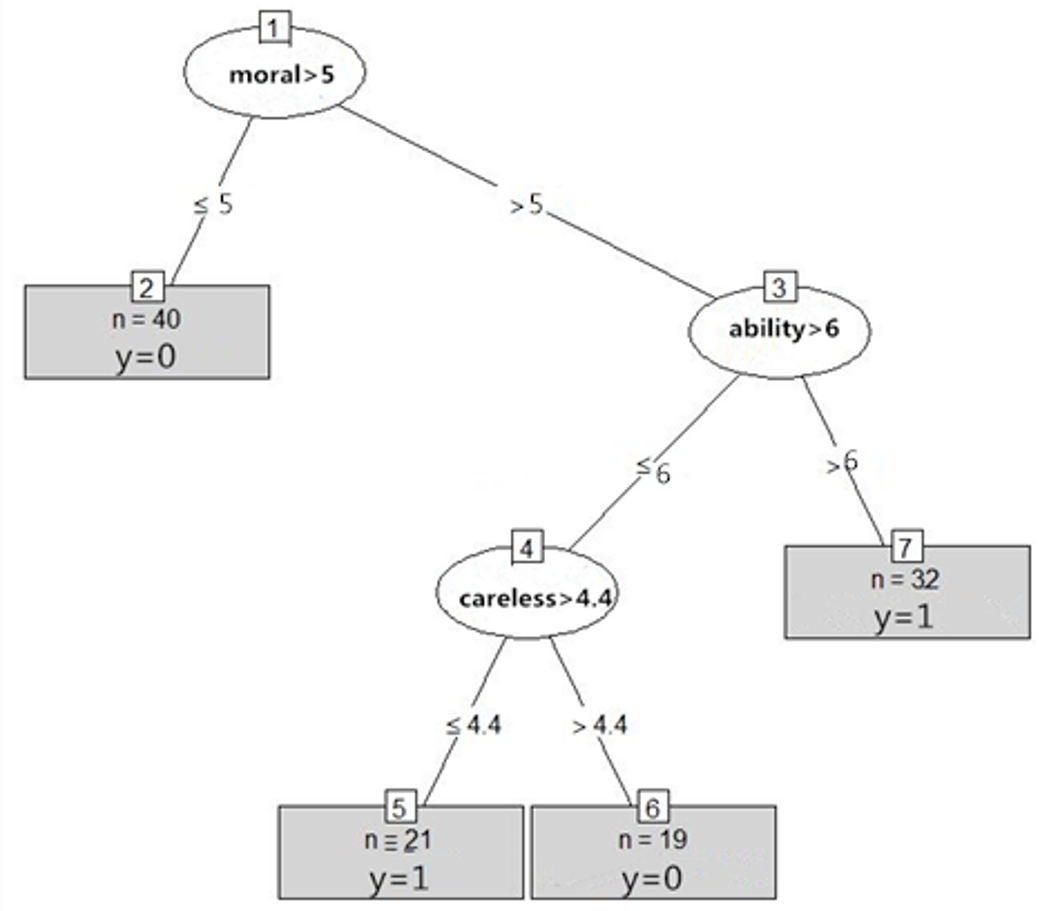 Fig 2. Example of a professional decision tree showing paths to employment success (1) or failure (0).
Experimental Analysis
The model relies on HR simulation scores to ensure the data is "socially convincing."
- Commonness vs. Individuality: LR targets individual weaknesses (Individuality), while DT identifies general market trends (Commonness).
- Dynamic Adaptation: The authors propose a two-stage longitudinal study: first accumulating predicted data and then tracking actual employment outcomes to iterate and refine the model weights.
Critical Insight: The Value Proposition
Unlike traditional static surveys, this model's strength lies in its weight-based feedback. If a student fails to meet the threshold for a "Teacher" role, the LR weights point exactly to which of the 40 dimensions (e.g., "Communication" vs "Professional Ethics") was the bottleneck.
Limitations
- Data Scarcity: As noted by the authors, the model is in its early stages and requires larger datasets to achieve robust statistical significance.
- Subjectivity of HR: The "Ground Truth" is based on HR simulations; if HR biases exist, the model will inevitably codify them.
Conclusion & Future Work
The Multidimensional Professionalism Evaluation Model offers a promising bridge between campus and career. Future work involves integrating real-time recruitment data and expanding the dimensionality of the 5D4L parameters to account for the evolving needs of the digital economy.