
Precise Knowledge Injection: Boosting Data Mining with Ontology-Aided Semantic Mapping
17730_A Novel Ontology-Aided Method for Integrating Prior Knowledge into Data Mining.
This paper introduces a novel ontology-aided method for integrating domain-specific prior knowledge into data mining pipelines. By utilizing Gene Ontology (GO) and semantic similarity measurements, the authors transform hierarchical knowledge into compact feature vectors, significantly improving Protein Subcellular Localization (SCL) prediction accuracy compared to traditional sequence-based and binary-mask GO methods.
TL;DR
This research presents a novel methodology to bridge the gap between structured domain knowledge (Ontologies) and data mining. By replacing sparse, high-dimensional binary vectors with compact "semantic distance" vectors calculated against anchor points called Markstones, the authors achieved superior prediction accuracy in protein localization with significantly lower computational costs.
Academic Position: A structural refinement of GO-based feature engineering, moving from "lexical matching" to "semantic manifold positioning."
Problem & Motivation: The Curse of Sparse Knowledge
In fields like bioinformatics, integrating "prior knowledge" (what we already know about a protein's function) is essential for accurate prediction. However, previous attempts faced a dual-bottleneck:
- Sparsity & Scale: Representing the Gene Ontology (GO) as a binary vector leads to thousands of dimensions where most values are zero, causing the "Curse of Dimensionality."
- Structural Blindness: Binary flags (0 or 1) ignore the hierarchical nature of knowledge. If two proteins hit different GO terms that are actually "siblings" in the tree, a traditional model sees them as equally distant as two completely unrelated terms.
The authors' insight is simple but powerful: Knowledge has a geometry. If we can measure the distance between a sample and a set of "landmark" concepts, we can represent that sample's functional context in a much more efficient, continuous numerical space.
Methodology: Markstones and Semantic Milestones
The proposed workflow follows a three-step integration process:
- Traditional Feature Extraction: Extract standard features (e.g., Amino Acid Composition, AAC).
- Semantic Vectorization:
- Markstone Selection: Identify key nodes in the ontology that are highly discriminative for the target task.
- Distance Calculation: For every sample, calculate the distance to these markstones based on the ontology's hierarchy.
- Milestone Logic: Use a decaying function to ensure that deeper, more specific nodes have higher weights/resolution than shallow, general nodes.
- Feature Fusion: Concatenate the traditional vector with the new compact semantic vector.
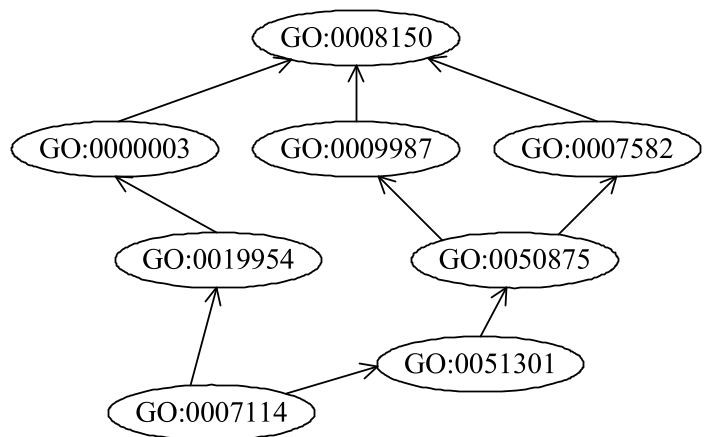 Fig 1: A subgraph of GO illustrating how structure dictates similarity. p2 is semantically closer to p3 than to p1, a relationship lost in binary encoding.
The core mathematical innovation lies in the distance formula: Where is the closest common ancestor. This ensures the model respects the "phylogeny" of the concepts.
Experiments: Efficiency Meets Accuracy
The authors tested their method on a dataset of 483 proteins from Gram-negative bacteria, comparing three feature sets:
- AAC: Pure sequence data (20D).
- AAC + Former GO: Sequence + Sparse Binary GO (247D).
- AAC + New GO: Sequence + Semantic Markstone GO (Only 32D).
Performance Comparison
Despite having nearly 8x fewer dimensions than the previous ontology method, the "New Method" consistently outperformed the others:
| Method | Avg. Accuracy | Dim. Count |
|---|---|---|
| AAC Only | 80.54% | 20 |
| AAC + Former GO | 81.51% | 247 |
| AAC + New Method | 83.85% | 32 |
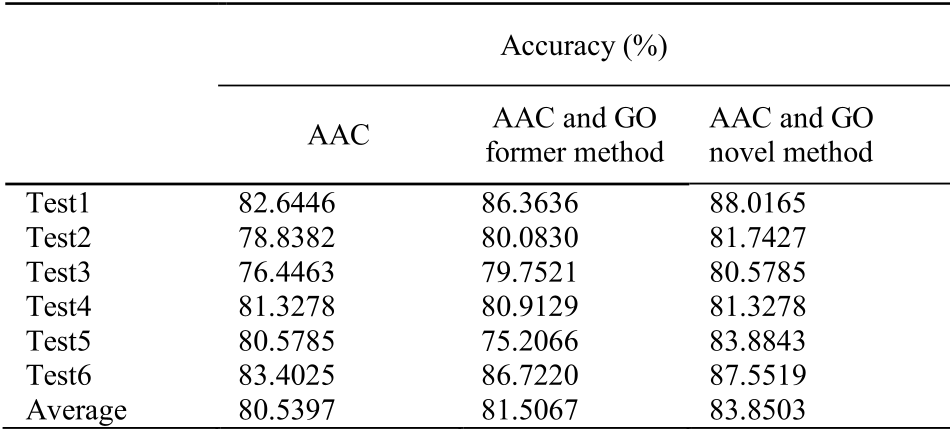 Fig 2: Comparative results across six test runs show the robust improvement of the semantic distance approach.
Critical Analysis & Conclusion
Takeaway
The value of this work lies in Information Compression. By using the ontology's internal logic to pre-process features, we do the "heavy lifting" for the SVM classifier. The model no longer needs to learn the relationships between 2,000 biological terms; it only needs to interpret a sample’s position relative to 12 key functional landmarks.
Limitations & Future Work
- Markstone Selection: Currently, markstones are selected based on manual prior research. Developing an automated, information-theoretic way to select these "landmarks" is the next logical step.
- Metric Sensitivity: The results are sensitive to the parameter in the milestone formula. Exploring dynamic values for different branches of the ontology could further increase precision.
In conclusion, this ontology-aided method proves that "less is more"—by utilizing the underlying geometry of human knowledge, we can build models that are both lighter and smarter.