
Deciphering the Digital Stream: A Structural Approach to Social Media Multimedia Recognition
A Novel Recognition Method of Multimedia Data for Social Network
This paper introduces a systematic recognition method for identifying image, audio, and video content within social networks by leveraging HTML tag analysis and DOM tree traversal. Using Sina Weibo as a primary case study, the approach utilizes web crawling and structural analysis to filter multimedia data from complex social media streams.
TL;DR
As social platforms like Weibo and Instagram become the primary vessels for information, the ability to automatically identify and categorize multimedia data (images, audio, video) is critical. This paper presents a structural recognition method that moves beyond simple text mining by analyzing HTML tag signatures and DOM tree hierarchies. By targeting specific metadata attributes—such as the suda-uatrack in Weibo—the researchers provide a blueprint for high-efficiency media filtering.
Problem & Motivation: The Chaos of Unstructured Social Data
Social Network Services (SNS) are no longer just text-based blogs; they are massive repositories of unstructured multimedia. The researchers identify four critical needs for accurate media recognition:
- Supervision: Filtering illegal or pornographic content at its source.
- Fact-Checking: Distinguishing rumors which often use manipulated media.
- Public Opinion: Predicting trends through viral video/audio analysis.
- Emergency Response: Rapidly discovering hot topics through user-uploaded content.
The core challenge lies in the heterogeneity of web standards. Audio might be embedded in an <object> tag, while video might be hidden behind a specific suda-uatrack attribute or a hyperlink. Simple web scraping isn't enough; we need a "grammar" for social media structures.
Methodology: Mining the DOM Tree
The authors propose a three-stage workflow: Capture -> Structural Analysis -> Recognition.
1. The Multi-Type Recognition Logic
Instead of processing the raw pixel or signal data (which is computationally expensive), the algorithm looks for "fingerprints" in the webpage markup:
- Images: Primarily identified via the
<img>tag and itssrcattribute. - Audio: Detected through file suffixes (e.g.,
.mp3,.wav) or specific<object>and<body>parameters. - Video: Identified by the
target="video"attribute in<a>tags or thedataattribute in the<object>element.
2. Architecture of the Extraction Pipeline
The system initializes a URL queue (TaskList) and performs noise reduction to strip away redundant HTML data, leaving only the structural skeleton of the social media post.
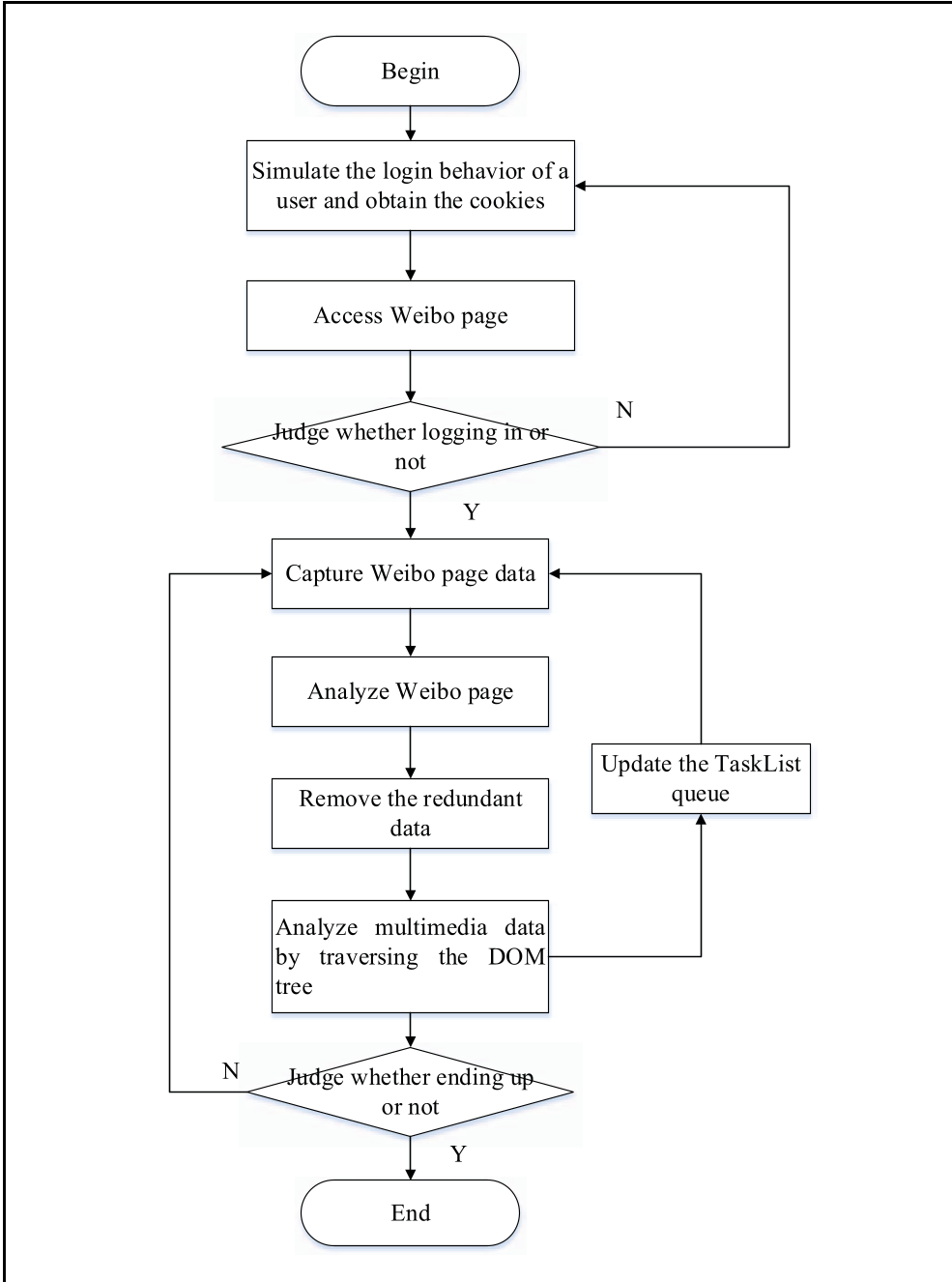 Fig.1: The algorithmic flow from URL input to categorized multimedia output.
Deep Dive: The Weibo Case Study
The paper provides a detailed breakdown of how this applies to Sina Weibo. By simulating a logged-in user through session cookies, the system parses the DOM tree to find specific classes:
WB_detail: The container for the tweet content.suda-uatrack: A proprietary attribute where the presence of the stringvideooraudioacts as a definitive tag for the media type.
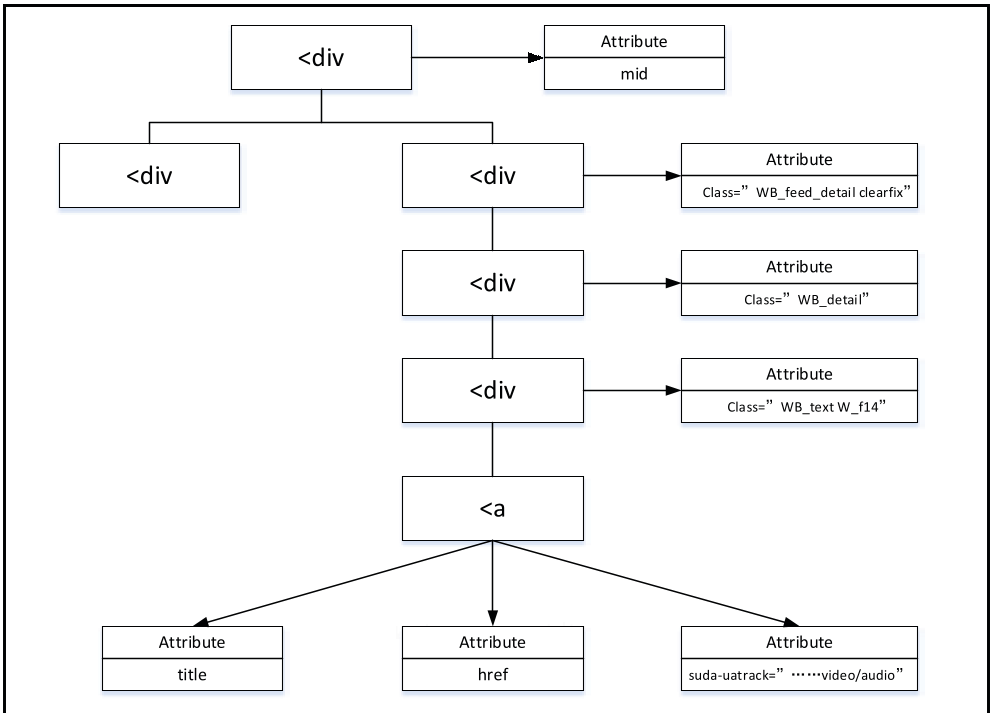 Fig.2: Example of attribute-based identification used to differentiate video from audio in a live tweet.
Critical Analysis & Future Outlook
The strength of this work lies in its simplicity and scalability. By operating at the tag level, the recognition happens nearly in real-time, providing a high-speed pre-processing layer before expensive Deep Learning models are applied.
However, there are limitations:
- Dynamic Content: Modern SPAs (Single Page Applications) that use React or Vue often render tags dynamically, potentially requiring a headless browser (like Puppeteer/Selenium) which isn't fully addressed here.
- Structural Drift: Social networks frequently update their HTML class names (obfuscation) to prevent scraping, which would require constant updates to the recognition rules.
Future Work: The authors suggest moving toward streaming protocol analysis (RTP/RTSP), which would allow for media recognition even before the full webpage is rendered, a promising direction for real-time monitoring systems.
Conclusion
This paper serves as a vital reminder that in the age of AI, structural metadata remains king. Before we analyze what is in a video, we must first master the art of efficiently finding the video within the digital haystack of the social web.