
LDL: Bridging Spectral Theory and Local Dynamics for Robust Community Discovery
Novel social network community discovery method combined local distance with node rank optimization function
This paper introduces Local Distance Laplace (LDL), a novel community discovery algorithm that integrates Laplace matrix decomposition with a local distance-based community model. By leveraging a Node Rank Optimization (NRO) function to select optimal structures, LDL achieves SOTA performance across diverse social network benchmarks.
TL;DR
The Local Distance Laplace (LDL) algorithm tackles the long-standing challenges of node bias and pre-defined community counts in social network analysis. By combining Laplace matrix decomposition with a specific Node Rank Optimization (NRO) function, it outperforms contemporary SOTA methods by ~7%, offering a multi-scale approach that adapts to the topological complexity of real-world datasets.
The "Blind Spots" of Traditional Graph Mining
Community discovery is the backbone of social network analysis, yet two critical issues persist in most algorithms:
- Node Bias: In many networks, nodes with high degrees (many neighbors) are mistakenly treated as central nodes, ignoring the intrinsic "self-transfer" of information.
- The Pre-parameter Trap: Most clustering methods require us to tell the model how many communities exist (the value of K) before the search begins—an impossible task for dynamic, real-world data.
The authors of LDL argue that by not accounting for the normalization of these influences, current models fail to extract the "true" manifold of the social graph.
Methodology: The LDL Framework
The core of LDL lies in its two-pronged attack on graph features: Spectral Representation and Local Distance Optimization.
1. Laplace Matrix Decomposition
Instead of using a raw Adjacency Matrix (), LDL utilizes a Normalized Laplace Symmetric Matrix (): This step effectively "levels the playing field," ensuring that a node's influence is relative to its degree rather than just its raw count of connections.
2. Local Distance & Score Function
LDL calculates the tightness of a community using specific matrix norms to define Internal Distance () and External Distance (). The final score balances these distances, weighted by the community size to prevent small, noisy clusters from skewing the results.
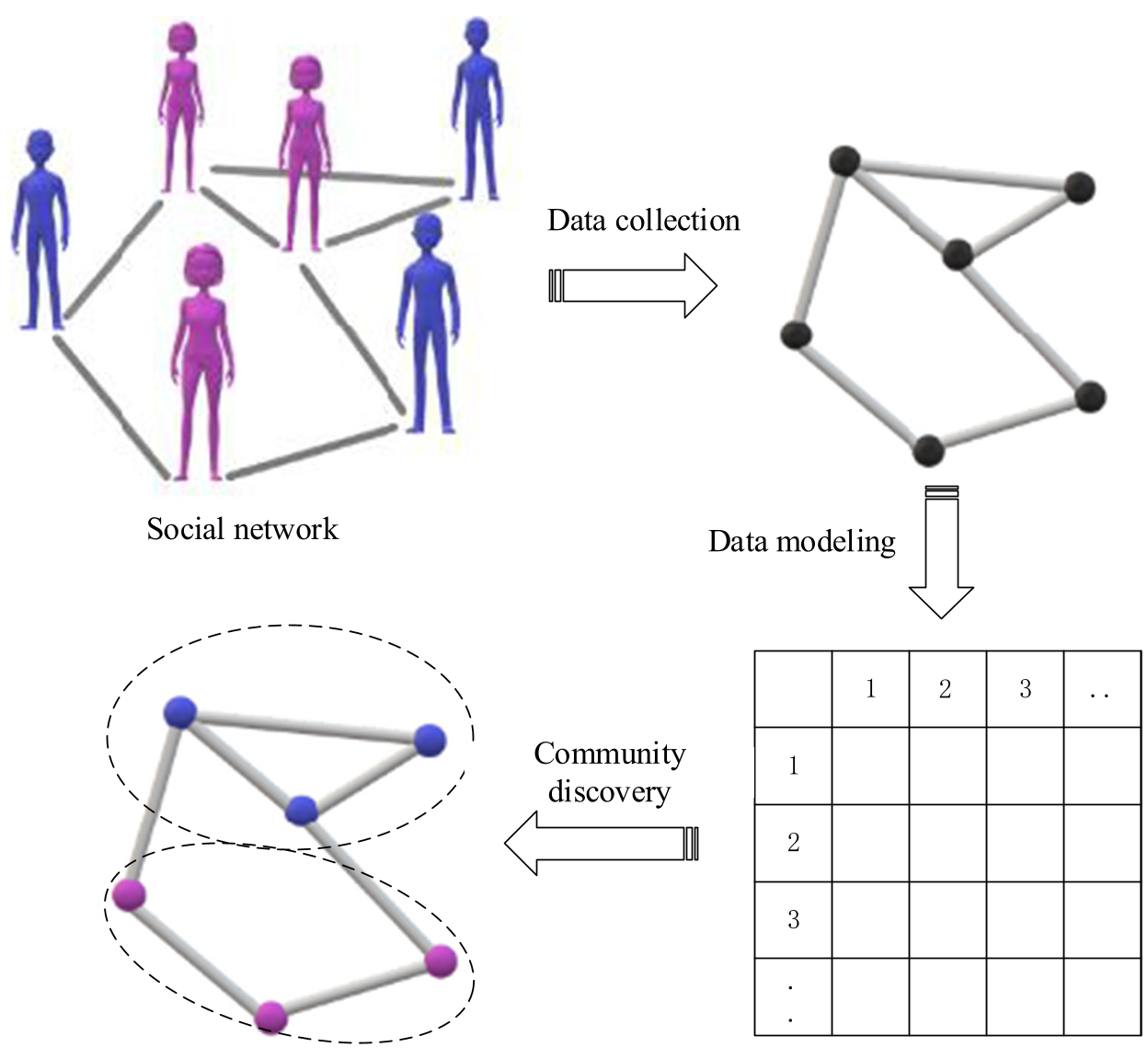 Figure 1: The Iterative Flow of the LDL Algorithm.
3. Node Rank Optimization (NRO)
To select the "best" partition, the authors introduced the NRO function. It acts as a filter that is stronger than the Weak Radicchi Criterion but more flexible than the Strong version, ensuring that each node's association with its own community is statistically more significant than its association with the exterior.
Experimental Validation
The paper rigorously tests LDL against 7 SOTA methods (including CoVeC, JNMF, and EADP) across 11 datasets ranging from the small Karate Club (34 nodes) to the large Hep_th collaboration network (8,361 nodes).
Key Performance Insights:
- Accuracy: LDL consistently shows a higher Jaccard Coefficient and Rand Index, signifying that its partitions align closely with ground-truth labels.
- Consistency: Even as the probability of "external edges" () increases (making community structures fuzzy), LDL maintains a higher modularity score compared to divisive or label propagation methods.
- Multi-Scale Visualization: The algorithm successfully captures the hierarchical nature of networks, as seen in the Power Grid analysis below.
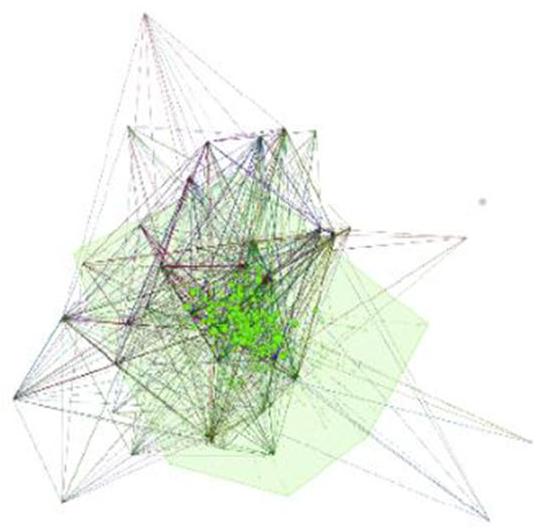 Figure 2: The step-by-step split of the Power Grid network into nine distinct communities.
Critical Insight & Future Work
The true value of LDL is its Inductive Bias toward local connectivity patterns within a spectral framework. While spectral methods often struggle with scalability, LDL’s focus on local distances keeps the computation manageable for medium-to-large graphs.
However, the authors acknowledge a limitation: the current model is static. The next frontier in this research direction is Dynamic Community Discovery—adapting LDL to handle edges that vanish or appear in real-time social streams.
Conclusion
LDL represents a sophisticated blend of matrix factorization and local heuristics. By solving the node bias problem through Laplace normalization and eliminating the need for pre-defined parameters, it sets a new benchmark for robust community discovery in the era of massive social data.