
Simulating the Human Bond: A Multi-Dimensional Trust Computing System for Social Networks
A Novel Trust Computing System for Social Networks
This paper introduces a holistic Trust Computing System designed to quantify trust magnitude between directly connected individuals in social networks. By integrating profile similarity, information reliability, and social opinions, the system produces a unified trust score ranging from 0 to 1.
TL;DR
Trust is the "invisible glue" of social interactions, yet it remains notoriously difficult to quantify. This paper moves beyond simple star-ratings to propose a Trust Computing System that simulates trust between individuals by synthesizing who they are (profiles), what they say (reliability), and what others think (reputation). It transforms qualitative human intuition into a quantitative score [0, 1].
Background & Motivation: Beyond the "Rating"
In the digital age, social networks are more than just friend lists; they are the infrastructure for e-commerce, P2P lending, and information exchange. Previous researchers focused on Trust Inference—calculating if person A can trust person C through a mutual friend B. However, the foundational question remained: How do we measure the base trust between A and B in the first place?
The authors argue that current systems are too shallow. Relying only on historical ratings ignores the psychological nuances of Homophily (we trust people like us) and the technical reality of Information Theory (we trust those who send consistent, reliable data).
Methodology: The Three Pillars of Trust
The system architecture is divided into three distinct components that feed into a final weighted formula.
1. Profile Similarity (The "Homophily" Factor)
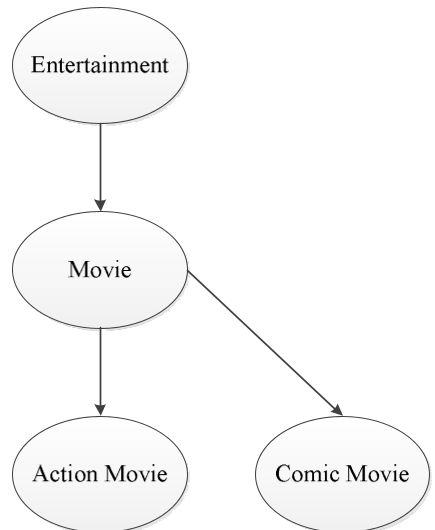
Using the psychological principle that "birds of a feather flock together," the system compares user profiles. It doesn't just look for exact matches but uses Ontologies (like WordNet) to find semantic overlaps. For example, if User A likes "Action Movies" and User B likes "Comic Movies," the system identifies their common ancestor "Movie" in the ontology tree to calculate a similarity score.
2. Information Reliability (The "Entropy" Factor)
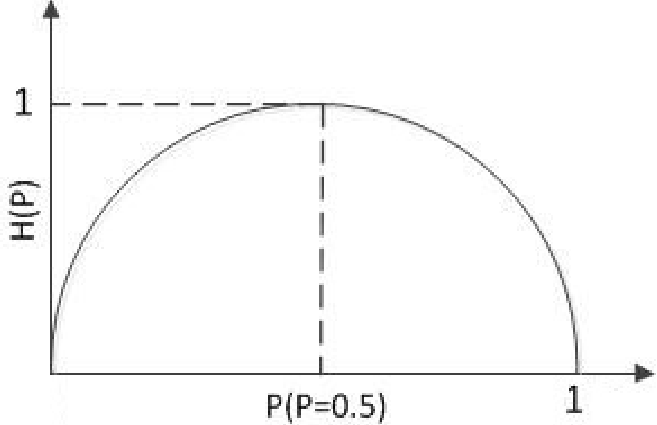
Communication is treated as a binary stream: Reliable vs. Unreliable. Drawing from Information Theory, the authors use Entropy to gauge trustworthiness.
- If a user sends a mix of truth and spam (P approaches 0.5), entropy is high, and trust is low.
- Trust is only granted when the probability of reliable information () is significantly higher than 0.5.
3. Social Opinions (The "Reputation" Factor)
The system incorporates the Dirichlet Reputation System, which allows for multi-dimensional ratings. It aggregates the opinions of mutual friends to adjust the trust magnitude, ensuring the system isn't just an isolated judgment but a socially-aware one.
Integration: The Final Trust Score
The definitive TrustScore is a weighted sum of these three components: This formula respects the asymmetry of trust: the trust A has for B is not necessarily equal to the trust B has for A.
Experimental Validation
The authors tested the system using real-world profile data and simulated communication (legitimate emails vs. spam).
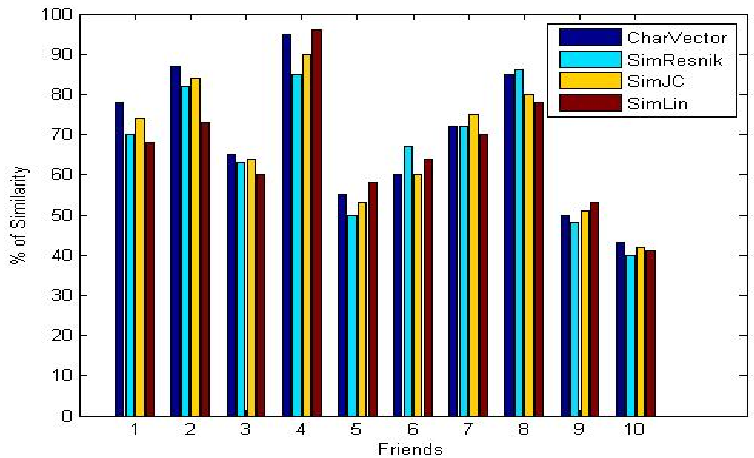
- Profile Test: Evaluated 10 different friends using four semantic algorithms (CharVector, Resnik, J&C, Lin), showing distinct "clusters" of similarity.
- Reliability Test: Verified that users with higher "legitimate email" ratios received exponentially better trust scores.
- Final Score: The combined results (Figure 6) provide a granular view of social ties that aligns with human expectations.
Critical Insight & Conclusion
This paper is a pioneer in treating trust as a computable phenomenon rather than a static attribute. Its strength lies in its modularity—one could swap the "Profile Similarity" module for a modern LLM-based embedder without breaking the underlying framework.
Limitations: The model assumes that profiles and communication data are readily accessible, which raises significant privacy concerns in modern social network contexts.
Future Outlook: The proposed "Trust-Base Score" (using only profile and reputation) is particularly exciting for Cold-Start problems in social systems, helping predict trust between entities that have never interacted before.