
SNAVH: Leveraging Social Graph Centrality for Smarter Vertical Handover
A novel vertical handover scheme for diminution in social network traffic
The paper introduces SNAVH (Social-Network-Assisted Vertical Handover), a novel handover scheme for WLAN-cellular integrated networks. It utilizes graph centrality measures from Online Social Networks (OSNs) to prioritize the admission of socially well-connected users to WLAN hotspots, significantly reducing global social network traffic.
TL;DR
SNAVH (Social-Network-Assisted Vertical Handover) is a pioneering approach that merges social network theory with wireless telecommunications. By calculating a Social Importance Metric (SIM) using graph centrality, the system prioritizes WLAN access for users with strong social ties. This results in significant reductions in global network traffic via localized data dissemination without substantially sacrificing overall network utilization.
From Signal Strength to Social Significance
Historically, the decision to switch your smartphone from a cellular data network to a local WiFi hotspot (Vertical Handover) has been a "blind" process. The network cares about your Received Signal Strength (RSS), your speed, and the local congestion. However, it knows nothing about what you are doing or who you are connected to.
The authors of this paper identify a missed opportunity: Localized Data Proxying. If a group of friends is at the same conference or campus, the data they share on platforms like Facebook or Twitter can be distributed locally through the WiFi Access Point (AP) rather than clogging the global internet backbone. The challenge is ensuring the "right" (i.e., most connected) people get onto the WiFi first.
The Methodology: Quantifying "Social Importance"
The core of SNAVH lies in translating social relationships into a mathematical probability for network admission. The paper employs three pillars of graph theory:
- Degree Centrality: Simply put, how many friends do you have? More friends locally mean more potential for local data sharing.
- Betweenness Centrality: Does the user act as a "bridge" between different social clusters?
- Eigenvector Centrality: Are you connected to other important people?
The Social Importance Metric (SIM)
These measures are normalized using a sigmoid function and combined into the SIM (): This value serves directly as the Probability of Admission (). If your social value is high, you are much more likely to be granted access to the WLAN when you enter its range.
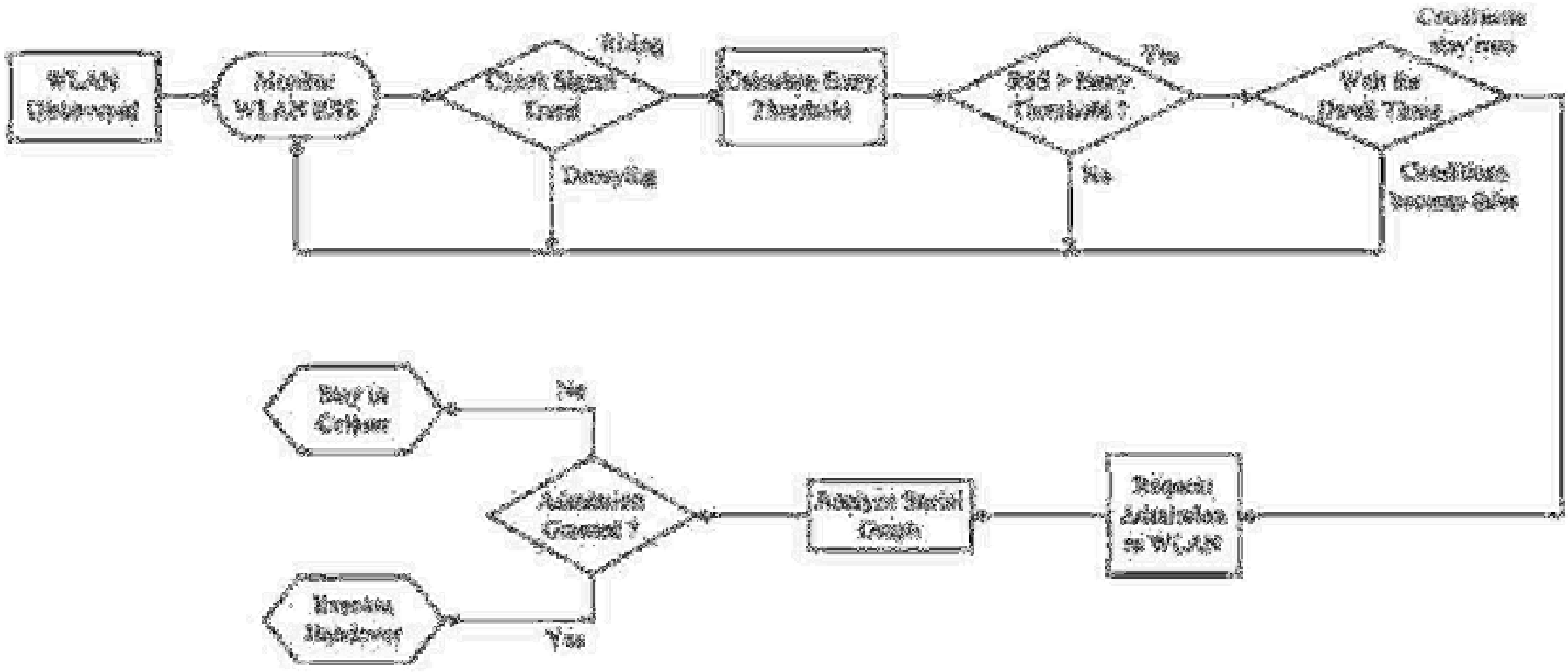 Figure 1: The SNAVH decision pipeline combining physical layer checks with social metrics.
Experimental Evidence
The researchers tested SNAVH using real-world data from the IMC’07 Orkut dataset, involving over 3 million users.
Does it actually reduce traffic?
Yes. By acting as an OSN proxy, the WiFi AP can fulfill data requests locally. The simulations showed a consistent 4-5% reduction in total social network traffic volume, a gain that scales as the network density increases.
| No. of Users | Original Traffic (GB) | Reduced Traffic (GB) |
|---|---|---|
| 200 | 456.67 | 440.55 |
| 500 | 1436.23 | 1361.55 |
The Trade-off: User Admission
One might fear that "Social Admission" would leave too many users on the slower cellular network. However, the results show that the decrease in admitted users is less than 10% compared to traditional "WLAN-First" schemes, meaning the network remains efficiently utilized while the traffic quality improves.
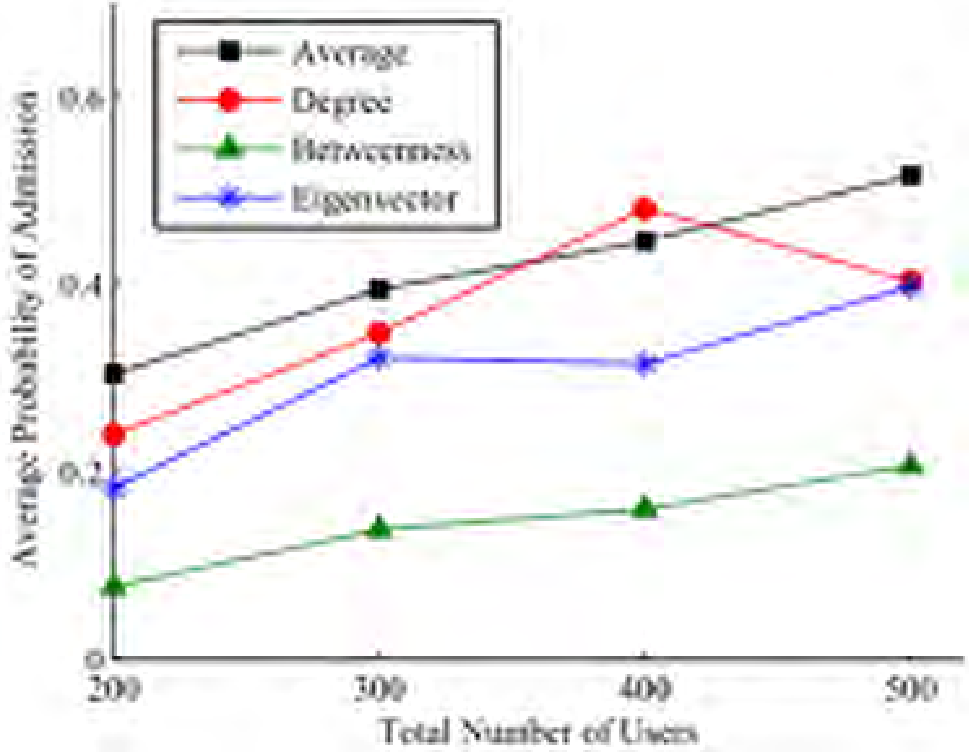 Figure 2: Admission probability trends as a function of total user density.
Critical Analysis & Future Outlook
SNAVH represents a paradigm shift toward Application-Aware Networking.
Strengths:
- Physical-Social Fusion: It doesn't ignore traditional physics (RSS and Dwell Timers are still required) but enhances them with logical context.
- Infrastructure Efficiency: It turns standard APs into "Social Proxies," reducing the burden on core internet infrastructure.
Limitations:
- Privacy Concerns: The model assumes the AAA server/AP proxy has access to the user's social graph, which raises significant privacy and data sovereignty questions in a modern GDPR/CCPA context.
- Graph Sparsity: As the authors note, this only works in "dense" environments like campuses or offices. In a public city-wide park, the lack of edges makes the SIM less effective.
Conclusion: SNAVH paves the way for a future where our networks understand our human connections. By prioritizing the most "socially active" nodes, we can build wireless systems that are not just faster, but more intelligent.