
Nowhere to Hide: How Navigational Cues Turn Social Networks into Tracking Maps
Nowhere to Hide: Navigating around Privacy in Online Social Networks
The paper introduces a novel "navigation privacy attack" on Online Social Networks (OSNs) like Facebook and Google+. It demonstrates that an adversary can locate a target user by crawling public social links and leveraging publicly visible attributes (e.g., location, alma mater) as navigational cues, even if the target has opted out of central directories.
TL;DR
Think you're safe from online stalkers because you deleted yourself from the search directory or use a pseudonym? Think again. This paper by researchers at EPFL reveals a "navigation privacy attack" that finds targets by jumping from friend to friend. By exploiting your friends' public data and the "small-world" nature of OSNs, an attacker can find you among 1 billion people by crawling only a few hundred profiles.
Background: The Illusion of the Private Profile
Historically, privacy in Online Social Networks (OSNs) was viewed as a binary: either your profile is public/searchable, or it's not. However, the authors point out a critical structural flaw. Even if User A hides their profile from the central directory, they still appear in User B’s friend list. If User B’s friend list is public, User A remains part of the publicly reachable subgraph.
The core insight of this paper is that social networks are not just small (the "six degrees of separation"), but they are navigable. Because we tend to be friends with people near us or who went to the same school (homophily), these attributes act as "scents" or "cues" that an algorithm can follow.
Methodology: The TargetedCrawler
The authors treat finding a person as a pathfinding problem in a graph, implementing the TargetedCrawler based on the A* search algorithm.
1. The Heuristic Function
The secret sauce is the cost function . The "remaining distance" estimates how far a current node is from target based on attributes.
- Geographic Scent: Initially, the crawler prioritizes location. It jumps toward users in the same continent, then country, then city.
- Attribute Scent: Once the crawler hits the target's city, it switches to "fine-grained" attributes like Workplace, Education, or Last Name to bridge the final gap.

2. Implementation Reality
The researchers built custom crawlers for Facebook and Google+. They bypassed limits by intercepting Ajax/JSON requests used for "infinite scrolling" in friend lists, allowing them to map out the network efficiently without relying on restricted APIs.
Experimental Battleground: Facebook vs. Google+
The study involved 200 targets on each platform across 42 countries.
Key Findings:
- High Success Rate: 66.5% of Facebook targets were found.
- Efficiency: The median number of nodes crawled was ~380 for Facebook and ~291 for Google+. In a network of billions, this is a microscopic fraction.
- The Geographic "Fast Lane": Reaching the target's city is incredibly easy. In half the cases, it took only 8-13 jumps to arrive at the correct city.
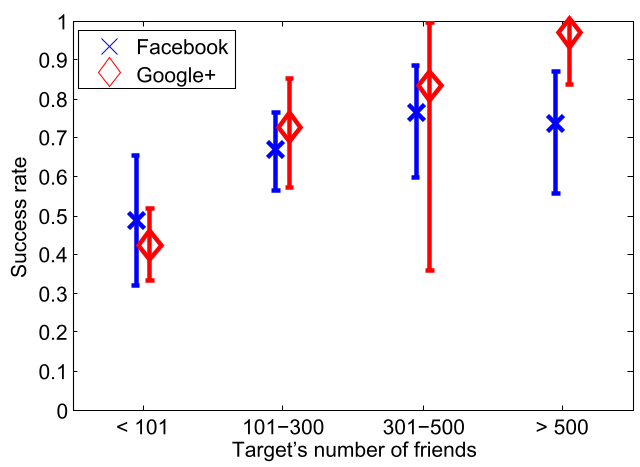 Fig 1: The success rate remains high for small-to-midsize cities but drops in massive metropolises (like Tokyo or NY) where the "crowd" is genuinely larger.
Why the Attack Succeeds
The attack succeeds because of Interdependent Privacy. Your privacy is not just in your hands; it’s in the hands of your "weakest" (most public) friends. Even if you are cautious, a "hub" friend (someone with thousands of public friends) acts as a lighthouse for the attacker.
The study found that the shortest path discovered by the crawler was typically 9-11 hops on Facebook—longer than the theoretical 4.7 average distance, but short enough to be traversed in a few hours of automated clicking.
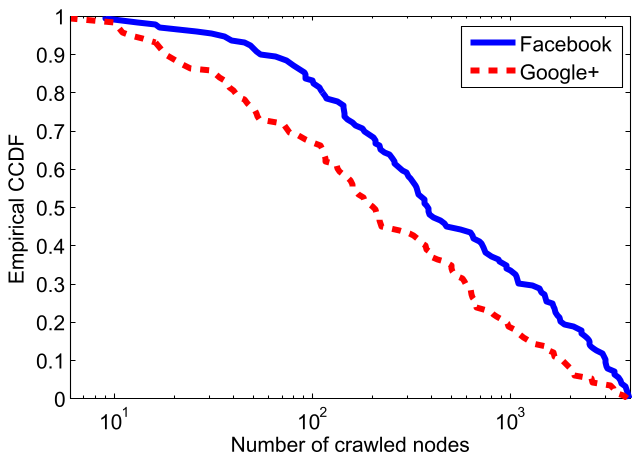 Fig 2: As the crawler gets closer to the target (hops 3, 2, 1), the utility of specific attributes like 'Work' and 'Education' spikes, while 'City' dominates the early long-range navigation.
Critical Analysis & Conclusion
This work exposes a fundamental tension in OSN design: features intended to help friends find each other (public friend lists and searchable attributes) are the exact tools used for deanonymization.
Limitations:
- The City Size Threshold: The attack struggles in very large cities (1M+ population) because the search space within the city explodes, requiring more than the 4,000-node limit set by the authors.
- Modern API Changes: Since this paper's publication, many OSNs have significantly tightened "friend list" visibility and anti-scraping measures.
Final Takeaway:
Privacy is a collective responsibility. A single "public" friend can act as a gateway to your identity. The authors suggest that OSNs should implement multilateral privacy—where a link is only public if both parties agree to it. Until then, remember: in the social graph, there is truly nowhere to hide.