
DIMM: Quantifying Social Influence Through the Lens of Time and Sentiment
Object-based dynamic influence measurement model (DIMM) using social data (on facebook) Seoung-hyun Koh 1 • Yen-yoo You 2 • Do-sung Na 2
This paper introduces the Object-Based Dynamic Influence Measurement Model (DIMM), a novel framework for quantifying user influence on Facebook by analyzing time-series social data. The method uniquely combines structured metrics like response counts and unstructured data such as response time gaps and preference sentiment to determine influence direction and strength.
TL;DR
The Object-based Dynamic Influence Measurement Model (DIMM) moves beyond static follower counts to quantify how users truly affect one another on platforms like Facebook. By calculating the time gap between a post and its reaction, and weighting the "quality" of that reaction (Like vs. Share), DIMM provides a mathematical blueprint for identifying the real "trendsetters" in any social group.
The Problem: The "Million Follower" Fallacy
Most social network studies treat influence as a static property of a node—if you have many followers, you are influential. However, this ignores the temporal dimension:
- Directionality: Who reacted to whom first?
- Engagement Quality: Does a "Like" carry the same weight as a "Share"?
- Decay: Does a comment made 10 hours later indicate the same influence as one made in 10 seconds?
Current SOTA methods often fail to integrate these unstructured temporal and emotional data points into a single, cohesive metric.
Methodology: Putting Time on the Axis
The core innovation of DIMM is the User-Time Activity Matrix. Instead of a simple graph, the authors plot activities on a time axis relative to a specific "Object" (a topic or post).
1. Influence Direction (ID)
The direction is determined by the time gap (). If User B always reacts after User A within a short window, User A is the influencer. The lower the ID value, the higher the reliability of that influence direction.
2. Influence Strength (IS)
Strength is not just about the number of reactions, but the speed and type. A "Share" is weighted more heavily (value: 10) than a "Like" (value: 1), but this value is penalized if the reaction time is slow.
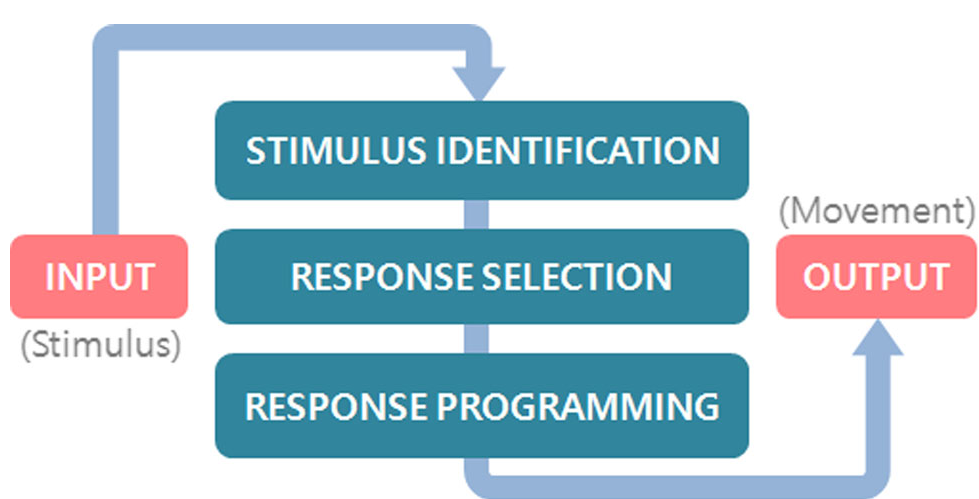 Figure: The conceptual framework distinguishing between direction and strength based on structured and unstructured data.
Experiments & Simulation Results
The authors simulated DIMM using actual Facebook interaction patterns across five users (A through E).
Mapping the Flow
By analyzing the matrix, the researchers could visualize the hierarchical flow of information. While User A was the primary source, they could quantify that User B’s influence on D was significantly weaker than A’s influence on B, largely due to increased response latency and fewer high-weight interaction types.
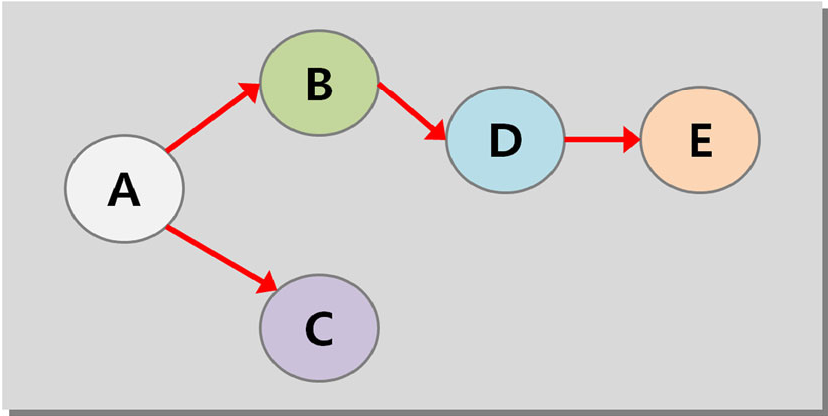 Figure: The resulting social graph showing quantified influence direction and strength.
Key Quantitative Findings:
- Inverse Relationship: There is a clear negative correlation between response time and the number of reaction activities.
- Reliability Gap: As the influence chain lengthens (A → B → D → E), the reliability (ID) drops significantly, from 0.15 (very high) to 8.33 (low).
Critical Insights & Conclusion
The DIMM model bridges the gap between sociology and data science. Its high technical value lies in the Operational Definition of unstructured data:
- Preference: Treating sentiment (positive/negative) as a vector that can reverse influence direction.
- Reaction Type: Assigning ordinal weights (1, 5, 10) to platform-specific behaviors.
Limitations & Future Work
While robust for single-object analysis, the model's complexity increases exponentially in multi-object environments. The authors aim to expand this into multi-dimensional networks, which will be crucial for modern "algorithmic" feeds where users interact with hundreds of objects simultaneously.
Takeaway for the Industry: For brands, "Who follows you" matters less than "Who reacts to you instantly." DIMM provides the math to find those high-velocity hubs.