
Beyond Generic Security: Tailoring Staff Profiling for the Healthcare Sector
Observational Measures for Effective Profiling of Healthcare Staffs' Security Practices
This paper introduces a comprehensive framework of observational measures for profiling healthcare staff security practices (HSPAMI). By synthesizing Norwegian health regulations, GDPR, and ISO standards, the authors propose a tailored set of metrics to detect insider threats and anomalous behaviors within medical environments.
TL;DR
In the healthcare sector, the human element is often the "weakest link" yet also the most critical for patient care. This paper proposes a comprehensive set of observational measures tailored specifically for healthcare staff. By moving away from generic IT monitoring and toward a regulation-based profiling system (HSPAMI), the authors provide a roadmap for detecting insider threats without hindering life-saving medical procedures.
The "Hospital Paradox": Security vs. Speed
In a standard office, access to sensitive data is rigid. In a hospital emergency room, rigidity can be fatal. This creates a unique paradox:
- The Motive: Healthcare data is high-value for hackers (Social Security numbers, medical histories).
- The Conflict: ICT systems are designed to share data, while medical ethics and the GDPR demand strict limitation.
- The "Erratic" Factor: Doctors often need to bypass protocols (self-authorization) during crises, making traditional anomaly detection (which flags unusual access) prone to high false-positive rates.
The authors argue that existing security models fail because they don't understand the context of healthcare work.
Methodology: Mapping Law to Logic
The researchers didn't just invent new rules; they reverse-engineered existing standards like ISO 27799, HIPAA, and the Norwegian Code of Conduct.
They followed a structured transformation:
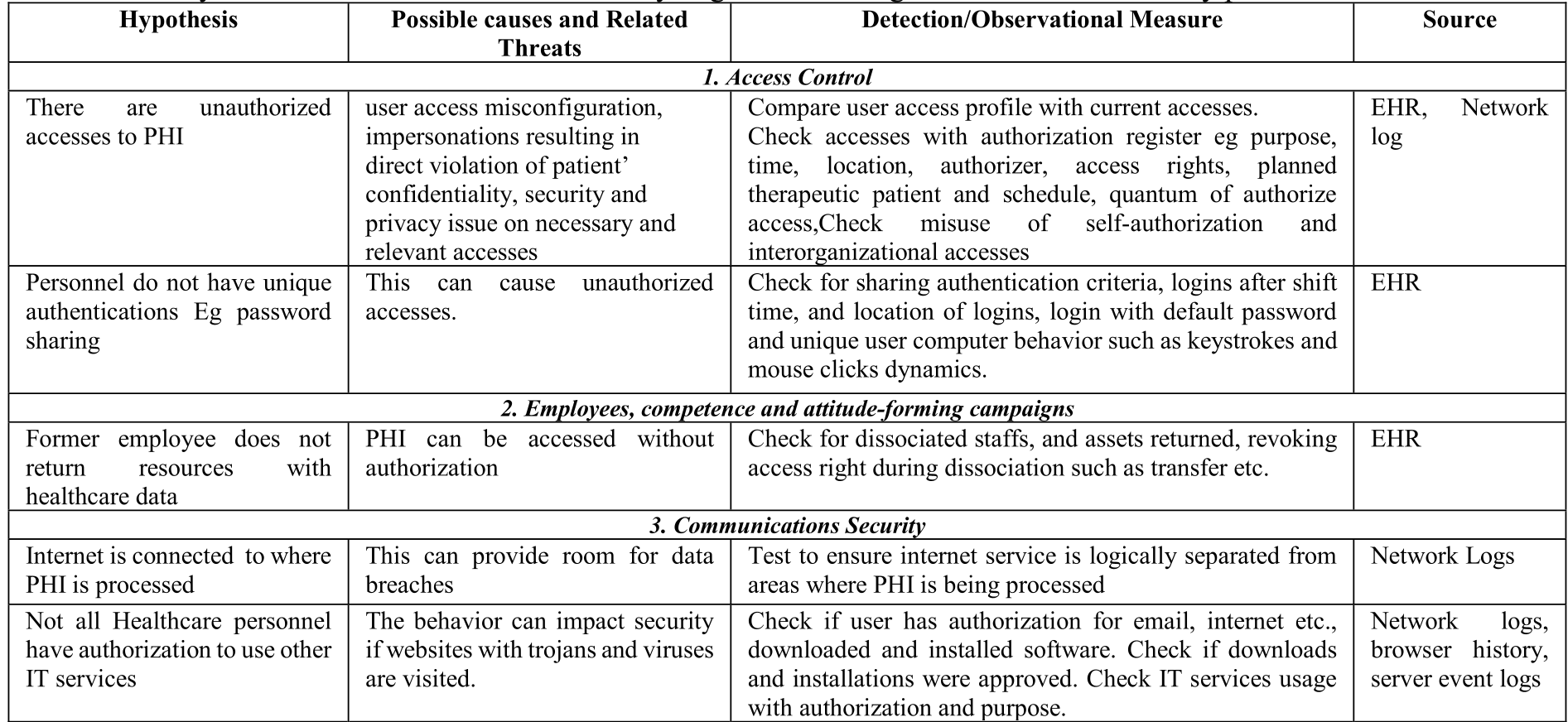
- Requirement: "Only authorized users access PHI for official purposes."
- Alternative Hypothesis: "There are unauthorized or non-therapeutic accesses occurring."
- Observational Measure: Compare the user's access profile (time, location, role) against the patient's schedule and the "self-authorization" register.
Key Framework Components
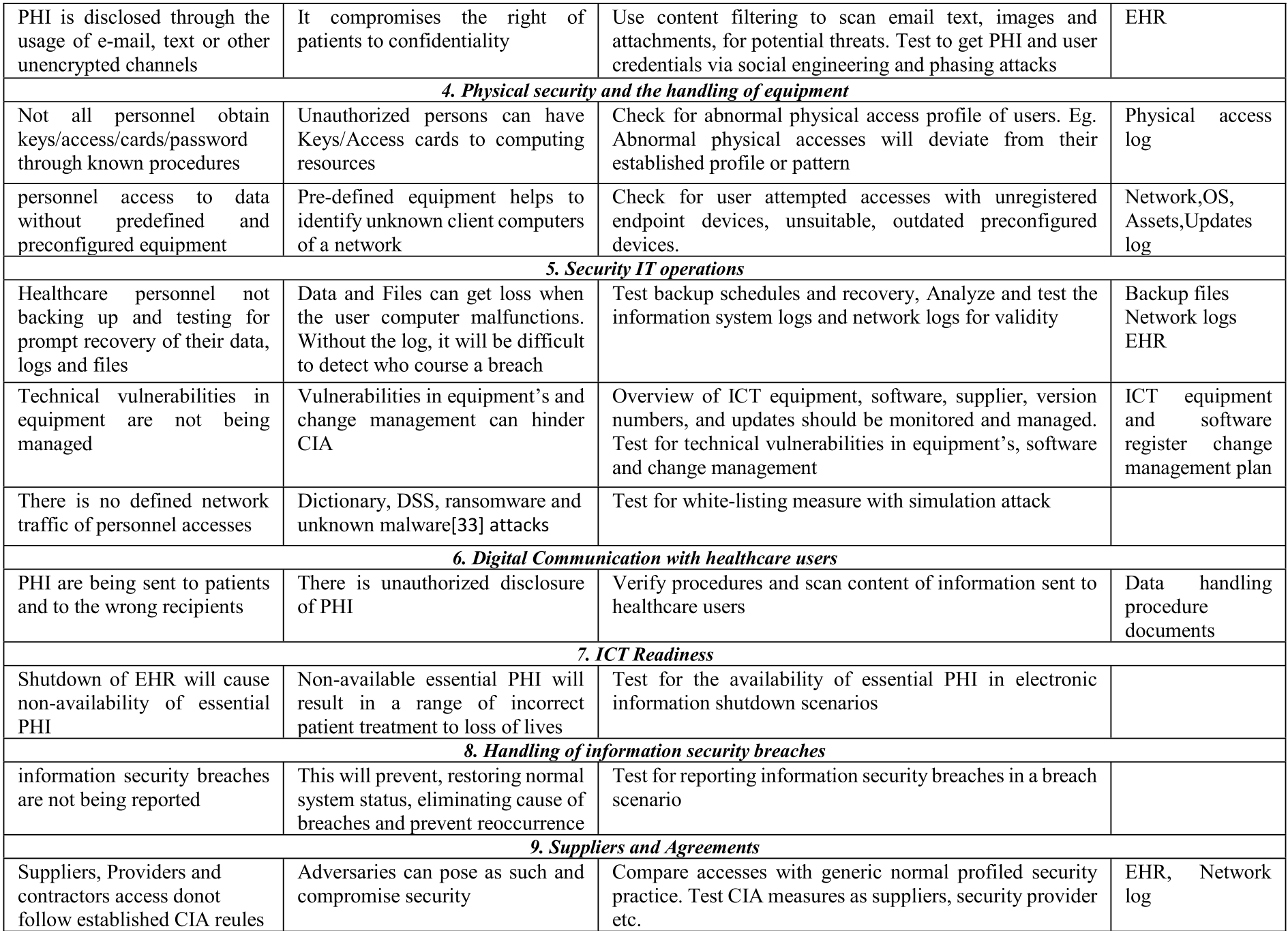
The paper identifies nine critical domains for monitoring, as summarized in the following table:
Core Innovation: The "Self-Authorization" Variable
One of the most significant contributions of this work is the emphasis on Self-Authorization and Inter-organizational Access.
- Self-Authorization: Most systems flag a user accessing a record they aren't assigned to. However, the specialized "Code of Conduct" allows this if documented for therapeutic reasons.
- The HSPAMI Insight: By including these "Emergency" flags in the profiling algorithm, security systems can reduce the friction for doctors while still creating an audit trail that can be verified post-incident.
Critical Results and Data Sources
The paper highlights that no single data source is sufficient. To build an accurate behavioral profile, an integrated view is required:
- EHR Logs: For tracking what medical data was viewed.
- Network Logs: For identifying where the data went.
- Physical Access Logs: To ensure the person at the terminal is biologically where they claim to be.
- ICT Readiness: Testing if systems remain secure during electronic shutdowns or referral scenarios.
Critical Analysis & Conclusion
While the paper provides a robust theoretical foundation for HSPAMI (Healthcare Staff Security Practice Analysis, Modeling, and Incentivization), it acknowledges a major hurdle: Computational and Ethical Cost. Monitoring email content, keystrokes, and movement requires significant processing power and heavy-duty ethical clearance.
Takeaway
The shift from "Generic Security" to "Clinical-Context Security" is inevitable. For security professionals in healthcare, the lesson is clear: your AI is only as good as its understanding of the medical workflow. If your system can't distinguish between a "Snooping Nurse" and a "Life-Saving Doctor," it will eventually be ignored or disabled.
Future Outlook
The next step for this research is the empirical implementation of these measures using Machine Learning to see how well they perform against simulated phishing and unauthorized access attempts in a live (but controlled) environment.