
Deciphering Learner Behavior: Using EDM to Enhance e-Learning Personalization
Obtaining Knowledge Using Educational Data Mining
The paper presents a custom methodology for Educational Data Mining (EDM) integrated into the "Tesys" e-Learning platform. It utilizes the Expectation-Maximization (EM) clustering algorithm to group learners based on their testing behaviors and performance metrics to facilitate personalized pedagogical approaches.
Executive Summary
TL;DR: This paper introduces an integrated approach within the Tesys e-Learning platform to categorize students using the Expectation-Maximization (EM) algorithm. By transforming raw session logs into high-level behavioral attributes, the system successfully identifies four distinct learner archetypes, enabling more targeted pedagogical interventions.
Background Positioning: This research sits at the intersection of Educational Data Mining (EDM) and Learning Management Systems (LMS). It moves beyond simple logging toward "knowledge discovery," positioning itself as a foundation for adaptive educational systems.
Problem & Motivation: The "One-Size-Fits-All" Bottleneck
Contemporary online education often lacks the nuance of a physical classroom where a teacher can sense a student's struggle. The authors identify two primary pain points:
- Data Fragmentation: User activity is often captured in semi-structured logs (like Log4j) that are difficult to analyze for pedagogical insights.
- Lack of Personalization: Without a systematic way to classify learners, platforms cannot adapt to the varying speeds and knowledge levels of a diverse student body.
The authors' insight was to treat student "activity sequences"—specifically testing behavior—as a multi-dimensional feature space that can be partitioned into meaningful clusters.
Methodology: From Raw Logs to Behavioral Clusters
The core of the methodology is a sophisticated data pipeline that converts noise into knowledge.
1. The Data Capture Layer
The Tesys platform captures data through two main channels:
- Log4j Utilities: Primarily for system events and security.
- Activity Tables: A granular SQL-based tracker that records every student action with specific tags (e.g.,
STUDENT_LOGGED,FINISH_TEST).
2. Feature Engineering
The authors identified 6 "Domain Knowledge" attributes that define a learner's profile:
- Positive Count & Correct Percent: Measures of raw accuracy.
- Total & Average Tries: Measures of persistence and difficulty.
- Total & Average Question Time: Measures of cognitive speed.
3. Clustering Logic
To handle the uncertainty in student behavior, the authors utilized the EM (Expectation-Maximization) Algorithm. Unlike hard clustering (like K-means), EM provides a probabilistic framework, which is better suited for the "fuzzy" nature of learning proficiencies.
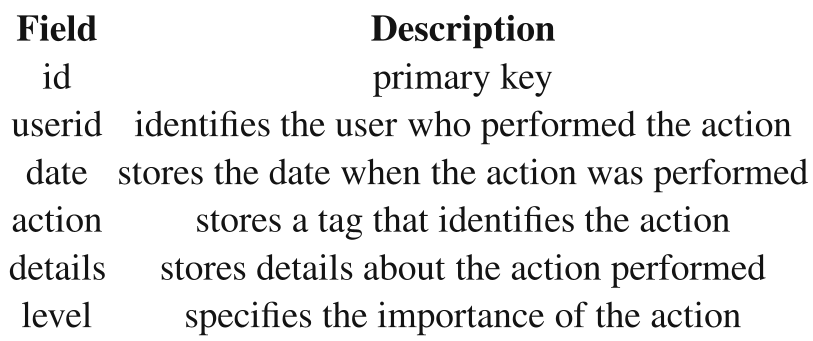 Figure 1: The structured activity table used to derive behavioral features.
Experiments & Results: Mapping the Student Landscape
After pruning "noisy" data (students with near-zero activity), 268 instances were analyzed. The EM algorithm converged on four clusters:
- Cluster 0 (15%): Emerging learners.
- Cluster 1 (31%): Steady performers.
- Cluster 2 (42%): The majority group (Average).
- Cluster 3 (12%): High-efficiency/At-risk outliers (depending on time/accuracy correlation).
The model achieved a log-likelihood of -3.75, suggesting a strong fit for the data. This indicates that the chosen features (Time, Accuracy, Tries) are indeed the "DNA" of student performance within the Tesys environment.
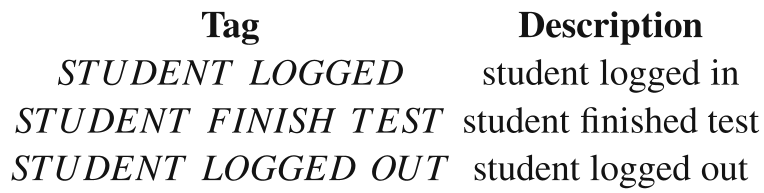 Figure 2: Event tags that facilitate the transition from raw clicks to behavioral insights.
Critical Analysis & Conclusion
Takeaway
The study proves that unsupervised learning can effectively "label" students without manual intervention. This labeling is the first step toward Automated Pedagogical Adaptation—where the system can automatically offer more resources to Cluster 0 or advanced challenges to Cluster 3.
Limitations
- Data Granularity: Using nominal values (VF, F, A, M, VM) simplifies the model but might lose the nuance of continuous data.
- Dynamic Evolution: The current model is a "snapshot." A student's cluster should ideally evolve as the semester progresses (Temporal EDM).
Future Work
The authors suggest that these clusters could eventually serve as labels for Decision Tree learners, creating explicit "rules" (e.g., If Time is High and Accuracy is Low, then recommend Chapter X) that courses managers can easily interpret.
Senior Editor's Note: This paper serves as a classic example of transitionary AI in education—moving from simple record-keeping to algorithmic understanding. While modern LLMs are currently popular, the fundamental logic of behavioral clustering presented here remains essential for robust LMS analytics.