
Enhancing OLAP for Social Media: Tackling Missing Data and Reflexive Conversations
OLAP operators for social network analysis
This paper introduces five specialized OLAP operators (Null-Drilldown, Null-Rollup, Null-Select, FDrilldown, and FRollup) designed for social network analysis, specifically targeting Twitter data. The proposed "OLAP4Tweet" framework addresses unique constraints of social media data, such as missing values and reflexive relationships between tweets, enabling multi-level conversation analysis.
TL;DR
Analyzing social media through traditional Business Intelligence (BI) tools is often a "square peg in a round hole" scenario. This paper proposes a suite of extended OLAP operators specifically designed to handle the messy reality of Twitter: missing data and deep, nested conversation threads. By introducing "Null-aware" and "Reflexive-fact" operators, the authors enable sophisticated multi-level analysis without compromising the raw integrity of the data.
Problem & Motivation: The "Null" Reality of Social Media
While Data Warehousing has been the backbone of decision support for decades, it was built for the structured, complete worlds of finance and inventory. Social media data, however, is a different beast:
- The Sparsity Trap: Missing metadata (like location or precise user info) is the norm, not the exception. Traditional OLAP filters out "nulls," often losing the majority of the data.
- The Reflexive Paradox: In social networks, a "Fact" (a tweet) can link to another "Fact" (a reply). Conventional OLAP navigates dimensions (like Time or Place), but it lacks the mechanism to navigate through the facts themselves to trace a conversation's depth.
The authors' insight is that we shouldn't "fix" the data by guessing (imputation); we should fix the tools used to analyze it.
Methodology: Specialized Operators for Complex Networks
1. Handling Missing Data (The "Null-" Suite)
The authors extend Drilldown, Rollup, and Select with a tri-modal approach to missing values:
- All: The classic approach, including nulls as they are.
- AllNullLast: A UI-centric approach that pushes incomplete records to the bottom, ensuring the most useful data is seen first.
- Flexible: A smart logic where the system calculates the percentage of nulls at a specific level (e.g., Region). If it exceeds a user-defined threshold, the operator suggests an alternative level (e.g., City) that provides higher data density.
2. Navigating Conversations (The "F-" Suite)
To solve the "reflexive relationship" issue, the authors introduce FDrilldown and FRollup. Unlike standard operators that move through dimension hierarchies, these move through Fact Levels.
- FDrilldown: Moves from the root tweet of a thread down into the "leaf" replies (e.g., moving to Level 6 of a conversation).
- FRollup: Aggregates conversation pieces into higher-level topics or "start" tweets.
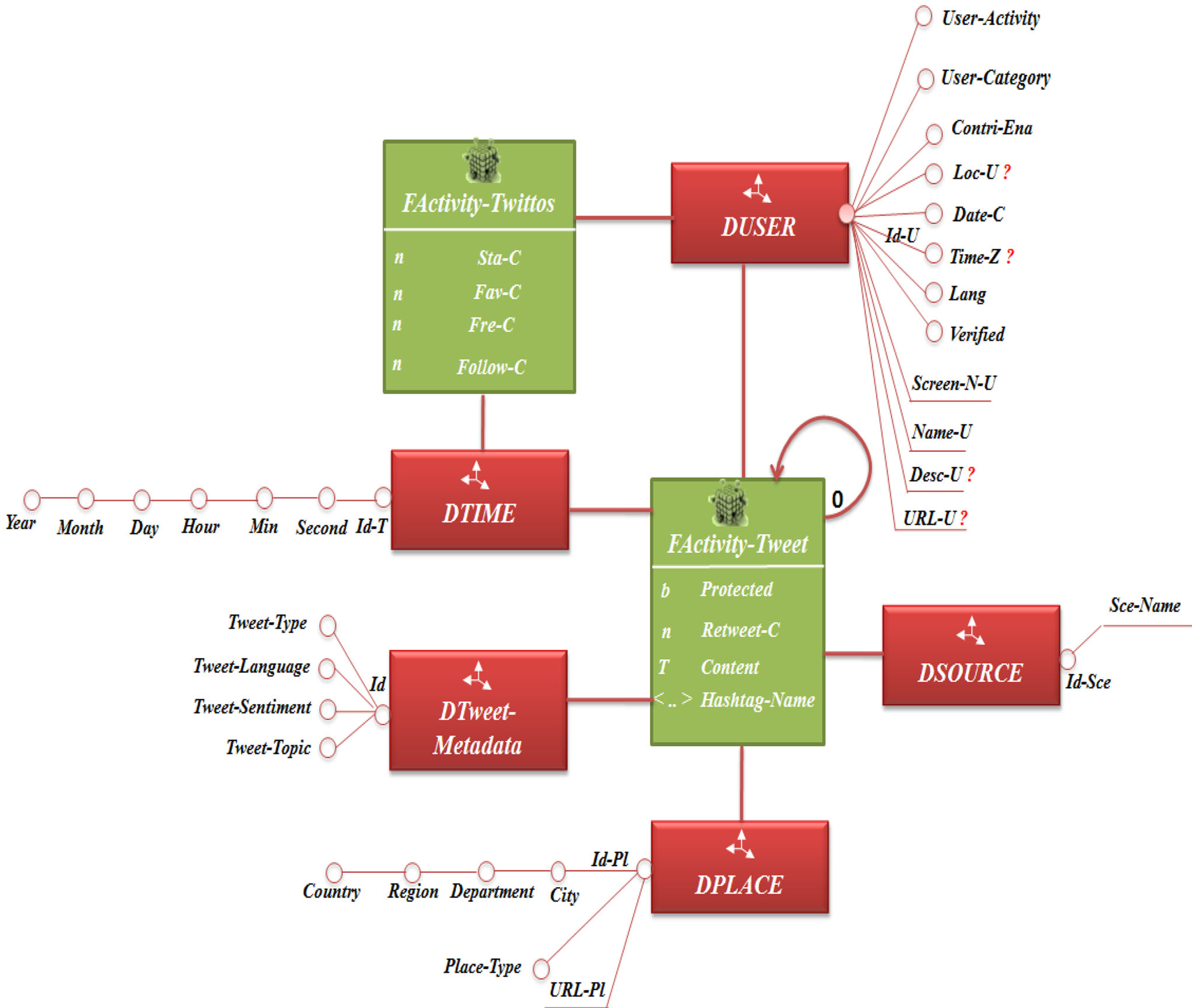 Figure 1: The "Tweet Constellation" R-OLAP model supporting reflexive fact relationships.
Experiments & Results: OLAP4Tweet in Action
The researchers built OLAP4Tweet, a Java and Oracle-based prototype. They tested it on a real-world crawl of ~72,000 tweets.
Key Performance Insights:
- Data Density: Using the "Flexible" operator for
Null-Drilldown, the system detected that Department and Region levels were 99% and 94% empty, respectively. By automatically pivoting to the City level, it provided actionable data with a much lower null rate. - Conversation Tracking: The F-operators allowed analysts to identify "intense conversations" by filtering for specific depths (e.g., threads longer than 5 replies), a task that would require complex, recursive SQL queries in a standard BI environment.
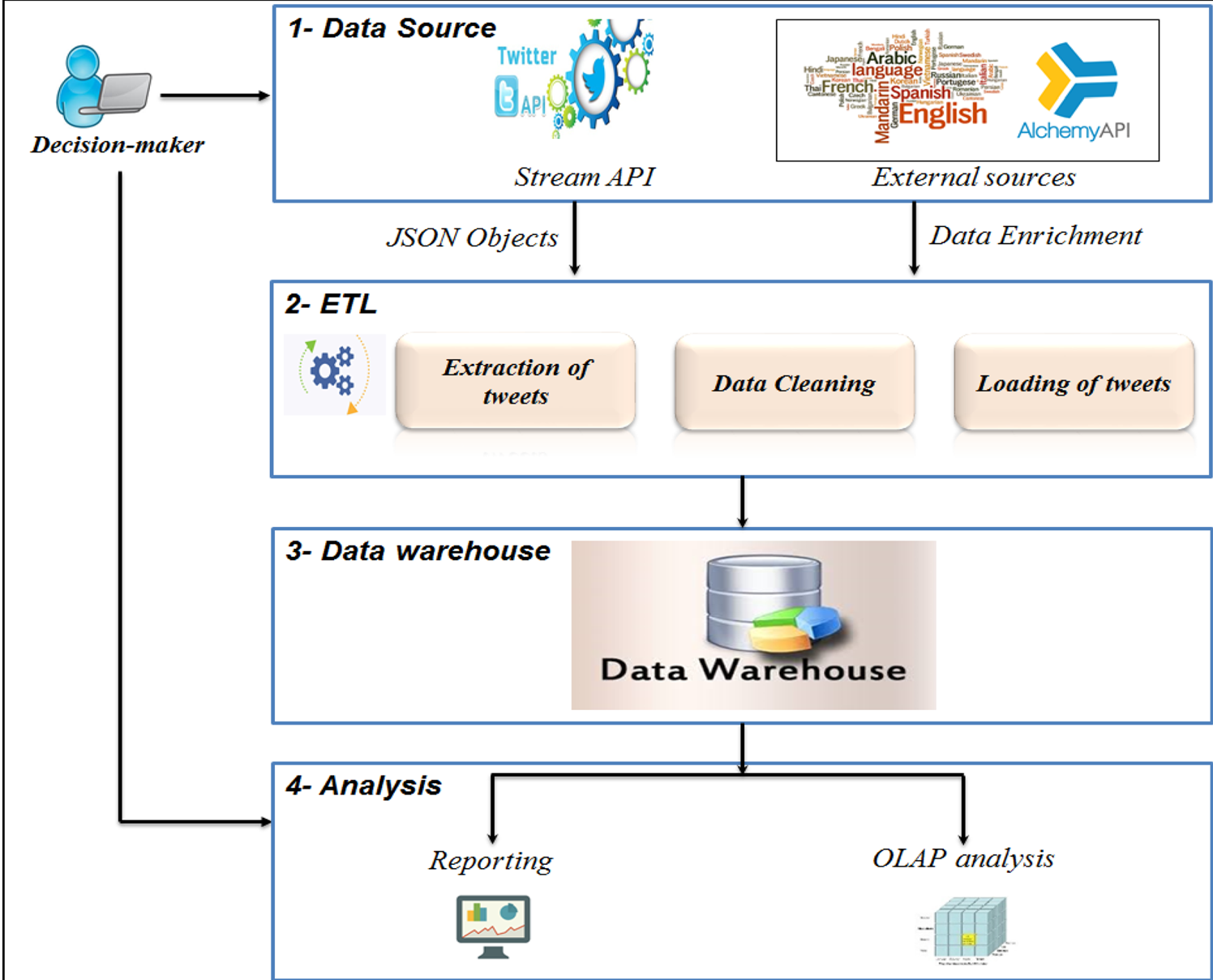 Figure 2: The OLAP4Tweet Prototype interface showing automated Null-option detection.
Critical Analysis & Conclusion
This paper provides a pragmatic bridge between the rigid world of Data Warehousing and the chaotic world of Social Media.
The Takeaway: By embedding data-quality awareness directly into the algebraic definition of OLAP operators, the authors prevent "analytical distortion" caused by missing data.
Limitations:
- Complexity: While powerful, the "Flexible" option requires multiple SQL executions to check thresholds across different levels, which could impact latency on massive datasets.
- Schema Rigidity: The approach still assumes a Star/Constellation schema. Future work could explore how these operators behave in "Schema-on-read" environments like Data Lakes.
In conclusion, the FDrilldown and Null-Select operators represent a significant step toward making traditional BI toolsets relevant for the era of social-network storytelling.