
Empowering the "Silver Makers": Deciphering the Formation of an Older Adult-Led Makerspace
Studying the Formation of an Older Adult-Led Makerspace
This paper presents an ethnographic study on the formation of an older adult-led makerspace in an independent living community ("Nestern"). It documents how residents and staff negotiated the identity, resource allocation, and technological "on-ramps" for a space traditionally associated with younger, technical demographics.
TL;DR
While the "Maker Movement" often conjures images of Gen-Z engineers and 3D-printed gadgets, a new study from CHI '21 explores what happens when we let older adults drive the creation of these spaces. Researchers followed the residents of "Nestern" to understand how they navigate the tension between "high-tech" ambition and practical, community-oriented utility.
Background: Beyond the Savior Narrative
In Aging HCI, technology is frequently framed as a "solution" to the "problem" of physical or cognitive decline. This study breaks that mold by treating older adults as active architects of their own technological environments. It moves the focus from what they build to why they choose to build it—and why some choose to walk away.
The "Indeterminate Openness" Problem
One of the core insights of the paper is the paralyzing nature of a makerspace's "infinite potential." When told they could make "anything," many residents struggled to imagine any use for the space.
"I can't think of a thing... I don't know enough to imagine something." — Resident R7
The researchers observed that the community had to define "invisible constraints"—anchoring the space in familiar themes like sewing, jewelry making, and card making—to make the abstract concept of "making" tangible.
Methodology: On-Ramps and Hiding the Tech
To overcome the perceived "technophobia" of their peers, the planning committee utilized a strategy of Technological On-Ramps.
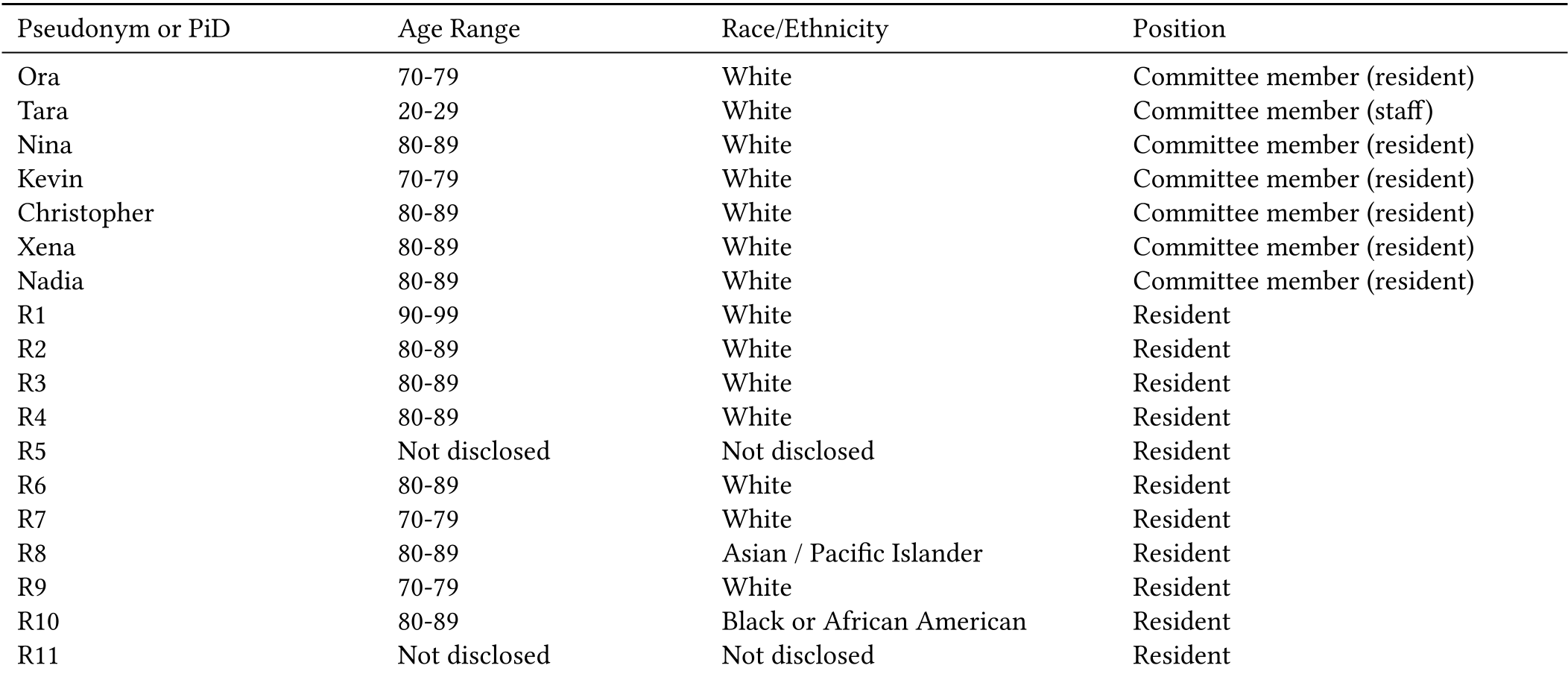 Table 1: The diverse resident and staff committee involved in the Nestern makerspace formation.
The committee made strategic decisions to lower the "barrier to entry":
- The "Hiding" Strategy: For sewing machines with complex touchscreens, they decided to place a sign on one saying "leave on straight stitch," effectively masking the digital complexity to make the tool approachable for those who just wanted to mend a pillowcase.
- The "Craft-First" Approach: Using button makers and programmable cutters (Cricut) for scrapbooking served as a gateway to more complex manufacturing processes.
Results: The "Return on Investment" (ROI) Mindset
Unlike younger hobbyists who might value "tinkering" for its own sake, the residents of Nestern applied a rigorous ROI lens to the makerspace.
- Financial Scrutiny: Residents compared the cost of a 3D printer ($5,000) to the cost of a new community bus or roof.
- Utility over Novelty: While 3D-printed figurines were seen as "frivolous," the idea of printing custom dentures or mending clothes for the infirm was seen as "meaningful."
- Downsizing Reality: The common maker trope of "making more stuff" clashed with the reality of aging in independent living—many residents were actively trying to get rid of possessions, not create more.
Deep Insight: Success is Not SOTA
The most profound takeaway is that for this population, success isn't about hitting SOTA (State-of-the-Art) technical milestones. Success is an "occupational" victory: giving a resident a reason to get out of bed, learn a new skill, and contribute to the community.
Limitations & Future Work
The study highlights that "making for all" is often coded as "youthful." Future research must investigate how to decouple "innovation" from "youth" to ensure older adults don't feel like they are just performing a high-tech version of "Home Ec."
Conclusion
The Nestern makerspace is a masterclass in inclusive design through negotiation. It proves that for a technology environment to be truly adopted by older adults, it must respect their histories, validate their skepticism, and provide clear paths to communal value.