
Empowering the Silent Majority: Bridging the Digital Divide via Argumentative Speech Interaction
Older adults interaction with broadcast debates
The paper introduces a novel application designed to bridge the digital divide for older adults by facilitating interaction with broadcast debates. By combining speech recognition with computational models of argument (AIFdb), the system allows users to engage with media in real-time without complex interfaces, achieving a low-barrier entry to social media engagement.
TL;DR
Researchers at the University of Dundee have developed a prototype that allows older adults to participate in broadcast debates using only their voice. By integrating Speech Recognition with the Argument Web, the system transforms verbal reactions into digital data, allowing a demographic often excluded from social media to see how their opinions stack up against the public—with zero complex menus required.
Background & Motivation: The Accessibility Gap
While the "Digital Native" generation expresses every thought via a tweet, a vast portion of the population—older adults—remains digitally disenfranchised. Despite 90% of UK adults having access to TV/Radio, their engagement with the social media conversations surrounding these broadcasts is disproportionately low.
The core problem isn't a lack of interest; it's the interaction barrier. Traditional social media requires logins, complex navigation, and text-heavy inputs. The authors identified a "common desire to interact" that is currently stifled by technology that doesn't align with the natural habits of older listeners, who often voice their opinions to the screen or to companions using Arguments from Experience.
Methodology: The "Zero-Command" Architecture
The proposed application moves away from traditional UI/UX. Instead of buttons, it uses the human voice as the primary driver. The architecture is divided into four distinct modules:
- ARGPlayer: This is the heart of the synchronization. It connects the live audio stream of a debate with segmented, concise sentences stored in the AIFdb (Argument Interchange Format database).
- SRSA Module: Using speech recognition and keyword spotting, it captures spontaneous verbalizations (e.g., "I disagree with that!") and classifies the sentiment.
- Synchronization: This module dynamically maps the user's spoken sentiment to the specific argument being discussed at that exact moment in the broadcast.
- Feedback Loop: It visualizes the user's stance alongside a "view of other listeners," providing a sense of social presence and validation.
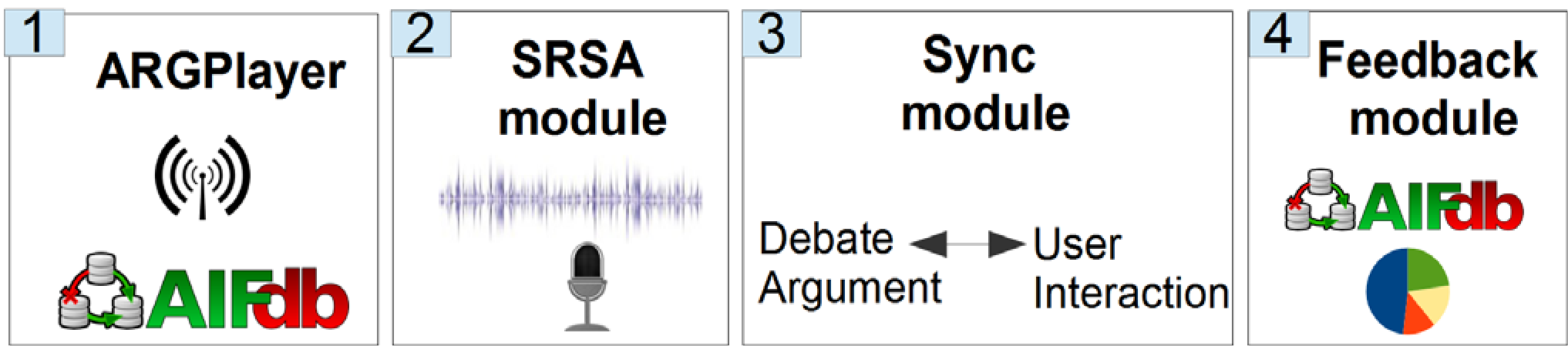 Figure 1: The system workflow—from audio synchronization to speech-driven feedback.
Experimental Insights: Validation of Social Inclusion
The team conducted a pilot study with older adults who regularly consume broadcast debates. The findings were revealing:
- The Power of "Others": Participants were highly motivated by seeing how their views compared to others. This social comparison served as a "tempting feature" that encouraged continued engagement.
- Simplification is Key: Segmenting long, complex debates into "concise sentences" significantly helped participants process and interact with the content.
- Frictionless Interaction: The user feedback was clear—"I do not want to login and browse hundreds of menus." The speech-first approach successfully bypassed the typical tech anxiety associated with new apps.
Critical Analysis & Looking Forward
While the vision is compelling, the authors candidly acknowledge a major technical hurdle: Speech recognition in noisy environments. Capturing unconstrained natural language from a living room environment remains a challenge for current SOTA models, and misclassifications could lead to user frustration.
Furthermore, while this paper focuses on the input (how they participate), the future of this tech lies in the output—potentially using audio feedback instead of screens to further lower the barrier for those with visual impairments.
Final Takeaway
This work represents a fundamental shift in Human-Centric Computing. By moving the complexity of "Argument Representation" to the backend and keeping the frontend as natural as a conversation, we can ensure that the "Silver Generation" is no longer a silent observer in the digital age.
 Institutional support provided by the University of Dundee.