
DreamTV: Transforming the Living Room into a Global Crowdsourcing Hub for Seniors
Older Adults and Crowdsourcing: Android TV App for Evaluating TEDx Subtitle Quality
The paper presents a pilot study on DreamTV, an Android TV application designed to engage older adults in crowdsourcing the evaluation of TEDx subtitle quality. By leveraging Smart TV interfaces and native language proficiency, the study demonstrates that seniors can effectively detect subtitling errors in a comfortable, non-computer environment.
TL;DR
Researchers have developed DreamTV, an Android TV app that empowers older adults to improve TEDx subtitle quality. By moving crowdsourcing from the desk to the couch, the study successfully tapped into seniors' lifelong linguistic expertise, turning quality assurance into an engaging, educational leisure activity.
Problem & Motivation: The Untapped Potential of an Aging Society
As the global population aged 65+ is projected to reach nearly 30% by 2080, we face a paradox: a massive demographic with high "crystallized intelligence" (general knowledge and language skills) is often excluded from the digital economy.
Current crowdsourcing fails seniors in two ways:
- Interface Barriers: Desktop computers and complex mobile UIs can be intimidating or physically uncomfortable for long sessions.
- Motivation Deficit: Most micro-task platforms offer tedious, repetitive work that lacks social or educational meaning.
The authors' insight was to use the Smart TV—a device with 50+ hours of weekly usage among seniors—as a familiar gateway to contribute to the "common good" of global education.
Methodology: Designing for Cognitive and Physical Comfort
The researchers developed the DreamTV application, focusing on "actionable familiarity." Instead of asking users to create subtitles (high effort), they asked them to detect errors (medium effort/high reward).
Key Features:
- Remote-First Interaction: Uses the simple D-pad and Pause/Play buttons, mimicking the familiarity of Teletext.
- Context-Aware Dialogs: When a user spots an error, the app pauses and shows a "dialog list" so the user can see the preceding and following lines, compensating for slower reflexes.
- Tiered Error Categories: Simplifying professional quality standards into four intuitive buckets: Timing, Grammar, Meaning, and Style.
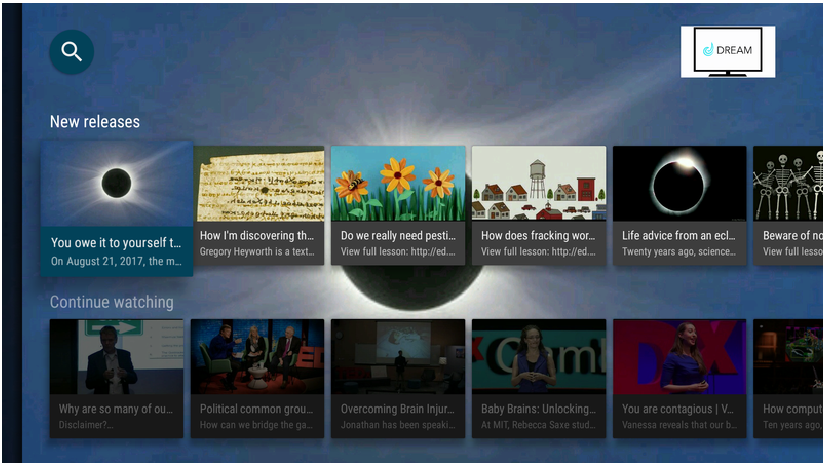 Fig 1. The DreamTV main screen allows for video selection and progress tracking, framing the task as a VOD service.
Experiments & Results: Native Proficiency vs. Technical Barriers
The pilot study involved seven Polish seniors (aged 60-79) interacting with five diverse TEDx videos, ranging from physics to activism.
Performance Highlights:
- High Stylistic Sensitivity: Seniors were exceptionally good at spotting "unnatural" phrasing and machine translation "calques" (literal translations that don't make sense).
- The "Interest-Accuracy" Trade-off: An intriguing finding was that the more interested a participant was in the video content, the fewer errors they detected, as they became engrossed in the learning aspect.
- Reading Speed Limits: Industry standard speeds (17+ characters per second) were too fast for most participants, suggesting that crowdsourcing for seniors requires "compressed" or slower subtitle tracks.
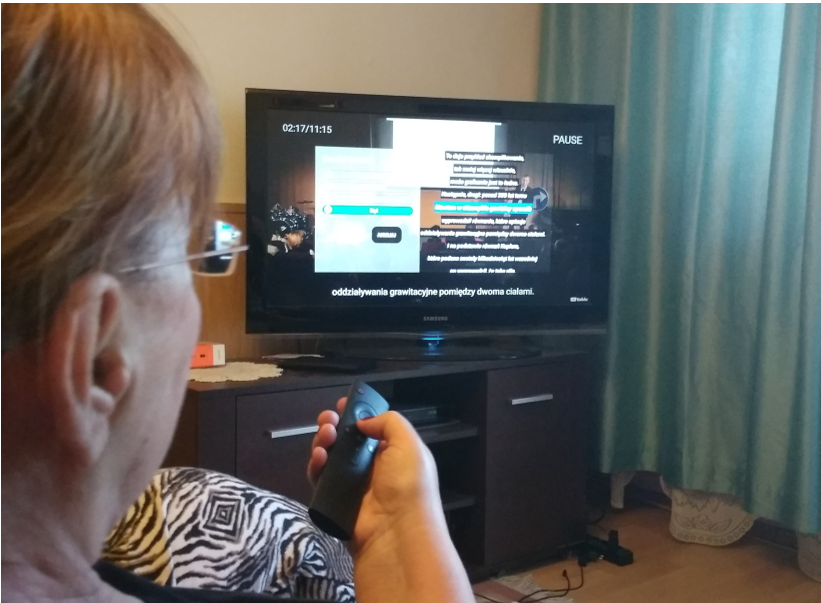 Fig 2. The at-home setup reinforces physical comfort, a critical factor for sustained digital engagement in older populations.
Critical Analysis & Conclusion
The success of DreamTV isn't just in the tech; it's in the framing. By positioning subtitling as "edutainment," the authors moved crowd work from a "job" to a "contribution."
Takeaways:
- Autonomy is King: Seniors value the freedom to choose topics (Physics vs. Culture) and control the duration of their engagement.
- Implicit vs. Explicit Training: While seniors are native experts, they need specific "priming" to catch technical errors like punctuation or synchronization.
Limitations & Future Work:
The study was small-scale and focused on Polish-speaking, ICT-literate seniors. Future research will explore intergenerational crowdsourcing—where seniors work with grandchildren—and the use of this human-labeled data to train more sophisticated Machine Translation models.
Ultimately, this work proves that the "Digital Divide" isn't just about access—it's about designing interfaces that respect the lifestyle and expertise of every age group.