
OmniHuman: Solving the Complexity of Human-Centric Video-Audio Generation
OmniHuman: A Large-scale Dataset and Benchmark for Human-Centric Video Generation
OmniHuman is a large-scale, multi-scene dataset containing 1 million high-definition video clips (1,800 hours) designed specifically for human-centric audio-video generation. It introduces a hierarchical annotation pipeline and the OHBench benchmark, achieving a new SOTA by fine-tuning open-source models (e.g., LTX-2) on just 20% of its data.
TL;DR
Human behavior is the narrative core of video, yet generative models often fail when people interact with each other or their environment. Researchers from Tencent and Peking University have released OmniHuman, a massive dataset of 1 million clips, and OHBench, a diagnostic benchmark. By providing hierarchical labels for scenes, interactions, and individual traits, they’ve shown that even partial fine-tuning can fix the "identity drift" and "audio mismatch" issues plaguing current open-source models.
The "Interaction Gap" in Generative AI
While models like Sora and Veo produce stunning single-person shots, they often crumble in "wild" scenarios. The authors identify three structural failures in current datasets:
- Scene Isolation: Most data comes from controlled portraits, leaving models unable to handle complex backgrounds or dynamic camera movements.
- Interaction Scarcity: Multi-person videos account for less than 3% of existing data, leading to "identity blending" where two characters' features merge.
- Audio-Visual Disconnect: Models struggle to map specific speech to the correct speaker in a crowd or synchronize physical actions (like a tool hitting a table) with sound.
Methodology: The Hierarchical Pipeline
OmniHuman isn't just a collection of videos; it’s a masterclass in automated data engineering. The pipeline operates on a three-tier logic:
1. Global Level (Environment)
The system identifies 8 typical scenarios (offices, landscapes, industrial sites) and standardizes audio to 44.1 kHz. Background noise is separated from vocals using Demucs, allowing the model to learn the distinct relationship between ambient sounds and human speech.
2. Interaction Level (Social & Physical)
Using YOLOv11 and MOTRv2, the pipeline tracks multiple identities simultaneously. It doesn't just see "people"; it understands who is talking to whom and who is touching what object. This is critical for preventing the "floating object" syndrome in generated videos.
3. Individual Level (The Fine Details)
For every person, the system extracts 134 skeletal keypoints (including fingers and feet) and uses ArcFace to ensure the character's face remains consistent across the entire clip.
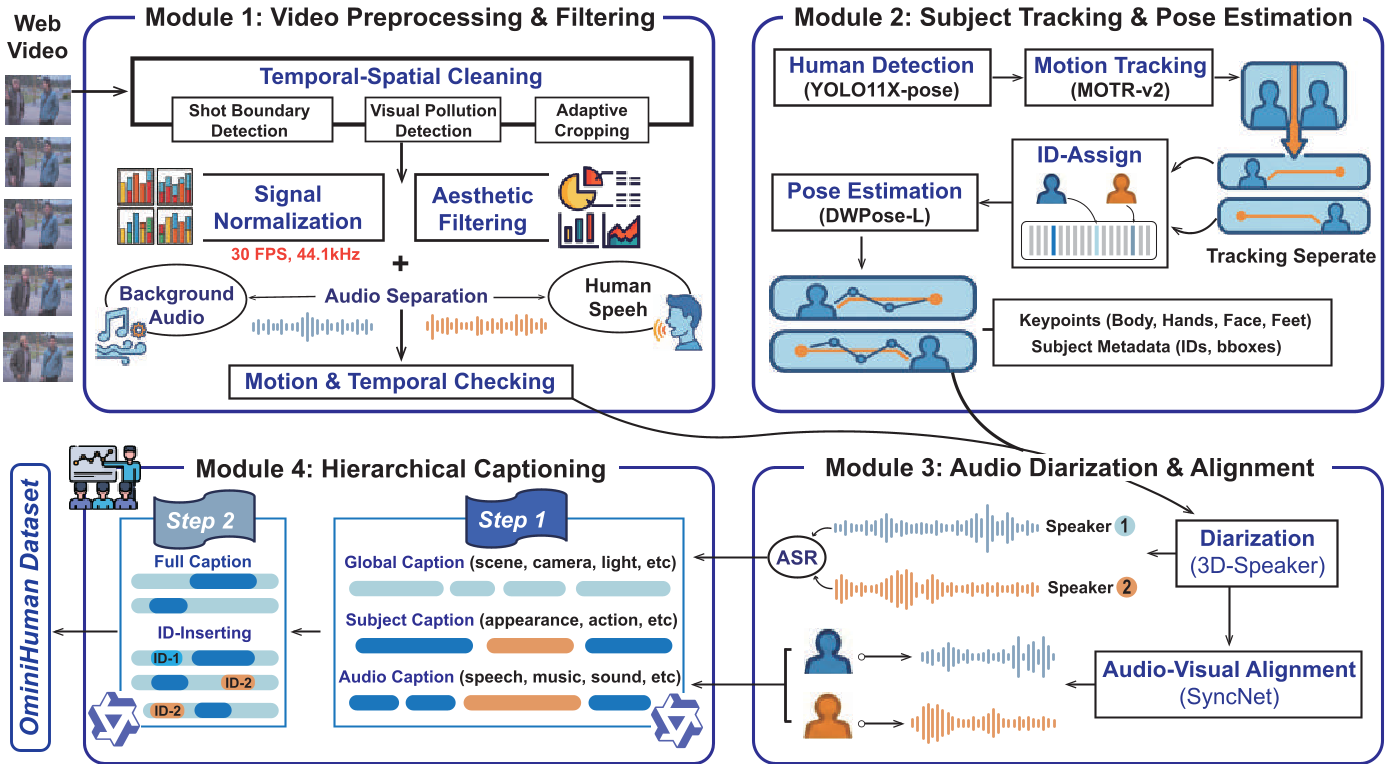 Figure 1: The tiered filtering and annotation architecture of OmniHuman.
OHBench: A Scientific Diagnostic Tool
Current metrics like FVD (Fréchet Video Distance) often fail to capture why a human looks "uncanny." The authors propose OHBench, which splits evaluation into:
- Foundational Quality: Imaging, background plausibility, and audio aesthetics.
- Interaction Realism: Specifically measuring "Listener Realism"—does the person not speaking look natural while listening?
- Fine-grained Traits: WER (Word Error Rate) for speech and SyncNet scores for lip-sync accuracy.
Experimental Results: The Power of 20%
The most striking result is the fine-tuning of LTX-2, a popular open-source model. By using only 20% of the OmniHuman dataset, the researchers achieved:
- 25.9% improvement in Audio KL divergence.
- 25.0% boost in Text-Audio alignment.
- Significant reductions in identity distortion (IC* index).
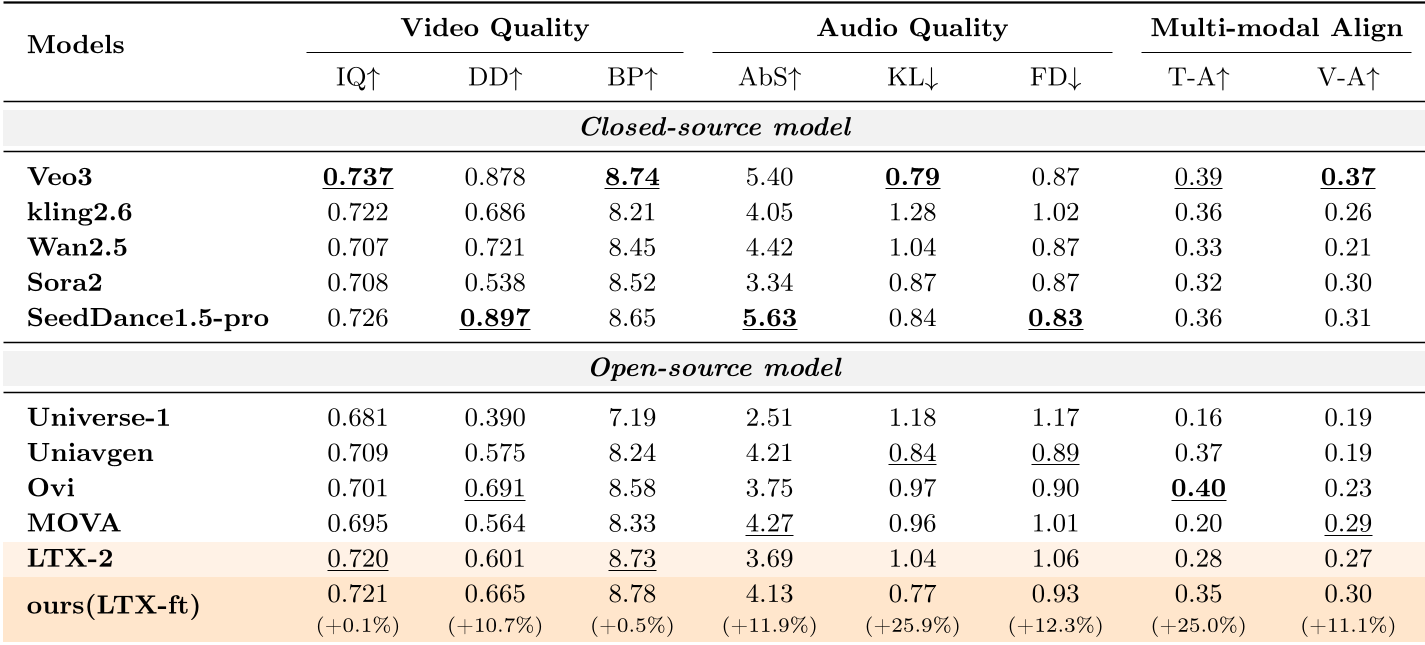 Table 1: Benchmarking open vs. closed models. Note how OmniHuman fine-tuning (last row) bridges the gap to closed-source leaders.
Critical Insight & Future Outlook
The performance gap between "Generalists" (models made for any video) and "Specialists" (human-centric models) is narrowing. However, as the authors note, identity distortion in multi-person scenarios remains high.
The takeaway for the industry is clear: Annotation density matters more than raw video hours. By moving from "flat" captions to identity-aware, hierarchical metadata, we can finally move past the "talking head" era into truly cinematic, multi-agent AI generation.
Limitations
Despite the scale, modeling humans in "long shots" (far from the camera) remains a bottleneck, with facial features often degrading into artifacts. This suggests that future work may need specialized "zoom-in" attention mechanisms for distant subjects.