
Scaling Personalized Healthcare: A 3-D Optical NoC Accelerator for Automated Diagnosis
On-Chip Hardware Accelerator for Automated Diagnosis Through Human–Machine Interactions in Healthcare Delivery
This paper proposes a novel 3-D Optical Network-on-Chip (ONoC) hardware accelerator for automated medical diagnosis, focusing on protein folding analysis. It introduces an area-efficient 3-D torus topology combined with a unique "grooming-on-chip" mechanism and an SNR-aware adaptive routing algorithm to enhance computation speed and data reliability.
TL;DR
Researchers have developed a 3-D Optical Network-on-Chip (ONoC) specifically designed for automated medical diagnosis. By replacing traditional electrical wires with high-speed photonic waveguides and utilizing a novel "grooming-on-chip" method, they achieved a 74% increase in throughput and a 45% boost in data reliability, all while reducing the physical footprint of the chip.
Context: The Protein Folding Bottleneck
Modern personalized medicine relies on understanding biomarkers, such as how proteins fold into their "native state." However, simulating protein folding is computationally expensive; finding the native state of a single protein can take millions of CPU hours. Traditional electrical interconnects (NoCs) are hitting a "wall" where the energy and speed of moving data between cores become the primary bottleneck.
The Core Innovation: Optical 3-D Torus
To solve the size and speed constraints of portable healthcare devices, the authors propose a 3-D ONoC. Unlike standard 3-D meshes that use complex, bulky routers for every node, this architecture uses a simplified 3-D torus topology.
1. Grooming-on-Chip (GOC)
The most significant insight is that individual medical data items often do not require the full bandwidth of a single light wavelength. Standard ONoCs are "inefficient," like a single car occupying a four-lane highway. GOC aggregates multiple data flows into a single lightpath, drastically reducing wavelength consumption and saving on-chip transceiver ports.
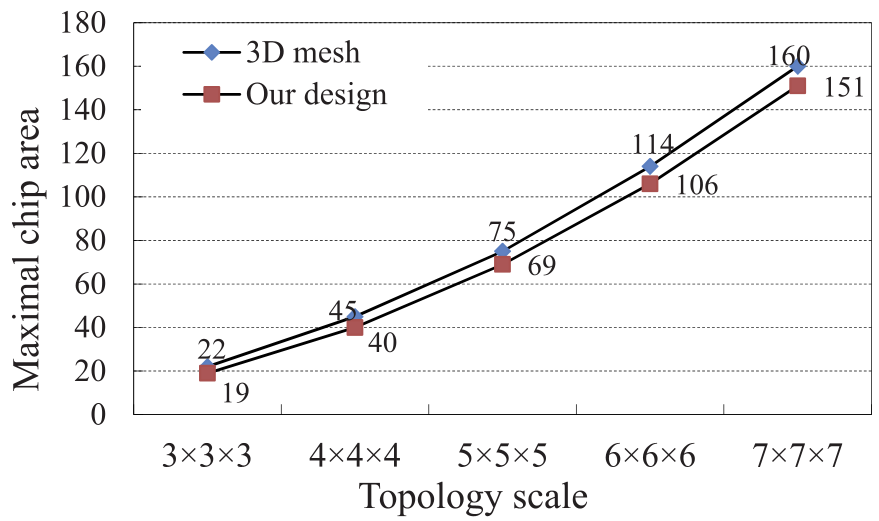 Fig 1: The 3-D simplified torus structure and the traffic grooming mechanism.
2. SNR-Aware Adaptive Routing
In the optical domain, signal quality is threatened by power loss and crosstalk from microring resonators (MRs). The authors developed a directed-graph model to predict the Signal-to-Noise Ratio (SNR) for any given path. Instead of blindly following a fixed route (like XYZ-order), the chip adaptively selects the path with the highest SNR, ensuring that diagnostic data isn't corrupted by photonic noise.
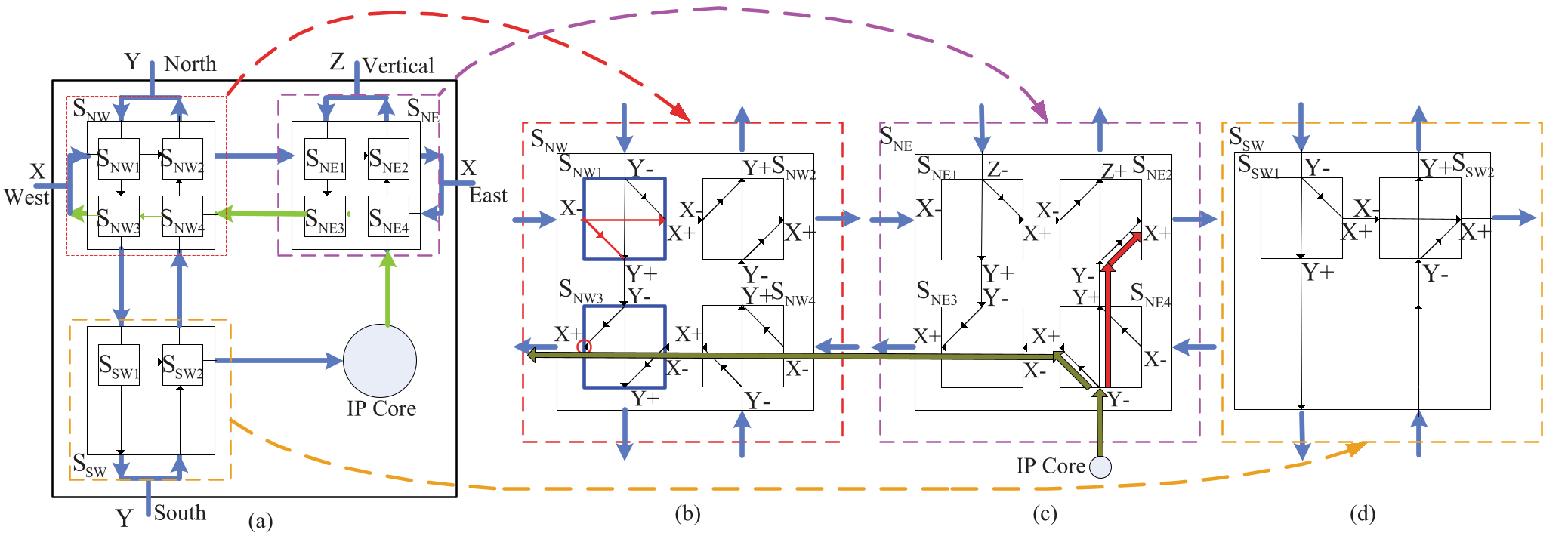 Fig 2: Switch-level directed-graph model used for SNR analysis.
Experimental Results
The system was tested using real protein sequences from the lattice protein model.
- Throughput: The GOC approach maintained high throughput even as data injection increased, outperforming conventional benchmarks by 74%.
- Area Efficiency: The simplified 3-D architecture resulted in a smaller footprint (approx. 14% reduction in area for a 3x3x3 scale), making it viable for wearable or portable medical ACPS.
- Reliability: The adaptive routing algorithm demonstrated a consistent SNR advantage, achieving a 45% improvement over rigid routing schemes.
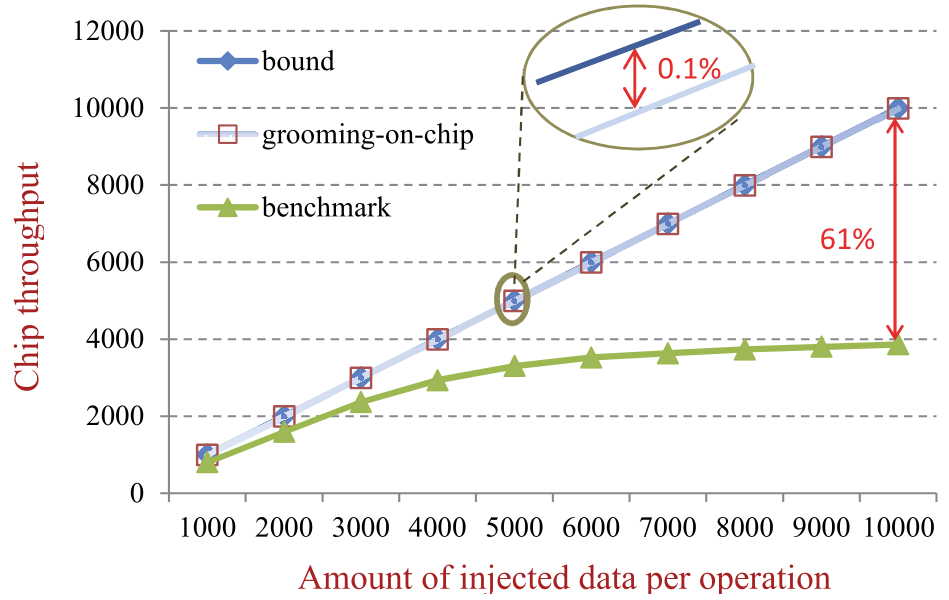 Fig 3: Efficiency gain of Grooming-on-Chip vs. traditional sequential execution.
Critical Insight & Future Outlook
The move from electrical to optical inter-core communication is no longer just about raw speed; it's about efficiency and reliability. While this paper successfully optimizes 3-D ONoCs for medium-scale topologies, scaling reached into "fault-tolerant" territory. As topology scales increase, the probability of microring failure or thermal drift rises, suggesting that future work must integrate fault-tolerant logic alongside SNR-aware routing.
This research provides a clear roadmap for the hardware side of the "Diagnosis-on-a-Chip" vision, proving that photonic technologies can meet the strict physical and computational demands of next-generation healthcare delivery.