
Once a User, Always a User? Decoding the Psychology of MSNS Persistence and Burnout
Once a user, always a user: Enablers and inhibitors of continuance intention of mobile social networking sites
2016-03-19
Summary
Problem
Method
Results
Takeaways
Abstract
This study proposes a comprehensive framework to investigate the dual-path determinants of Mobile Social Networking Sites (MSNSs) continuance intention. By integrating Bagozzi’s self-regulation framework with Uses and Gratifications (U&G) theory and the Person-Environment (P-E) Fit model, it identifies specific psychological enablers (gratifications) and inhibitors (overload-induced exhaustion) that dictate long-term user retention.
## Executive Summary
**TL;DR**: Why do we keep scrolling through Facebook or Instagram even when it feels like a chore? This research dives into the "push-pull" dynamics of Mobile Social Networking Sites (MSNSs). It reveals that while we are "pulled" by the need for escapism, exhibitionism, and the freedom of mobility, we are simultaneously "pushed" away by the crushing weight of information and social demands. The study finds that satisfaction and emotional exhaustion are the two internal gatekeepers of our intention to stay.
**Background**: This work acts as a bridge between marketing theory and psychological stress models. It moves beyond the simplistic "more features = more users" mindset to a more nuanced "self-regulation" perspective, situating itself as a critical study in understanding the dark side of social media.
## The Core Conflict: Why Users Leave
Most academic work focuses on the "Bright Side"—why we love apps. But Walid Chaouali argues that MSNSs are a "double-edged sword." The same features that connect us also overwhelm us.
* **The Mismatch**: Using the **Person-Environment Fit model**, the study highlights that humans have a limited cognitive threshold. When the "Environment" (the app) provides more "Stimulus" (notifications, posts, requests) than the "Person" can process, emotional exhaustion sets in.
* **The Inhibitors**: Information Overload and Social Overload are not just annoyances; they are technical "stressors" that lead directly to burnout.
## Methodology: The Theoretical Fusion
The researcher didn't just look at one angle. They combined three heavyweight theories:
1. **Bagozzi’s Self-Regulation Framework**: The master logic—Appraisal leads to Emotion, which leads to Intention (Coping).
2. **Uses & Gratifications (U&G)**: To identify what we actually *get* out of the app (Escapism, Voyeurism, etc.).
3. **Person-Environment Fit**: To measure where the app becomes "too much."
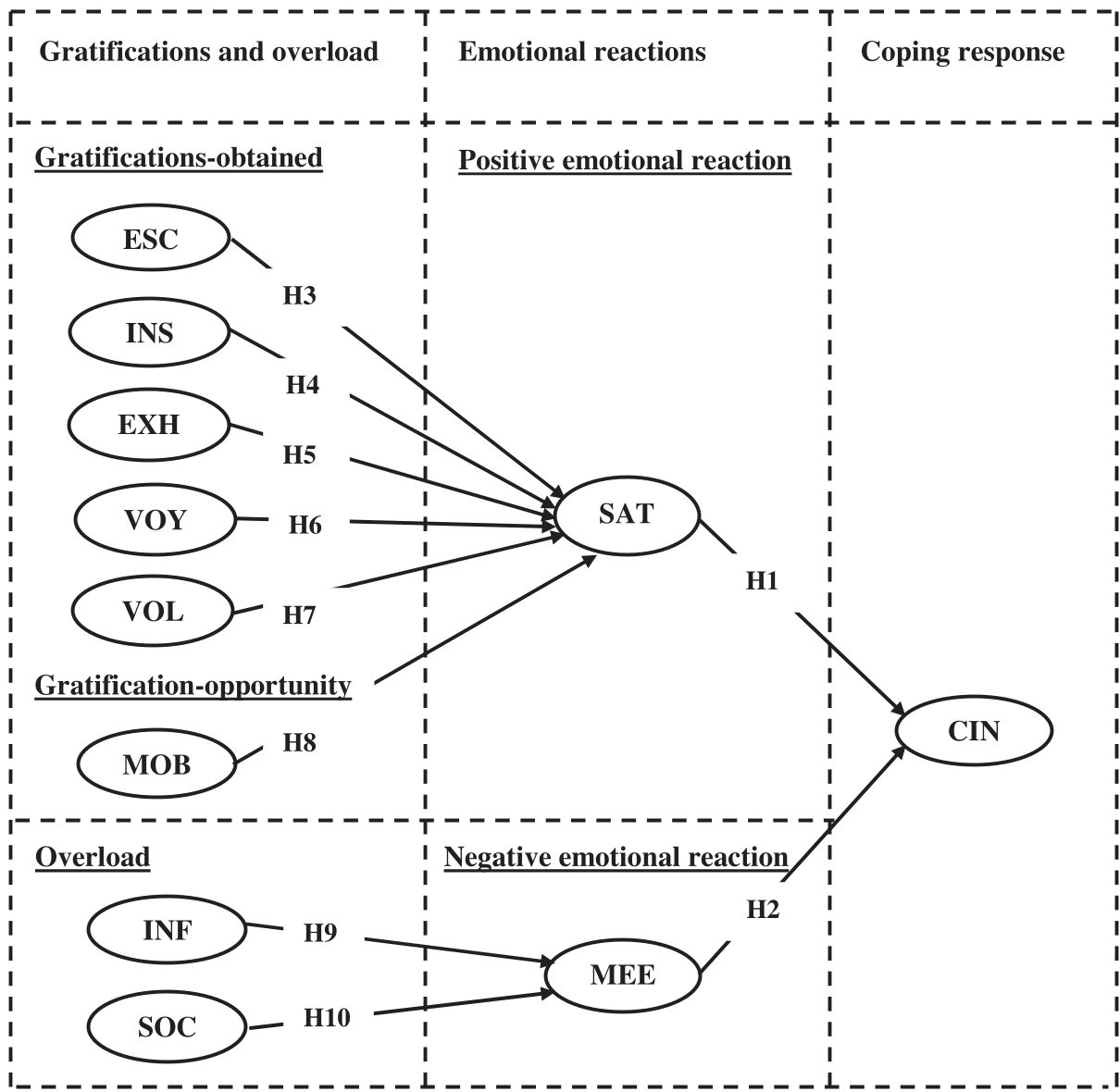
*Figure 1: The conceptual framework showing the path from gratifications/overloads to continuance intention.*
## Key Insights & Findings
### 1. The Power of Escapism and Mobility
The strongest driver of satisfaction was **Escapism**. Users don't use mobile social media to "find facts" (Information Seeking was statistically insignificant); they use it to "leave reality." The ability to do this anywhere (**Mobility**) is what makes the mobile experience superior to the desktop.
### 2. The Voyeur-Exhibitionist Loop
MSNSs thrive on a cycle of looking and being seen:
* **Exhibitionism**: Self-disclosing personal data to gain attention.
* **Voyeurism**: Scrutinizing others' lives without their direct awareness.
Both were found to be significant "enablers" of satisfaction, proving that the **Privacy Paradox** is alive and well—users value the psychological gratification of social exposure over the risk of data privacy.
### 3. The Exhaustion Threshold
The study proves that **Emotional Exhaustion** is a powerful "inhibitor." Even if you are satisfied with an app's features, if the social pressure to "like" everyone's birthday posts (Social Overload) and the deluge of news (Information Overload) becomes too high, your intention to continue will drop.
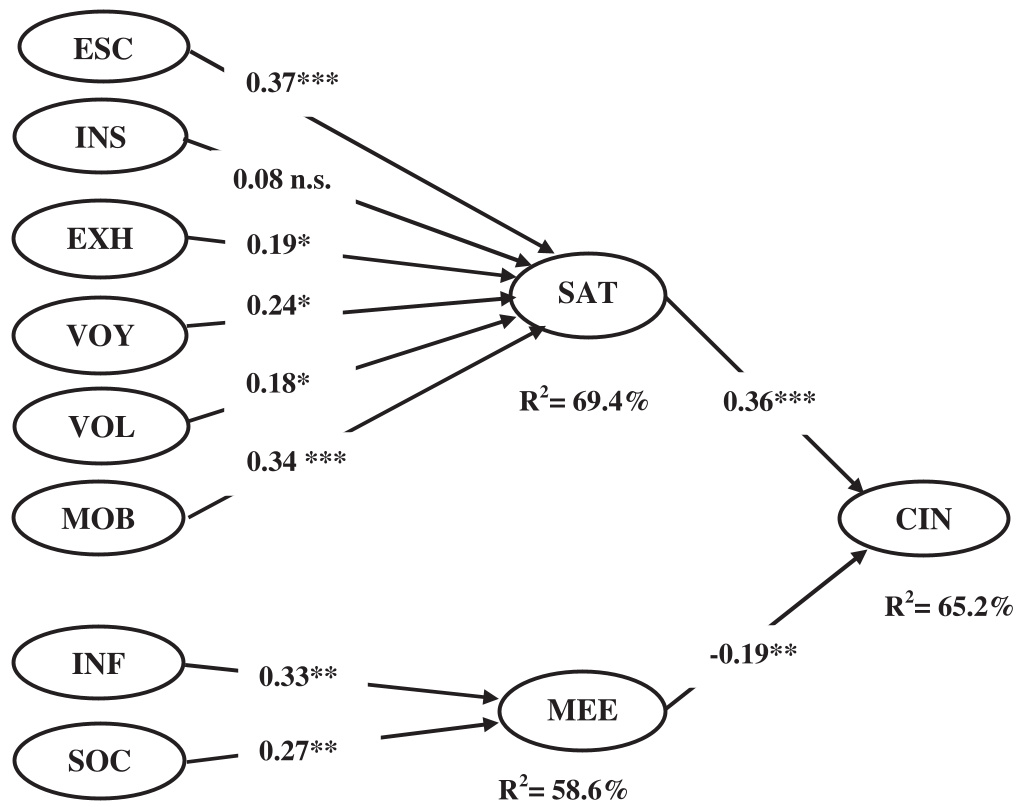
*Figure 2: Empirical results showing the path coefficients. Note the strong positive path from Escapism and the significant negative path from Emotional Exhaustion.*
## Critical Analysis & Industry Impact
**The Takeaway for Developers**:
Stop focusing purely on "Time Spent." If that time is spent in a state of overload, you are building a "ticking time bomb" of user churn.
* **Practical Recommendation**: Implement "Filter Bubbles" that users *actually* control. Tools that categorize friends into sub-lists or "auto-reply" to birthday reminders could actually save your user base by reducing social "work."
**Limitations**:
The study was conducted on university students in France. While this demographic is the "power user" of MSNSs, their tolerance for social debt might differ from older professionals or different cultural settings (e.g., collectivist vs. individualist cultures).
## Final Conclusion
The mantra "Once a user, always a user" is a myth. User retention is a fragile equilibrium. To keep users, MSNS providers must not only maximize the "joy of the peek" (voyeurism) and the "thrill of the post" (exhibitionism) but also actively shield users from the fatigue of the digital crowd.