
The Great Digital Absence: Is Educational Research Missing the Youth Online Revolution?
Are online communities for young people an issue for education researchers? A literature review of Swedish and international studies within the educational field
This literature review investigates the representation of youth online communities in educational research between 2003 and 2008. By analyzing Swedish (LIBRIS) and international (ISI Web of Science) databases, the author identifies a significant gap where educational expertise is largely missing from the study of social networking sites (SNS).
TL;DR
Despite the explosion of social networking sites (SNS) like MySpace and LunarStorm in the mid-2000s, this literature review reveals a startling vacuum in educational scholarship. While youth spend vast amounts of time in online communities, academic "Education" departments have largely ignored these spaces, focusing instead on formal ICT in classrooms. This work calls for a paradigm shift: treating online communities as vital sites for socialization and fostering.
Background Positioning
Published in 2010, Camilla Jonsson's review serves as a "call to arms" for educational researchers. It maps out a period where Sweden was a global leader in IT access, yet its academic institutions remained tethered to the traditional classroom, leaving the investigation of digital social life to sociologists, psychologists, and the mass media.
Problem & Motivation: The Formal Learning Trap
The educational field has a long tradition of studying "fostering" (up-bringing) and "socialization." However, Jonsson identifies a critical bifurcation:
- The Reality: Youth moved their social lives to platforms like LunarStorm (Sweden) and Bebo (UK).
- The Research: Educational researchers categorized ICT almost exclusively within formal school settings or teacher training.
The motivation for this study stems from a concern that if educators don't study these spaces, they cannot provide guidelines for parents and teachers. The void is currently filled by media-driven moral panics regarding paedophilia and commercialism, rather than pedagogical insights.
Methodology: Mining the Databases
The author utilized a rigorous cross-comparative method to find "hidden" research across Swedish and International contexts.
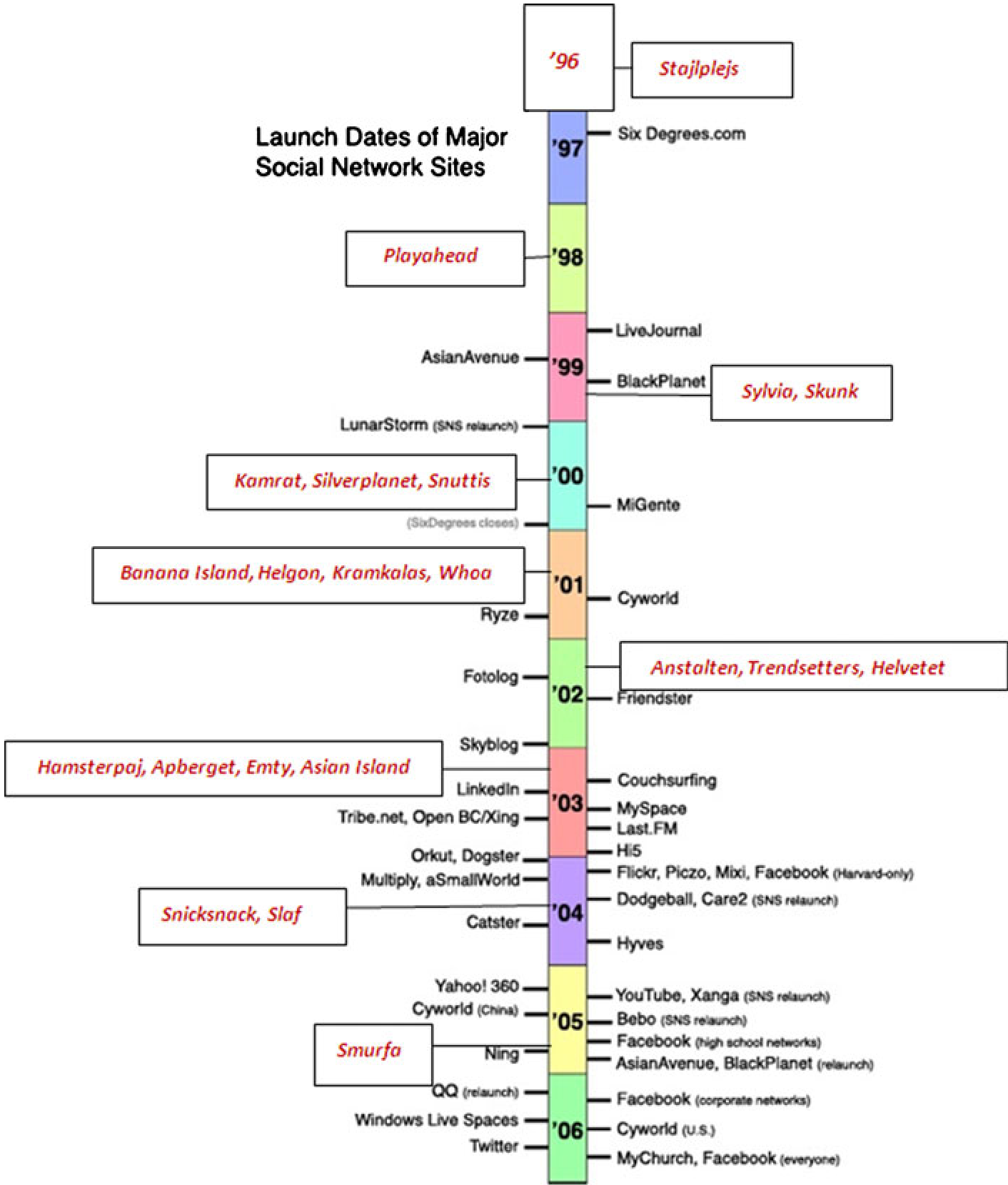 Figure: The multi-step search methodology involving LIBRIS and ISI Web of Science.
The search parameters targeted the years 2003–2008, a critical era for the rise of SNS. The author looked for keywords including "youth," "online communities," and "social network," specifically filtering for results categorized under "Education."
Results: A Field Out of Touch
The findings quantify a massive disconnect. In the Swedish database LIBRIS, the vast majority of ICT-related education research was clustered in higher education tools or classroom "e-learning."
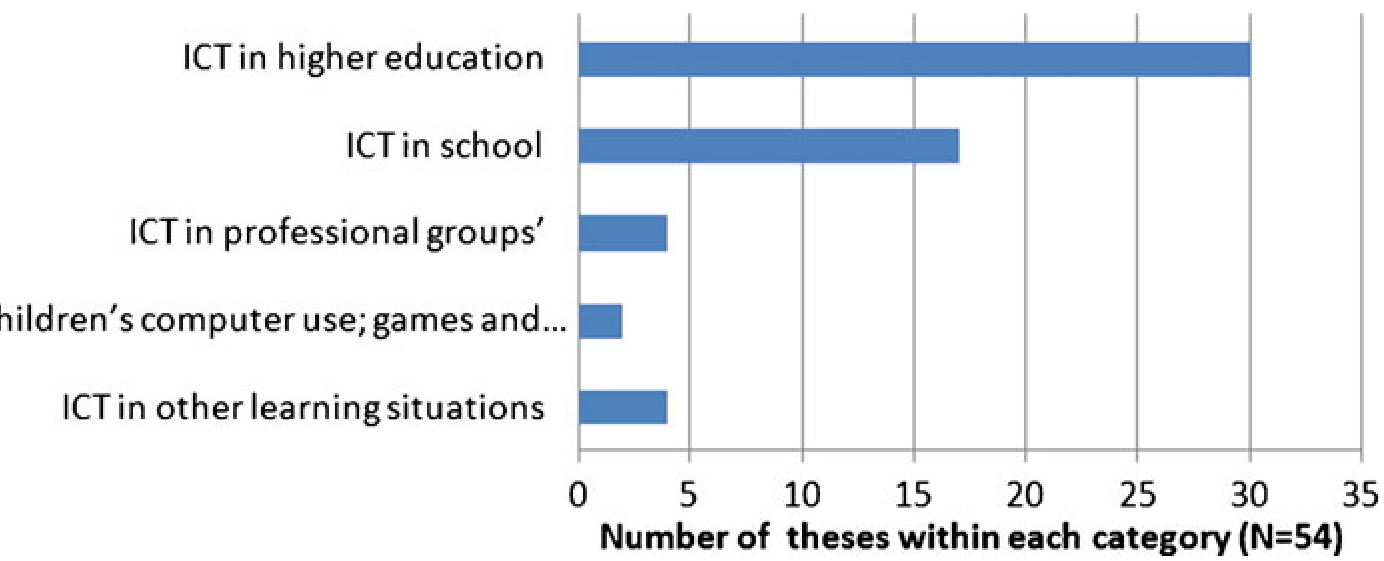 Figure: Distribution showing that ICT in higher education and schools dominates, while informal youth activities are nearly invisible (N=54).
Key Comparisons
- Disciplinary Dominance: On the international stage (ISI Web of Science), researchers in Public Health and Communication were 3-4 times more likely to study youth online behavior than Education researchers.
- The 12% Paradox: Only 12% of Swedish educational theses even mentioned ICT, and of those, the focus remained on the artifact (the computer) rather than the social space (the community).
Critical Analysis & Conclusion
Jonsson provides several sharp insights into why this gap exists:
- Funding Constraints: Established research topics (e.g., classroom pedagogy) win over high-risk, "new" digital topics.
- The "Insider" Barrier: Researchers may feel they lack the technical "native" experience to navigate these youth-centric digital worlds.
- Conceptual Lag: The field stubbornly views the internet as a tool for learning rather than a landscape for living.
Takeaway for Modern Researchers
While the paper reflects the state of the field in 2008, its core message is more relevant than ever. In an age of TikTok and Discord, the "Educational" perspective is still frequently sidelined by "Safety/Policy" perspectives. To truly understand modern youth, education research must transcend the classroom walls and enter the digital community.
Limitations
The study is limited by the classification systems of databases like LIBRIS, which the author notes often miscategorize or double-list entries, making the "exact" number of studies difficult to pinpoint. Furthermore, research may have been conducted but not yet published during the 2008 window.