
Project Spectra: Decolonizing Trans Voice Training through Community-Based Design
7704_Online Community-based Design of Free and Open Source Software for Transgender Voice Training.
This paper presents Project Spectra, a community-based collective that developed a free and open-source (FOSS) voice training application specifically for transgender people. Utilizing an autoethnographic approach and participatory design, the authors demonstrate how prioritizing trans agency and community ownership can subvert dominant, medicalized norms in speech technology.
TL;DR
This research chronicles Project Spectra, a grassroots initiative aimed at reclaiming the technology of transition. By merging Free and Open Source Software (FOSS) practices with Participatory Design (PD), a collective of trans developers built a voice training app that rejects the clinical, binary-obsessed standards of the past. It is an honest, sometimes uncomfortable look at how academic research can—and must—cede power to the communities it studies.
The Motivation: Beyond the Binary Pitch
For many transgender individuals, voice training is a matter of both identity affirmation and physical safety. Yet, existing professional apps (like EVA or Christella VoiceUp) often function as digital gatekeepers. They are frequently:
- Extractive: Built by cisgender clinicians for a "target population" rather than with them.
- Normative: Fixated on "passing" within a strict gender binary.
- Clinical: Visualized through sterile, often racialized, or classed aesthetics.
The authors recognized that to move forward, they didn't just need a better app; they needed a better process.
Methodology: Designing with Agency
The study utilizes autoethnography, where the lead researcher documents their own positionality and the collective’s "moments of breakdown." Unlike traditional software development, Project Spectra was guided by three "Experience Goals":
- Affirmation: Users define their own goals—masculine, feminine, androgynous, or simply pitch-specific—and can change them at any time.
- Playfulness: Counteracting the stress of voice training with an encouraging, non-childish mascot.
- Care: Focusing on vocal health (Vocal Function Exercises) to avoid physical strain, a priority often ignored by pitch-only apps.
The Evolutionary Path: From Sketch to Implementation
The team debated whether to fork existing software or start from scratch. Choosing the latter allowed them to prioritize cross-platform access and radical customization.
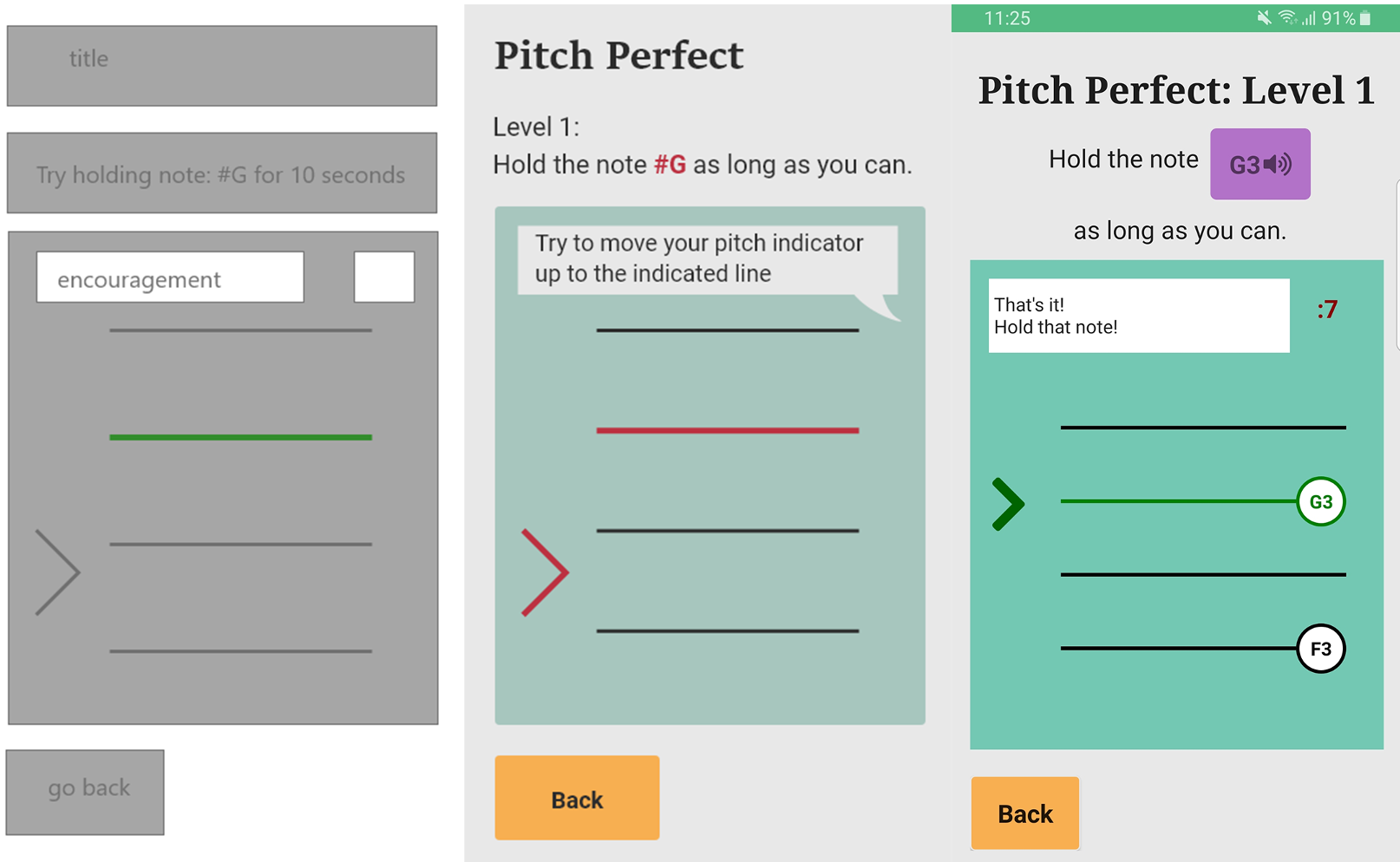 Figure 1: The progression from wireframe (left) to digital mockup (middle) to functional prototype (right), showcasing the "onboarding" flow.
Challenging Academic Extraction
One of the most profound sections of the paper deals with "the moment of breakdown." The lead researcher, Alex Ahmed, reflects on how her own dissertation deadlines created a "crisis of hierarchy" within the group.
When community members wanted to take the project in a new direction, it clashed with the rigid timeline of the University. This highlights a fundamental tension in Community-Based Participatory Research (CBPR): How can a project be truly community-led when an academic institution ultimately "owns" the researcher's time and credentials?
Results & SOTA Comparison
Project Spectra moved the needle by privileging community knowledge over clinical authority. When a professional speech therapist advised against certain exercises popular in the trans community (like "Big Dog Small Dog"), the group chose to include them anyway, honoring the community’s lived experience and self-developed pedagogical wisdom.
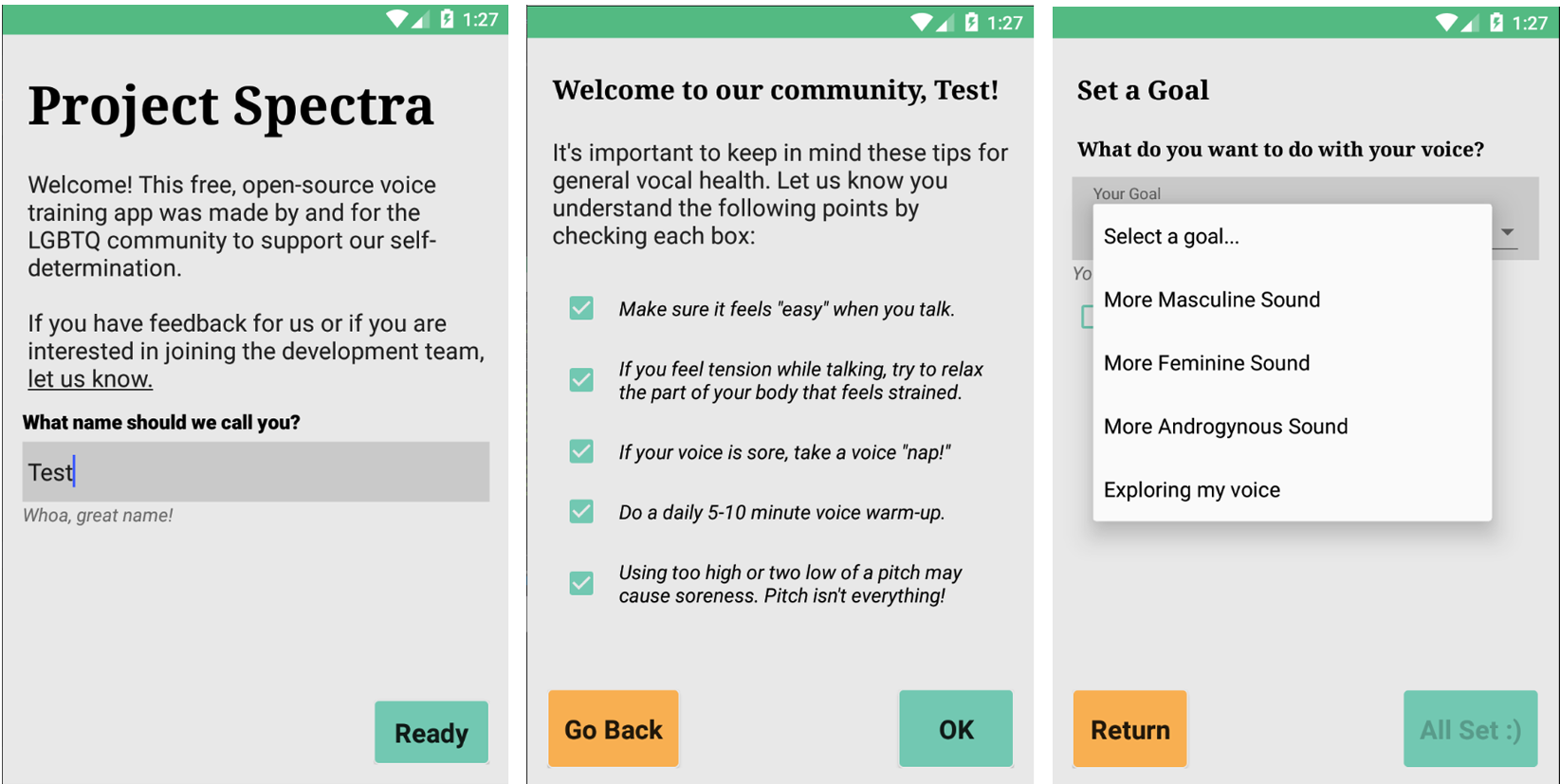 Figure 2: The onboarding UI, focusing on "Affirmation" by allowing users to select their own names and goals without being funneled into a binary path.
Critical Insights & Future Outlook
The Takeaway: Technology is never neutral. The tools we use to build it (GitHub, Discord) and the frameworks we use to design it (FOSS, PD) carry their own power dynamics.
Limitations: 1. The project was primarily conducted in English, potentially excluding non-Western trans experiences. 2. The inherent power of the "Project Lead" role (held by the researcher) remains difficult to fully dissolve within a PhD context.
Future Work: The authors call for "Slow Scholarship"—a restructuring of the university that values care and community partnership over rapid-fire data extraction and "deliverables." Project Spectra is not just an app; it is a "prefigurative" structural model for how trans-led tech can thrive.