
Engineering Empathy: Mapping Human Support Strategies to Social Agents
Towards an Online Emotional Support Agent: Identifying Emotional Support Strategies via Crowdsourcing Socially Interactive Agents Track
This paper presents a crowdsourcing-based empirical study to develop an "Artificial Friend" chatbot capable of providing emotional support on social media. By analyzing 10,000 tweets and leveraging Amazon Mechanical Turk, the authors mapped specific stressful situations to five distinct emotional regulation strategies, establishing a data-driven foundation for automated supportive dialogue.
TL;DR
Researchers from Vrije Universiteit Amsterdam are building a "Chatbot Friend" designed to alleviate stress on social media. By analyzing 10,000 tweets and using crowdsourcing, they have mapped five psychological support strategies to specific life stressors (like work, health, and finances), providing a blueprint for agents that know exactly how to comfort a user based on the problem at hand.
Context & Motivation: The Gap in Digital Comfort
We often turn to social media to vent about our "everyday problems"—a looming deadline, a breakup, or financial strain. While human friends are the ideal support system, they aren't always available, and providing constant support can lead to "support provider stress."
The authors propose Artificial Friends: social agents that fill this gap. However, the core challenge isn't just "talking," but Emotion Regulation. Most existing chatbots offer generic platitudes. This research seeks to provide the right type of support by grounding agent behavior in established psychological theory.
Methodology: The Gross Model and Crowdsourcing
The study adopts the Emotion Regulation Theory proposed by Gross (2002), which identifies several ways humans influence their own (or others') emotions. The researchers focused on five strategies:
- Attentional Deployment (AD): Shifting focus away from the stressor.
- Cognitive Change (CC): Re-evaluating the situation to change its emotional impact.
- General Emotional Support (GES): Purely socio-affective comfort.
- Situation Modification (SM): Suggesting ways to change the physical environment.
- Situation Selection (SS): Avoiding certain situations entirely.
To bridge theory and practice, the authors collected 10,000 tweets using keywords related to six stress categories (Death, Finances, Health, Relationships, School, and Work) and filtered them through human workers on Amazon Mechanical Turk (AMT).
Experimental Insights: What Humans Actually Want
The researchers conducted two experiments:
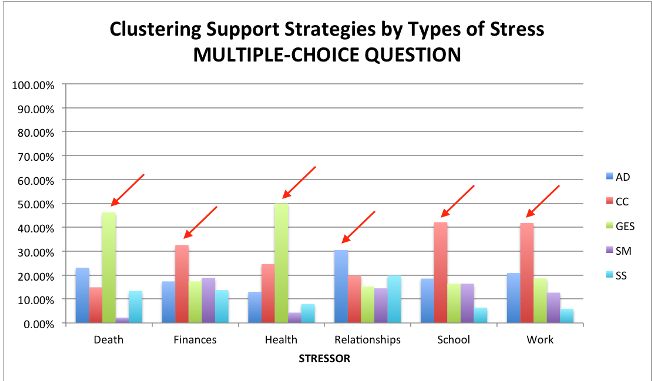
- Experiment 1: Humans chose the best support strategy from a predefined list for a given tweet.
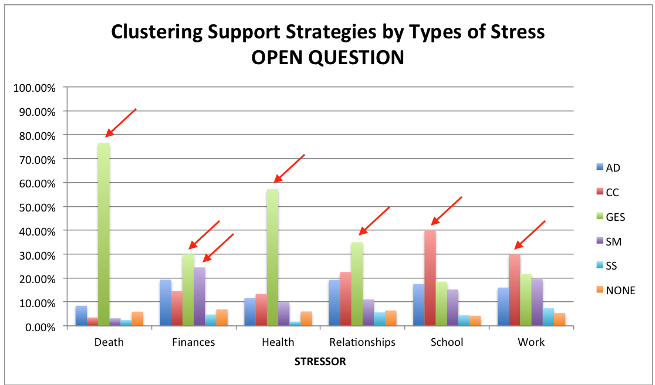
- Experiment 2: Humans wrote their own supportive replies, which were then categorized.
Key Findings:
- Symmetry in Support: The distribution of strategies was non-random. People instinctively change their support style based on the problem.
- The Dominance of CC and GES: For "Work" and "School" stress, Cognitive Change (CC)—helping the person see the stressor in a new light—was highly effective. General Emotional Support (GES) remained a universal favorite across almost all categories, aligning with the idea that social media users primarily seek socio-affective validation.
Critical Analysis: From Heuristics to AI
While this 2018 study relied on keyword matching and basic algorithms, its contribution lies in the empirical mapping of human empathy. The authors noted that "Finances" and "Relationships" required deeper investigation, as human responses in these areas were more varied and complex.
The project is currently transitioning to use IBM Watson, moving from hard-coded rules to more sophisticated AI-driven dialogues. This represents a shift from "Social Agents that react" to "Social Agents that understand."
Conclusion and Future Outlook
This work provides the "ground truth" labels necessary for training more empathetic machines. By proving that specific stressors demand specific psychological strategies, Medeiros and Bosse have laid the groundwork for agents that don't just "chat," but actively assist in his or her emotional well-being.
Limitations: The study relies on Twitter's public-facing data, which may be more performative than private stressors, and the use of MTurk workers may introduce cultural biases in what characterizes "good" support.
Future Work: The integration of Large Language Models (LLMs) could potentially automate the execution of these five strategies with even higher nuance than the original IBM Watson-based goals.