
Online Feedback Exchange: Bridging the Gap Between Crowd Comments and Design Action
Online Feedback Exchange: A Framework for Understanding the Socio-Psychological Factors
This paper proposes a conceptual framework for Online Feedback Exchange (OFE) that moves beyond simple quality control to address the end-to-end design cycle. It integrates socio-psychological factors from learning sciences, organizational behavior, and HCI to improve how designers seek, receive, and process feedback at scale.
TL;DR
While the internet makes it easy to get opinions, getting useful design feedback is a psychological minefield. This paper introduces a comprehensive framework for Online Feedback Exchange (OFE), shifting the focus from just "getting better comments" to supporting the entire human experience of seeking, giving, and applying feedback.
Context: The Hidden Friction in Online Feedback
Designers increasingly turn to the crowd—via Amazon Mechanical Turk, Reddit, or specialized platforms like Dribbble—for fast, affordable feedback. However, simply getting 100 comments doesn't mean a design will improve. Traditional tools focus on the "what" (the comment), but ignore the "why" and "how" of the social interaction. Why is a designer afraid to post a sketch? How do they handle a harsh critique from an anonymous user?
The 5 Pillars of the OFE Framework
The researchers break down the feedback journey into five distinct socio-psychological stages:
1. The Decision: To Seek or Not to Seek
Seeking help has a "social cost." Designers often fear looking incompetent or receiving toxic criticism.
- Insight: High-status signals on platforms (like "Top Designer" badges) can actually discourage novices from seeking help because the power gap feels too wide.
2. Presentation: Beyond the Final Image
How you show your work dictates the feedback you get.
- The Problem: Most platforms encourage showing "finished" work.
- The Solution: Sharing low-fidelity sketches and multiple variations (A/B options) signals to the crowd that the design is still "fluid," leading to more fundamental suggestions rather than nitpicks about colors.
3. Incentives: The Mystery of the Provider
Why should a stranger help you?
- The Anonymity Paradox: Anonymous providers are more likely to give honest, critical feedback (which is good), but designers find it harder to trust or interpret those comments without knowing the provider's background.
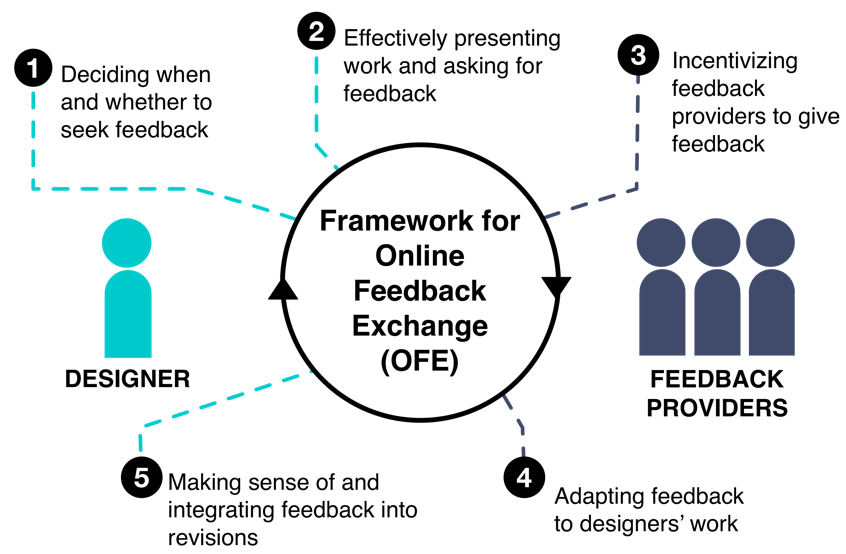 Figure 1: The proposed end-to-end framework for designing OFE platforms.
4. Adaptation: Structuring the Critique
Crowd members aren't always design experts. To get expert-like feedback, the system must "scaffold" the process.
- Mechanisms: Using rubrics (e.g., asking specifically about "Visual Hierarchy" or "Usability") transforms vague "I like it" comments into actionable design tasks.
5. Sense-Making: Closing the Loop
This is where most systems fail. Once you have dozens of comments, how do you prioritize them?
- The Need for Dialogue: Feedback is often vague. Systems need to support "laddering"—the ability to ask follow-up questions to uncover the user's underlying needs.
Analysis of Existing Systems
The authors reviewed 25 systems, finding that while many are good at "matching" designers to providers, few support the reflection phase.
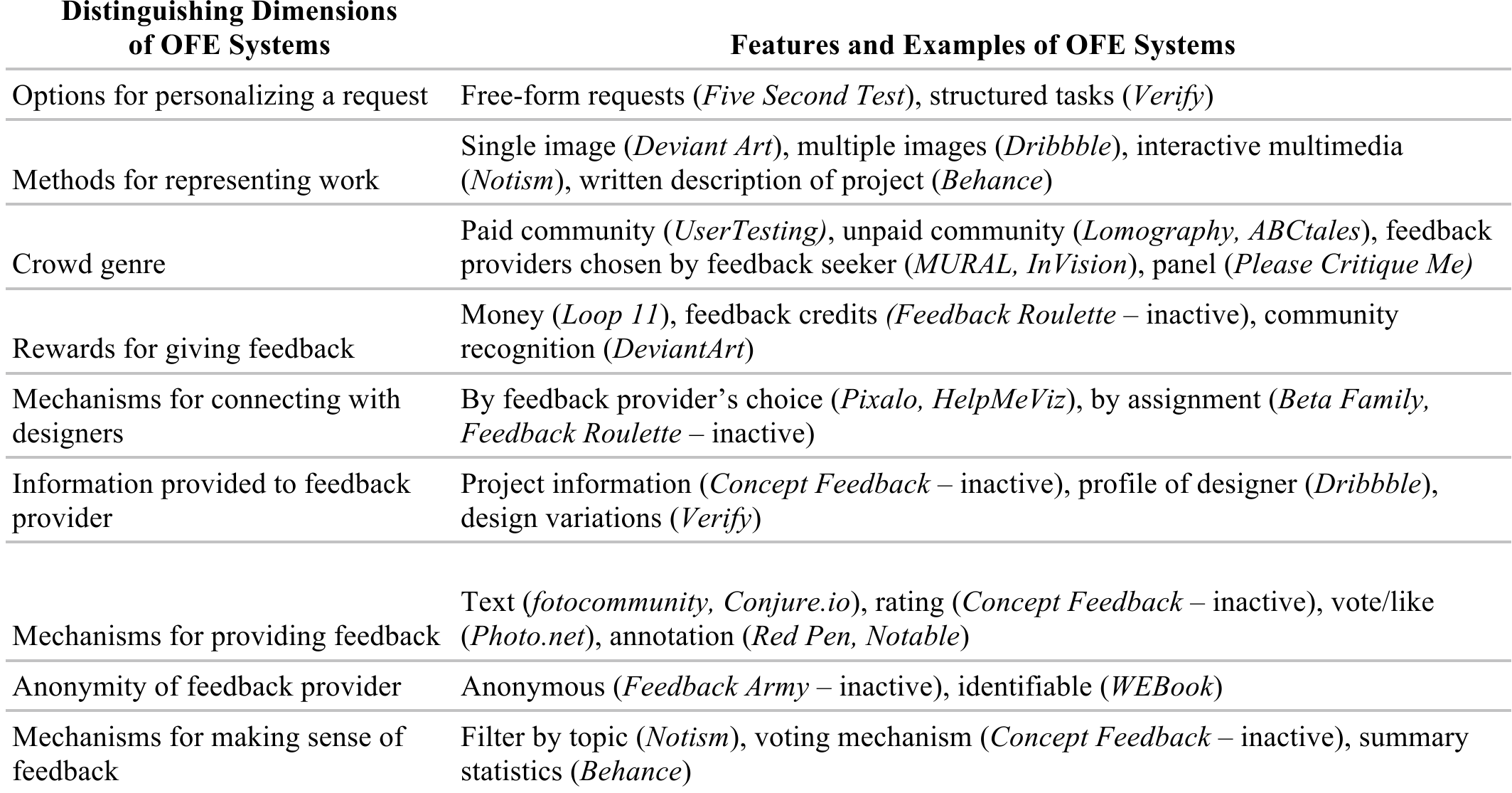 Table 1: How current OFE systems vary across dimensions like rewards, anonymity, and sense-making tools.
Takeaway for the Future
The real challenge of AI-driven or crowd-sourced design isn't just generating data; it's managing the human ego and interpretation. For a system to be truly effective, it must:
- Lower the emotional barrier to sharing prototypes "early and often."
- Use structured rubrics to guide non-experts.
- Facilitate a dialogue, not just a one-way broadcast of opinions.
Critical Insight: The paper reminds us that feedback is a learning process, not a transaction. If a designer doesn't know how to interpret a critique, the most "accurate" feedback in the world is useless.