
Crossing the Digital Chasm: Can Facebook Save Civic Idea Management?
Online Idea Management for Civic Engagement: A Study on the Benefits of Integration with Social Networking
This research-article presents a novel integration approach between dedicated Idea Management Systems (IMS), specifically IdeaScale, and Social Networking Sites (SNS) like Facebook, to enhance civic engagement. The study introduces a synchronization middleware that maps IMS features (ideas, comments, up-votes) to native SNS functionalities (posts, hashtags, likes) to lower participation barriers.
Executive Summary
TL;DR: This paper explores whether integrating dedicated Idea Management Systems (IMS) with social media (Facebook) can solve the chronic problem of low citizen participation. While the integration successfully "pulled" more people into the ecosystem, it revealed that simply being on a familiar platform doesn't automatically translate into a flood of high-quality civic contributions.
Background Positioning: This work bridges the gap between Human-Computer Interaction (HCI) and Political Science. It moves beyond the simple "Share" button and attempts a deep functional mapping between professional innovation tools and casual social networks.
The Friction of Newness: Why Civic Apps Fail
The central motivation of this study is the "Entry Barrier." Most civic engagement tools (like IdeaScale or Crowdicity) require a high level of commitment: users must register, learn a proprietary UI, and remember to visit the site. In the attention economy, these are a "kiss of death" for casual participation. The authors' insight is simple: Bring the tool to where the people already are.
Methodology: Mapping Logic over Code
Instead of building a brand-new app, the authors created a Middleware Bridge. The core technical challenge was mapping the "Structured" world of IMS to the "Unstructured" world of Social Media.
- The Mapping Schema:
- IdeaScale Communities Facebook Groups
- Ideas Posts (with specific campaign #hashtags)
- Comments Facebook Comments
- Up-votes Facebook Likes
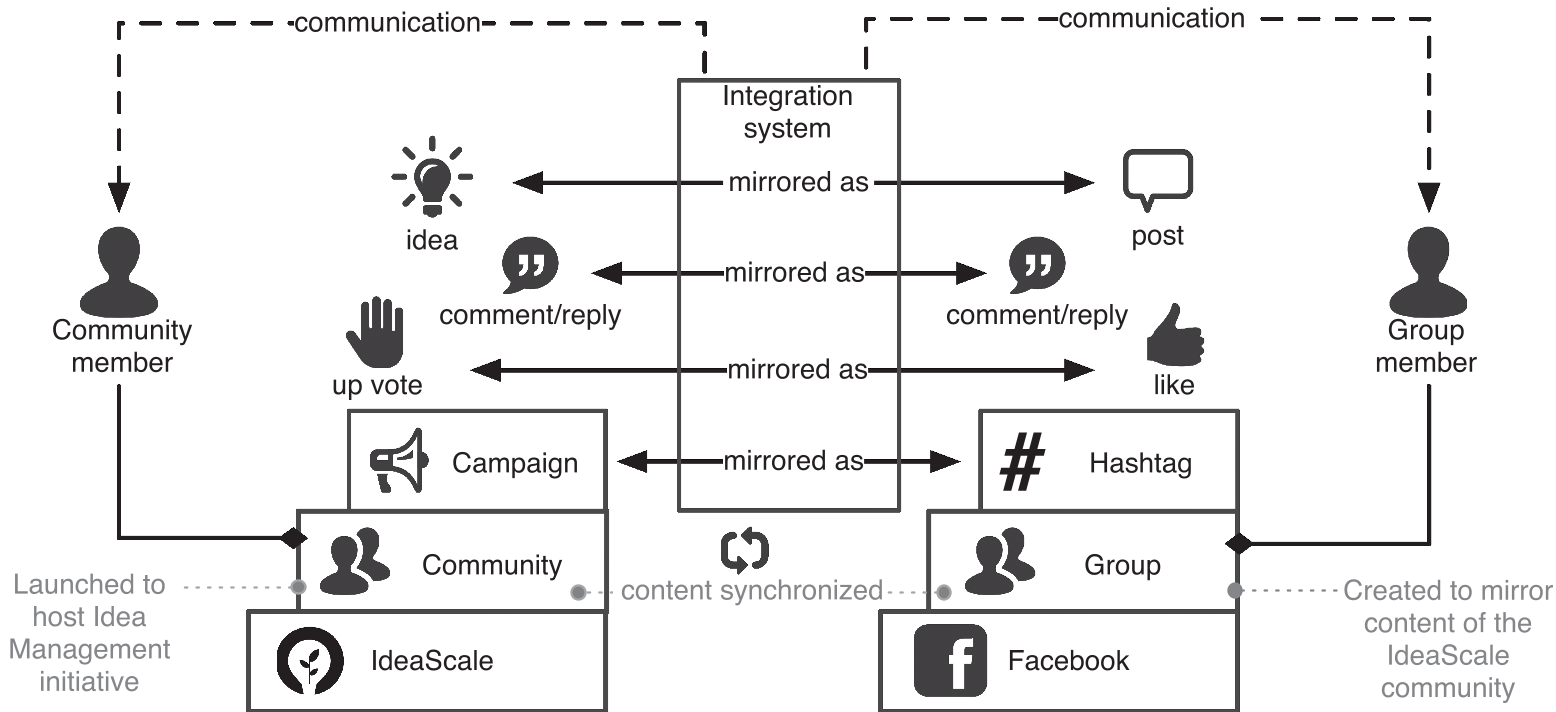
The synchronization daemon polled both APIs every five minutes, ensuring that a comment on Facebook appeared on IdeaScale and vice-versa, maintaining a "single source of truth" across two vastly different platforms.
Real-World Case Study: "Voz y voto"
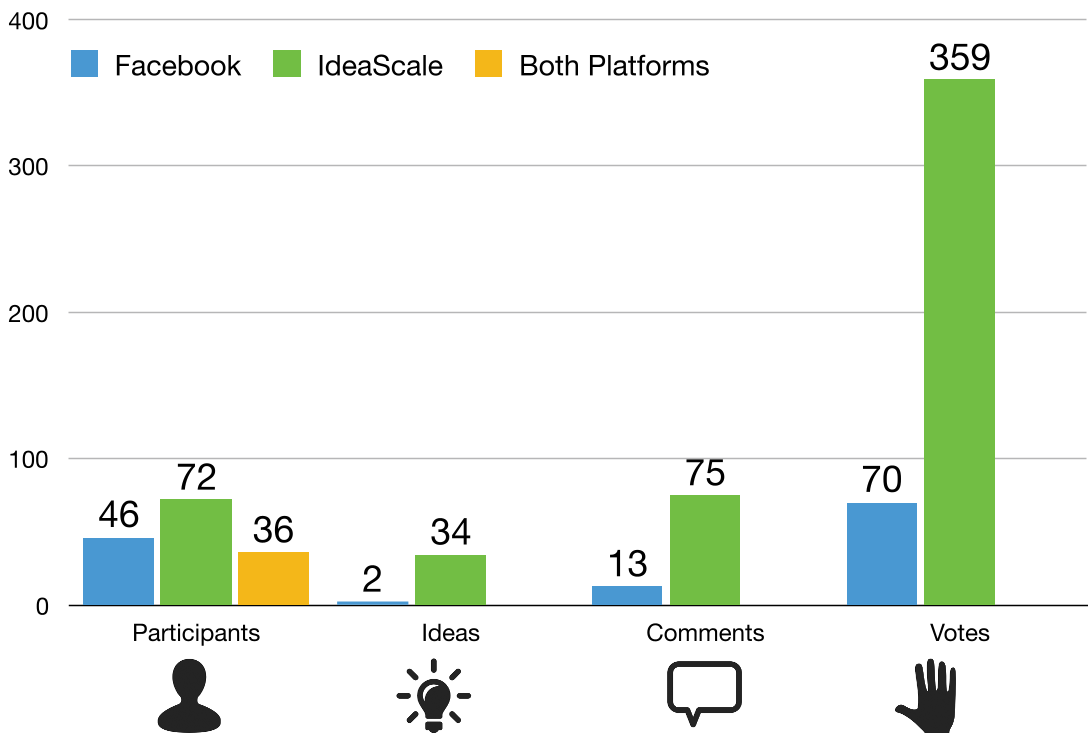
The system was tested in Asunción, Paraguay, involving a political party seeking urban innovation ideas. The 13-week study tracked 154 participants across three cohorts: IdeaScale-only, Facebook-only, and "Hybrid" users.
Key Experimental Results
- Enrollment Boost: Facebook proved to be a powerful "top-of-funnel" tool. 23% of users joined the Facebook group first before ever registering on the main IMS platform.
- The Convenience Factor: Over one-third of hybrid users migrated entirely to Facebook for following updates, finding it more convenient than the dedicated platform.
- The Participation Paradox: Despite more people joining, the volume of ideas didn't skyrocket on Facebook. Users were comfortable "Liking" (voting) but hesitant to write long, structured "Ideas" on a social feed.
Deep Insights: The Anonymity vs. Accountability Dilemma
One of the most profound findings of the study was the identity conflict.
- On Facebook, your political opinions are tied to your real name, visible to family and employers. This "context collapse" discouraged some from posting radical or critical ideas.
- On IdeaScale, pseudonyms allowed for more "inhibited" self-expression.
Technically skilled "super-participants" dominated the discourse—44% of ideas were produced by just two people. This suggests that while integration lowers the physical barrier, it doesn't necessarily lower the psychological barrier of civic expertise.
Critical Analysis & Conclusion
The Takeaway: Integration with SNS is essential for visibility and recruitment, but it changes the nature of the content. Facebook is excellent for quick feedback (Likes/Comments) but poor for long-form intellectual labor (Idea Drafting).
Limitations:
- Hashtag Friction: Users often forgot to use hashtags, breaking the automated synchronization.
- Mobile Digestion: Long civic proposals are hard to read on a Facebook mobile feed.
Future Outlook: The authors suggest that moving toward Machine Learning to automatically categorize ideas (replacing manual hashtags) and focusing on Instant Messaging (WhatsApp) integration might be the next frontier for civic engagement in regions where mobile-first habits dominate.
Ultimately, "Voz y voto" showed that technology can bridge the gap to the "non-voter," but only if the organizers are ready to listen and act on the results. Technology can facilitate the conversation, but political will is what makes it matter.