
Ingress: How Niantic Gamified Labor to Build a Billion-Dollar Map
Online Multiplayer Games for Crowdsourcing the Development of Digital Assets - The Case of Ingress
This study investigates Niantic's "Ingress" as a pioneering case of crowdsourcing digital assets through an online multiplayer game. It explores how the game motivates players to build a global Points of Interest (PoI) database that serves as the backbone for multi-billion dollar titles like Pokémon GO.
TL;DR
This paper explores how Niantic utilized its first major game, Ingress, not just as an entertainment product, but as a massive crowdsourcing engine. By integrating the creation of a global Points of Interest (PoI) database into gameplay, Niantic leveraged unpaid player labor to build the "Real World Platform" that powers Pokémon GO and Harry Potter: Wizards Unite, effectively turning "playing" into a productive revenue stream.
Problem & Motivation: The Sourcing Bottleneck
Building a high-quality, geographically distributed database of "culture-worthy" locations is a monumental task. Traditional methods—hiring surveyors or using generic map data—often lack the "human touch" and local nuance required for immersive Augmented Reality (AR) experiences.
The authors point out that while platforms like Amazon Mechanical Turk exist for micro-tasks, they rely on extrinsic (monetary) motivation. This is expensive and often fails to elicit the passion needed for high-quality data. Niantic’s insight was to move beyond "superficial gamification" (just adding points) and instead create a complete game around the crowdsourcing problem.
Methodology: The "Secret" Revenue Model
The paper categorizes Niantic’s approach as a sophisticated blend of Crowdsolving (submitting new portal candidates) and Crowdrating (peer-reviewing those candidates via the "Operation Portal Recon" or OPR system).
Multi-layered Motivation Framework
The core of the methodology lies in how Niantic keeps players working for free:
- Game World Influence: Submitting a portal directly creates a new gameplay location in the player's neighborhood.
- Social Recognition: High-level players (Level 12+) gain elite status by reviewing submissions, verified through in-game "badges."
- Team Dynamics: Players are motivated to build the "Portal Network" to help their specific faction (Resistance vs. Enlightened).
 Figure 1: The UI for submitting digital assets directly within the Ingress application.
Experiments & Results: The Value of "Play"
The study highlights a stark contrast in direct vs. indirect revenue. While Ingress Prime generated a modest 22,000,000 in the same period.
Performance Comparison
The authors analyze Niantic's dominance in the Location-Based Game (LBG) market:
- Pokémon GO: $22M (Powered by Ingress data)
- Harry Potter: Wizards Unite: $2M (Powered by Ingress data)
- Ingress Prime: $20k (The data generator)
The results demonstrate that the real asset isn't the game itself, but the crowdsourced database which Niantic now rents to other developers as an AR platform.
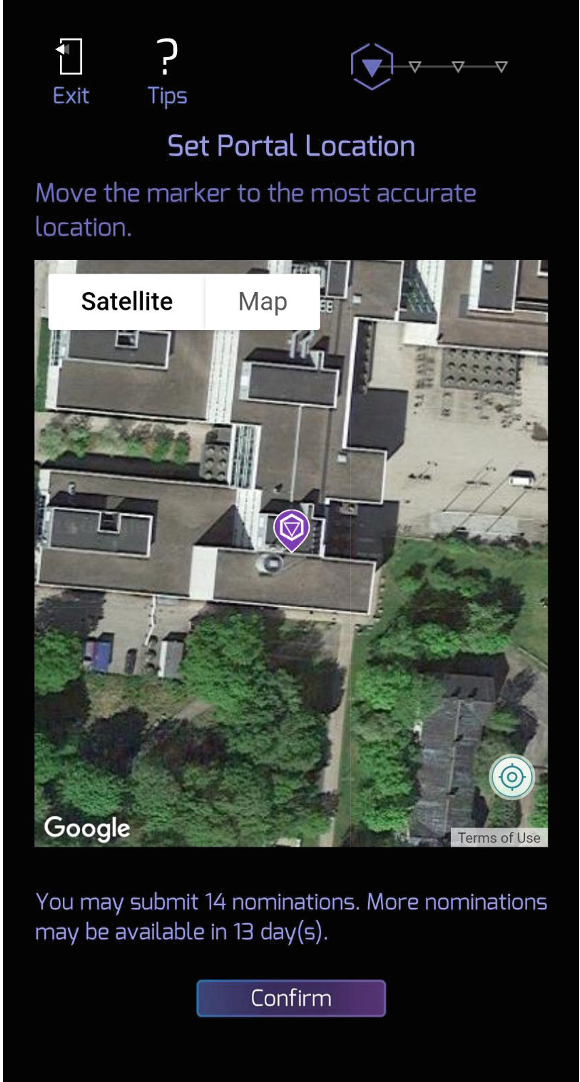 Figure 2: The complex interplay between gameplay, data generation, and revenue streams.
Critical Analysis & Conclusion
Takeaway
The paper concludes that crowdsourcing digital assets via online multiplayer games is a highly viable business strategy. By aligning the player’s desire for local content with the company’s need for data, a symbiotic relationship is formed where labor is perceived as entertainment.
Paradoxes and Ethics
The authors raise significant ethical questions. Is this "digital sharecropping"? Since players feel they "co-created" the world, do they have rights to the data? Furthermore, the study notes geographic biases: rural areas remain underdeveloped because there aren't enough "voluntary workers" (players) there to build the network.
Future Outlook
We are moving toward a future where more games will likely hide productive tasks (e.g., training AI, labeling images, mapping environments) inside "fun" loops. Niantic has proven that if you make the work meaningful within a virtual narrative, the crowd will build your empire for you.
Academic Keyword Tags: #Crowdsourcing #Gamification #RevenueModels #LBG #Ingress #DigitalAssets #Niantic