
Can an Online Service Predict Gender? The Fragile Reality of Text-Based Identification
Can an Online Service Predict Gender? On the State-of-the-Art in Gender Identification from Texts
This paper provides a systematic literature review (2017-2019) on automated gender identification from textual data, evaluating various machine learning approaches across platforms like Twitter and Facebook. The study finds that while the state-of-the-art method achieves 93.4% accuracy, most current systems are fundamentally limited by binary gender models and insufficient reliability for scientific or ethical use.
TL;DR
Is your digital footprint enough for an algorithm to "know" your gender? This systematic review by Stefan Krüger and Ben Hermann reveals a sobering reality: despite the hype around AI, the state-of-the-art in text-based gender identification is far from perfect. With a peak accuracy of 93.4% and a dogmatic reliance on binary gender models, these systems pose significant risks of misgendering and social exclusion.
Context: Why "Guessing" Gender is Growing
From targeted advertising to scientific surveys, there is a massive demand for automated gender identification. Many organizations use these tools to measure "diversity" or "success" in their initiatives. However, the authors argue that the temptation to automate comes at a high cost of accuracy and ethical integrity.
The Problem: Accuracy Gaps and Binary Bias
The research highlights two critical failures in the current landscape of Gender Identification (GI):
- Technical Unreliability: While some models claim high numbers, many struggle in real-world scenarios. A model that is 80% accurate still misgenders one in five people—a rate that is unacceptably high for any service that restricts access based on results.
- Gender Reductionism: Almost all existing research (including the 59 approaches studied) treats gender as a binary switch (Male/Female). This ignored reality of non-binary and transgender individuals means these "predictive" services are inherently discriminatory by design.
Methodology: How the Benchmarks Stack Up
The authors analyzed 59 approaches from prominent NLP competitions and journals between 2017 and 2019. The workflows generally involve:
- Preprocessing: Tokenizing text, replacing usernames/hashtags with generic markers.
- Classification: Utilizing algorithms ranging from Support Vector Machines (SVM) to Deep Neural Networks (CNNs/LSTMs).
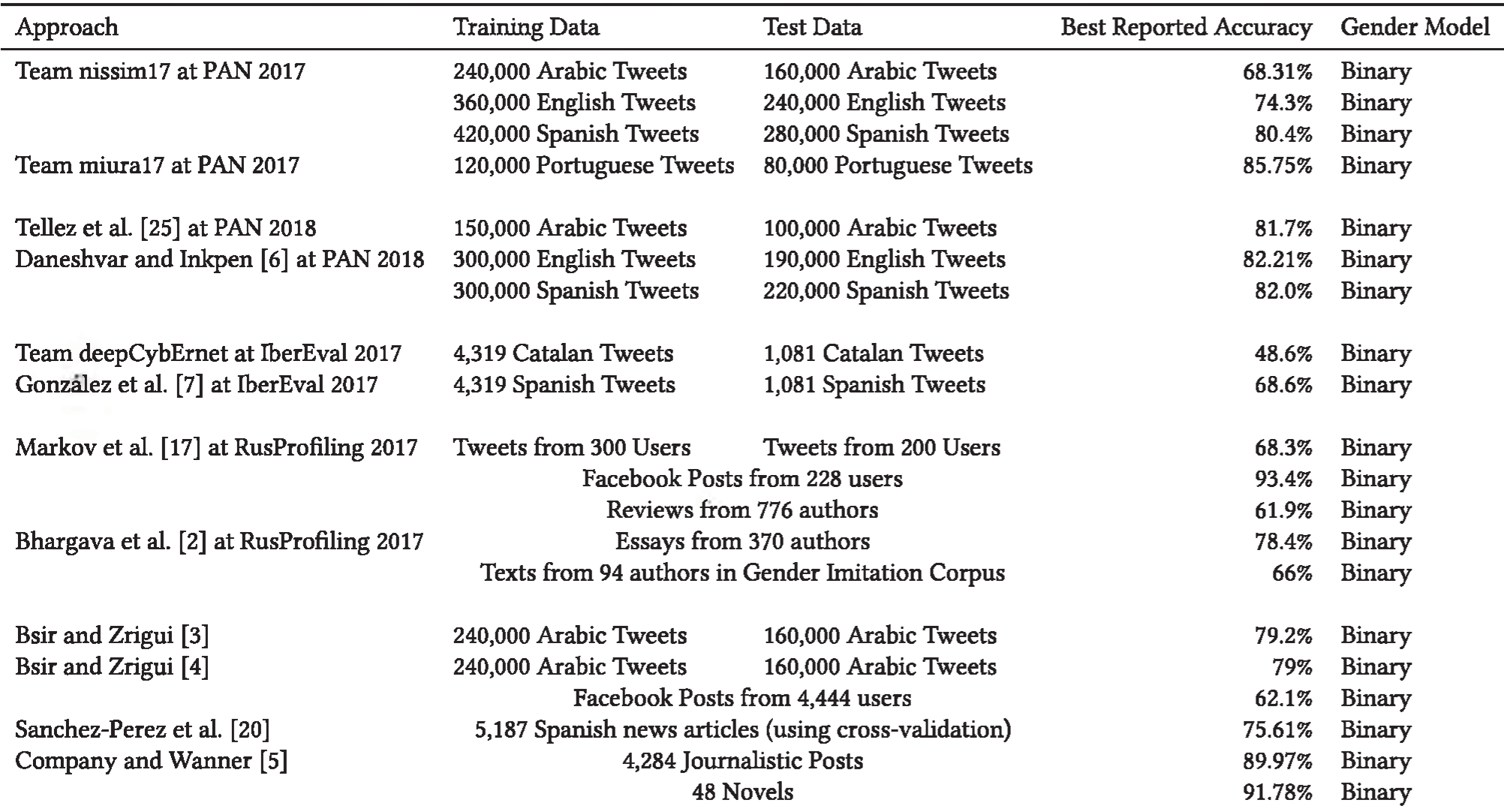 Figure 1: Comparison of various approaches, showing the fluctuation of accuracy across different languages and platforms.
Key Results: Where AI Fails
The study found that the "best" performance is highly dependent on the source of the data:
- Facebook Posts: Reached a high of 93.4% accuracy.
- Long-form Novels: Reached 91.78%, but required an impractical amount of data (multiple whole books per author).
- Twitter/Short Text: Often bottomed out between 61% and 80%, which the authors describe as "dangerously close to random guessing" in a binary setup.
Critical Insight: The "Why" vs. the "What"
The paper points out a lack of "scientific rigor" in the field. Most researchers focus on boosting accuracy percentages without explaining why certain linguistic features (like period length or slang) correlate with gender. This "black box" approach ignores the cultural and sociolinguistic context of how gender is expressed.
Conclusion and Future Outlook
The paper concludes with a stern warning: Automated gender identification is currently not a reliable substitute for self-identification.
For software engineers and data scientists, the message is clear:
- Stop assuming binary: Gender-inclusive architecture is a requirement, not an optional feature.
- Report the "Threats to Validity": If you use these tools in a study, you must acknowledge the 7-20% error rate.
- Ethical Innovation: We must protect marginalized groups from the "digital erasure" caused by inaccurate, reductionist algorithms.
Limitations
As a literature review, this study reflects the state of the art up to 2019. It does not account for the recent leap in Large Language Models (LLMs) like GPT-4, which may exhibit different biases or higher predictive capabilities—though the ethical concern regarding non-binary recognition remains largely unaddressed even in contemporary models.