
Online Social Honeynets: Turning the Tables on Malicious Web Crawlers
Online Social Honeynets: Trapping Web Crawlers in OSN
The paper introduces the concept of Online Social Honeynets (OShN), a defensive mechanism designed to protect Online Social Networks (OSN) from malicious web crawlers. By deploying a subgraph of fake users and strategically connecting them to high-degree nodes, the authors demonstrate a "trap" that attracts and confines crawlers using Greedy scheduler algorithms.
TL;DR
Web crawlers are the "silent harvesters" of the social media age, systematically mapping our relationships and exposing private communities. This paper proposes Online Social Honeynets (OShN)—a structural trap within social graphs designed to lure crawlers away from real user data and lock them into fake subgraphs by exploiting the very algorithms they use to navigate.
Contextual Positioning
While most privacy research focuses on anonymization (altering data before release) or access control (blocking bots), this work takes an Active Defense approach. It treats the social network as a battlefield where the crawler's navigation logic (the scheduler) is a vulnerability that can be exploited by the network administrator.
The Problem: Why Your "Private" Profile Isn't Safe
Even if you set your profile to private, the "Edge Privacy" problem remains. Your relationships are visible through your friends' lists.
- The Threat: Crawlers use different "schedulers" to decide who to visit next.
- The Impact:
- BFS (Breadth-First Search): Maps your immediate neighborhood and community.
- Greedy Schedulers: Rapidly find "hubs" (high-degree nodes) to map the entire network's backbone efficiently.
- The Failure of Traditional Defense: IP banning is easily bypassed via proxies, and CAPTCHAs ruin user experience.
Methodology: The "Greedy" Trap
The brilliance of the OShN lies in its psychological and algorithmic "bait."
1. The Attraction (The Bait)
Most efficient crawlers use a Greedy Scheduler, always picking the user with the highest number of friends to crawl next. The authors suggest creating a few "bridge" edges between real high-degree users and the Honeynet.
2. The Architecture
The OShN consists of:
- Exterior Nodes: Gateway fake profiles connected to real users.
- Interior Nodes: A dense, fake subgraph (e.g., a complete graph) where every fake user has an extremely high degree—higher than any real user in the network.
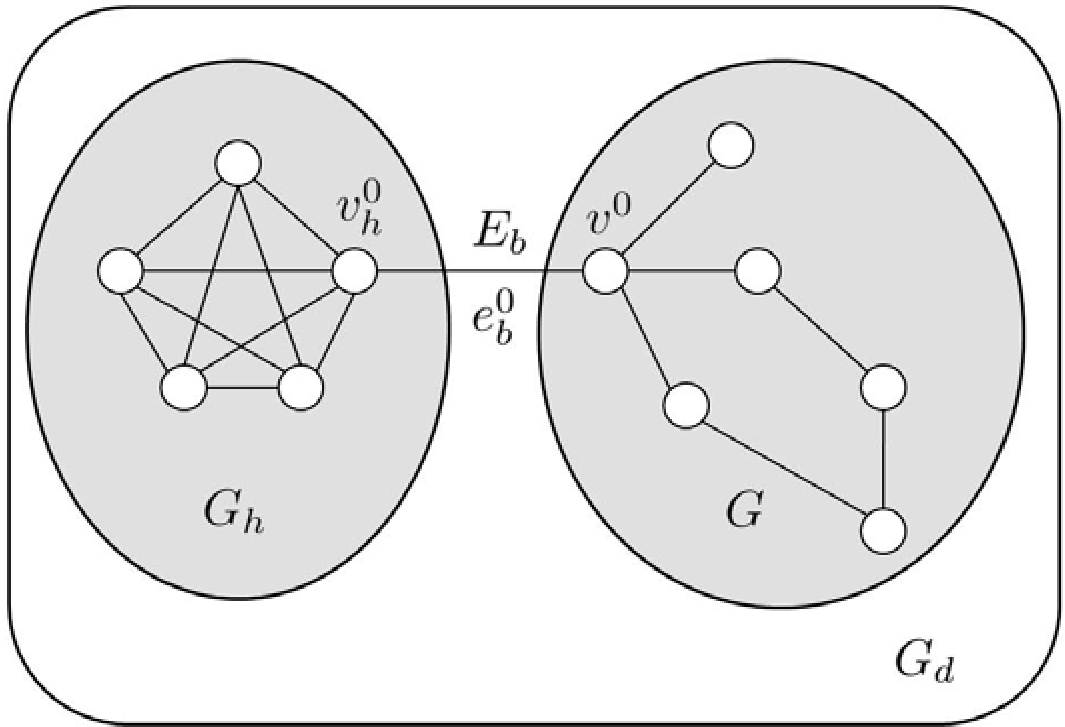
3. The Logic
Once a Greedy crawler spots a Honeynet node, it sees a "goldmine" of high-degree connections. Because the crawler is programmed to maximize discovery, it will prioritize the Honeynet nodes over real users, effectively entering a "sinkhole" where it spends its resources crawling fake data.
Experiments and Results
The authors tested this on a massive Flickr dataset (11 million users, 22 million links).
- Efficiency: In 66% of the tests, the crawler was "captured" by the honeynet in just 5.09 hops.
- Protection: Once captured, the amount of real data leaked was negligible. The crawler would essentially "spin its wheels" within the fake complete graph of the OShN.
- Minimal Noise: The honeynet only requires a few edges connected to "celebrity" nodes (who already have thousands of followers), meaning 99.9% of regular users never notice the honeynet's existence.
Critical Insight & Future Outlook
Takeaway: The "Inductive Bias" of a crawler—its preference for high-degree nodes—is its Achilles' heel. By shaping the network topology, we can manipulate the "visibility" of the entire graph.
Limitations:
- Static Nature: A smart crawler might eventually realize it's in a clique of fake users (it looks too "perfect").
- Breadth-First Defense: This specific proof-of-concept is optimized for Greedy crawlers; defending against BFS requires a different "spatial" noise strategy.
Future Work: The next frontier is Dynamic OShNs—honeynets that grow and change in real-time, appearing so socially "organic" that even AI-driven crawlers cannot distinguish them from the real vibrant fabric of a social network.