
Beyond the Transaction: Decoding User Interests via Social and Spatial Signals
Utilizing Online Social Network and Location-Based Data to Recommend Products and Categories in Online Marketplaces
The paper investigates product and category recommendation in online marketplaces by leveraging three data sources: marketplace, online social networks, and location-based data. Using a user-based Collaborative Filtering (CF) approach, the authors find that social network interactions are the strongest predictors for specific products, while marketplace and location data excel in recommending broader product categories.
TL;DR
This research challenges the "marketplace-only" status quo of e-commerce recommendations. By analyzing a massive dataset from the virtual world of SecondLife, researchers demonstrated that your social interactions (who you talk to and "love") are far better predictors of what you'll buy than your previous purchase history. However, for broad browsing (categories), your location and marketplace metadata become the star players.
Background: The Limits of Marketplace Isolation
Most online marketplaces suggest products based on what you previously bought or viewed. While effective, this ignores a fundamental truth: our purchasing decisions are deeply embedded in our social circles and our environment. The authors argue that by ignoring Social Network Analysis (SNA) and Location-Based data, recommenders miss out on the "Why" behind a purchase.
Methodology: The Three Pillars of Data
The study utilizes three distinct data stems:
- Marketplace: Interactions with products, sellers, and categories.
- Social Network: Likes, comments, wall posts, and group memberships.
- Location-Based: "Picks" (favorites), shared snapshots with GPS, and monitored event calendar triples.
The authors moved beyond simple similarity by testing Content-based features (what you have in common) against Network-based features (how your social graph overlaps).
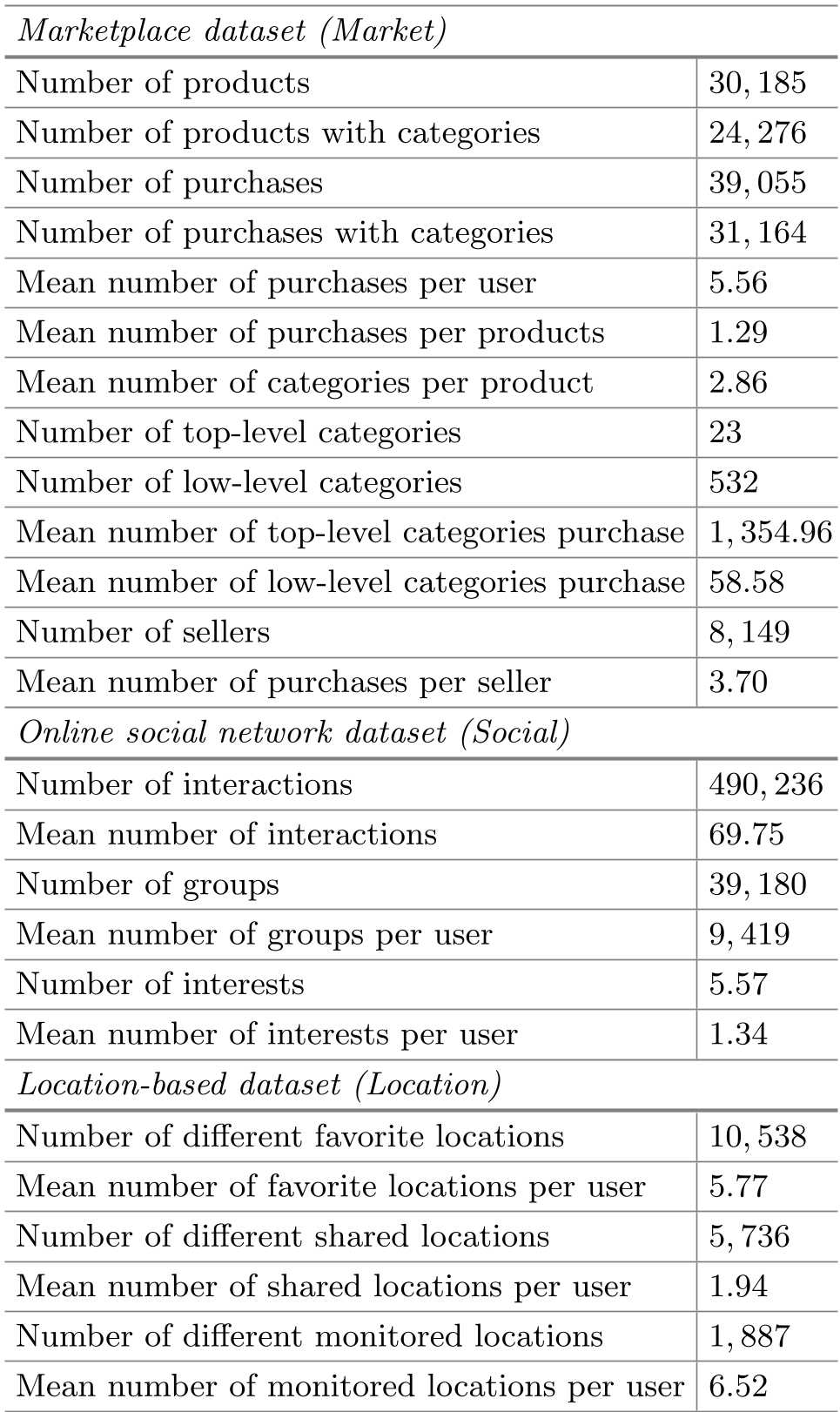
Table 1: The rich dataset profile from SecondLife, providing a unique "social petri dish" where marketplace, social, and location data coexist.
The Similarity Engine
The core of the methodology relies on User-based Collaborative Filtering (CF). Instead of a standard rating matrix, the "similarity" between users is defined by complex network metrics like:
- Adamic/Adar: Weighting common neighbors by the rarity of those neighbors.
- Neighborhood Overlap: Measuring the structural commonality between two users' social circles.
Experimental Results: Social for Items, Location for Interests
The experiments yielded a fascinating dichotomy in recommendation performance:
- Specific Product Recommendations: Network-based social features (like Neighborhood Overlap) crushed every other metric. Their nDCG was nearly 15x higher than marketplace-only features. This suggests that for specific items, we follow our peers.
- Category Recommendations: When the goal was simply to suggest a "Domain of Interest" (e.g., Virtual Clothing vs. Real Estate), marketplace and location features caught up. In top-level categories, Jaccard similarity of Categories actually outperformed social data.
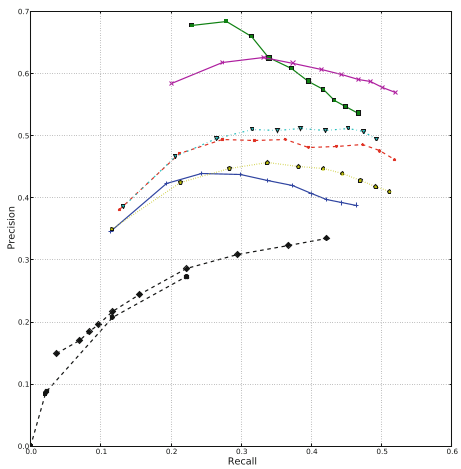
Fig 2: Recall/Precision plots showing the dominance of Social Network (SN) features for products (d) versus the competitive performance of Marketplace data for categories (c).
The Power of Hybridization
By using a Weighted Sum approach to combine the best signals from all three sources, the researchers achieved:
- SOTA Accuracy: Higher nDCG and Precision than any single-source method.
- 100% User Coverage: Most single-source methods fail for new users (cold start). By using social or location data as a fallback, the system can provide recommendations to every single user.
Critical Analysis & Conclusion
Takeaway
The specialization level of the task determines which data source is "king." If you want to sell a specific gadget, look at the user's social neighbors. If you want to suggest a lifestyle category, look at where they hang out and their general browsing habits.
Limitations
While SecondLife is a brilliant microcosm, a virtual world offers "perfect information" (exact GPS, every social 'love'). Transferring this to the real world involves significant privacy barriers and data fragmentation (e.g., getting Amazon data to talk to Facebook and Foursquare data).
Future Outlook
The next frontier is the Social Cold-Start. Can we recommend products to a user who has never made a purchase, solely based on their first three "Likes" or their current location? This paper provides the mathematical foundation to prove that it isn't just possible—it might actually be more accurate than the old ways.