
The Multidimensional Lens: Decoding Global Polarization via Online Social Networks
Online social networks and media
The paper introduces a multidimensional analytical framework to investigate polarized social discussions on Online Social Networks (OSNs). Using an iterative classification algorithm called Polarization Tracker (PTR), it tracks the evolution of sentiment regarding the Mediterranean refugee crisis and the Brexit referendum across time, space, and sentiment dimensions.
TL;DR
This research presents a scalable framework for analyzing polarized topics on Twitter by integrating time, geography, and sentiment. By applying this to the 2015 refugee crisis and the 2016 Brexit referendum, the authors reveal how sentiment shifts in response to real-world events and how different social phenomena (migration vs. political sovereignty) are fundamentally linked in the digital public square.
Problem & Motivation: Beyond Simple Hashtags
In the era of "Divided Unions," social media has become a primary battlefield for public opinion. However, most prior works treat Online Social Networks (OSNs) as flat data sources. They measure what is being said (frequency) but fail to address where and why opinions shift. The cognitive gap is clear: a "refugee" hashtag in Germany carries a different sentiment weight than one in the UK. The authors aim to fill this gap by proposing a framework that treats sentiment as a dynamic variable influenced by both physical location and temporal context.
Methodology: The PTR Algorithm
The core of this paper is the Polarization Tracker (PTR). Unlike standard sentiment tools that use fixed lexicons (which often fail with sarcasm or slang), PTR is an unsupervised, iterative algorithm.
- Seed Selection: It starts with a tiny set of obvious hashtags (e.g., #RefugeesWelcome vs. #NoRefugees).
- Iterative Expansion: It classifies tweets based on these hashtags, then classifies users based on their tweets, and finally identifies new polarized hashtags used by those users.
- Refinement: This loop continues until a stable set of polarized keywords and users is formed.
 The mathematical core: Scoring hashtags based on their prevalence in polarized user groups versus opposing groups.
Experiments & Results: The Refugee Crisis and Brexit
The framework was tested on two massive datasets: 1.2M tweets on refugees and 4.3M tweets on Brexit.
The Refugee Crisis: The "Alan Kurdi" Effect
The spatial-temporal analysis revealed that sentiment isn't just a mood—it's a reaction to tragedy. Following the drowning of the Syrian boy Alan Kurdi, positive sentiment and tweet volumes spiked globally, shifting the political discourse overnight. However, this varied by geography: countries heavily impacted by arrival flows (like Italy and Hungary) showed more persistent negative polarization than those further from the "front lines."
Brexit: A Predictor of Polarization
In the Brexit study, the framework showed that Twitter wasn't just reflecting the vote—it was highlighting the deep geographic divide. The analysis mapped a clear "North-South" sentiment gradient in the UK, where Scotland (Edinburgh/Glasgow) stayed consistently Pro-Remain/Pro-Refugee, while central England showed higher Pro-Brexit/Anti-Refugee sentiment.
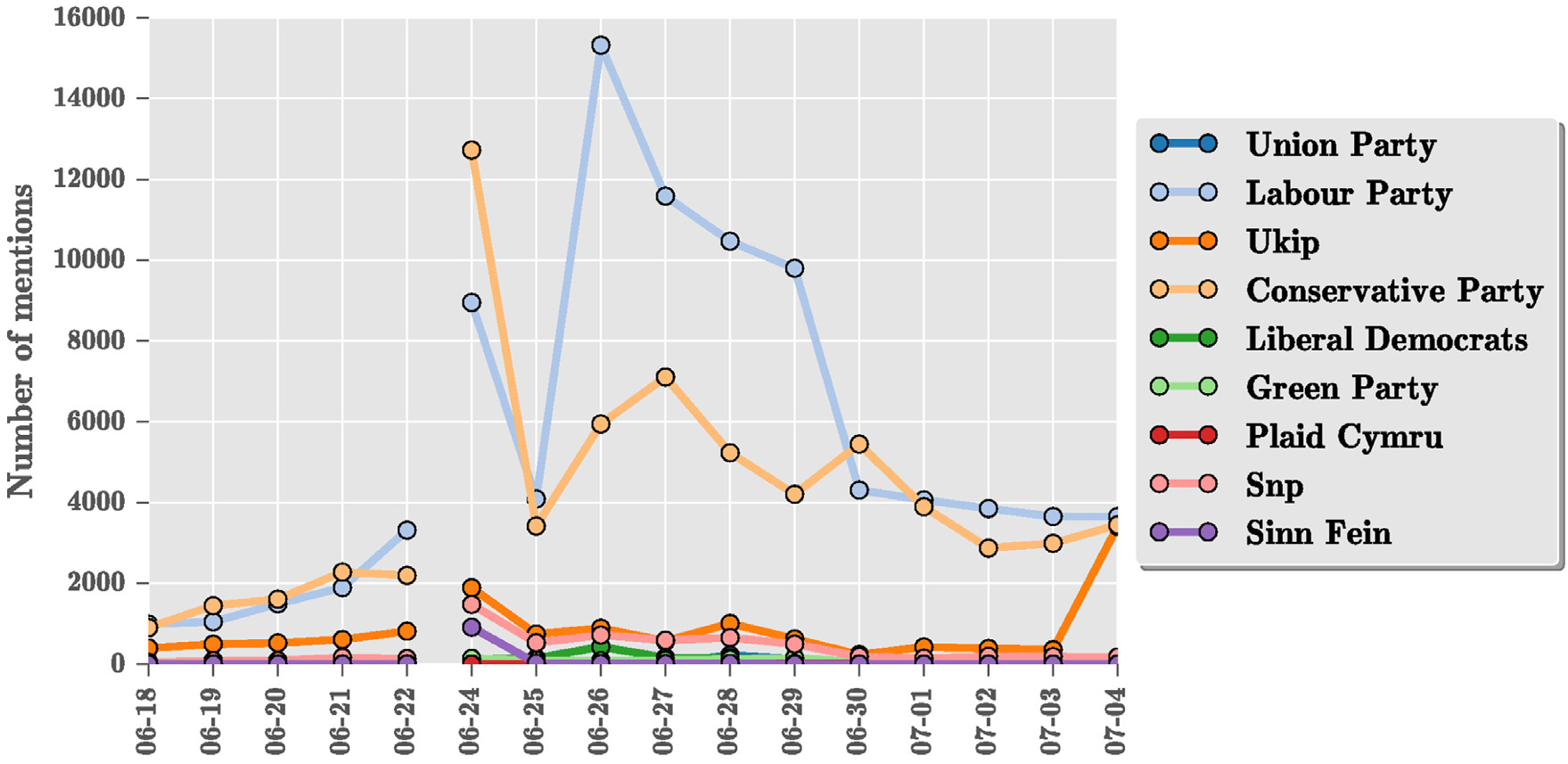 Fig: The spatial distribution of sentiment in the UK before the referendum, showing clear regional clusters of Leave vs. Remain.
The Hidden Link
Perhaps the most striking finding is the Pearson correlation between the two topics. As shown in the matrix below, cities that were anti-refugee were significantly more likely to vote for Brexit. This confirms the "Inductive Bias" that anti-immigration rhetoric was a primary driver for the Leave campaign.
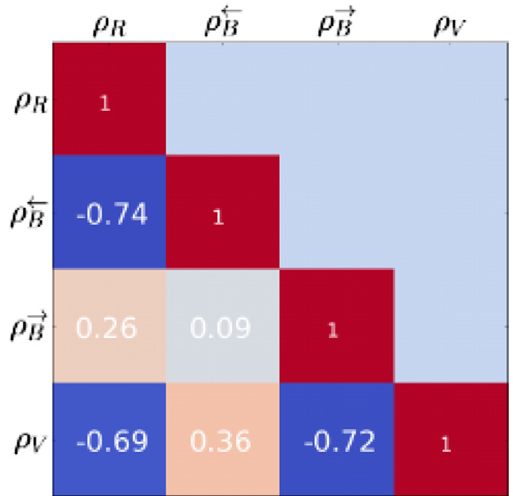 Fig: Strong positive correlations between Anti-Refugee sentiment and Pro-Brexit voting results.
Critical Insight & Conclusion
This paper succeeds in moving social media analysis from "counting" to "sensing." By integrating spatial metadata (user vs. mentioned locations), the authors move beyond the "echo chamber" narrative to show how physical reality (borders, transit routes) shapes digital perception.
Limitations: The study is limited to English-language tweets. Since the refugee crisis centers on non-English speaking regions (Germany, Turkey, Syria), a significant portion of the local sentiment may be lost or filtered through an "Anglophone lens."
Future Work: The next frontier for this framework is real-time streaming analysis and the incorporation of "Network Effects"—analyzing how the structure of the follower graph (not just the text) accelerates polarization.