
WeChat as a Digital Commons: How Online Social Networks Mobilize Young Adults
Can online social networks foster young adults’ civic engagement?
This study investigates whether and how the WeChat platform fosters civic engagement among young adults in China. Using Communication Infrastructure Theory (CIT) and a survey of 297 participants, it identifies that network size and interaction frequency drive both online and offline civic behaviors through the mediation of information use and group incentives.
TL;DR
Does spending hours on social media make young people less likely to care about their communities? This study on WeChat says the opposite. By analyzing the social habits of 297 young adults, the research finds that WeChat serves as a critical "storytelling community" where interactions and information sharing directly translate into a higher likelihood of participating in both online and offline civic activities.
Problem & Motivation: The "Time Displacement" Debate
For years, scholars have worried about the Time Displacement Hypothesis—the idea that the more time we spend online, the less time we spend being active citizens. In China, where traditional civic channels are often limited, understanding the role of social media is crucial.
While previous studies focused on public-facing platforms like Sina Microblog (Weibo), this paper zooms in on WeChat, which is built on strong ties (acquaintances and friends). The author asks: Can these private, relationship-driven networks actually foster a sense of duty and public participation?
Methodology: The Path from Connection to Action
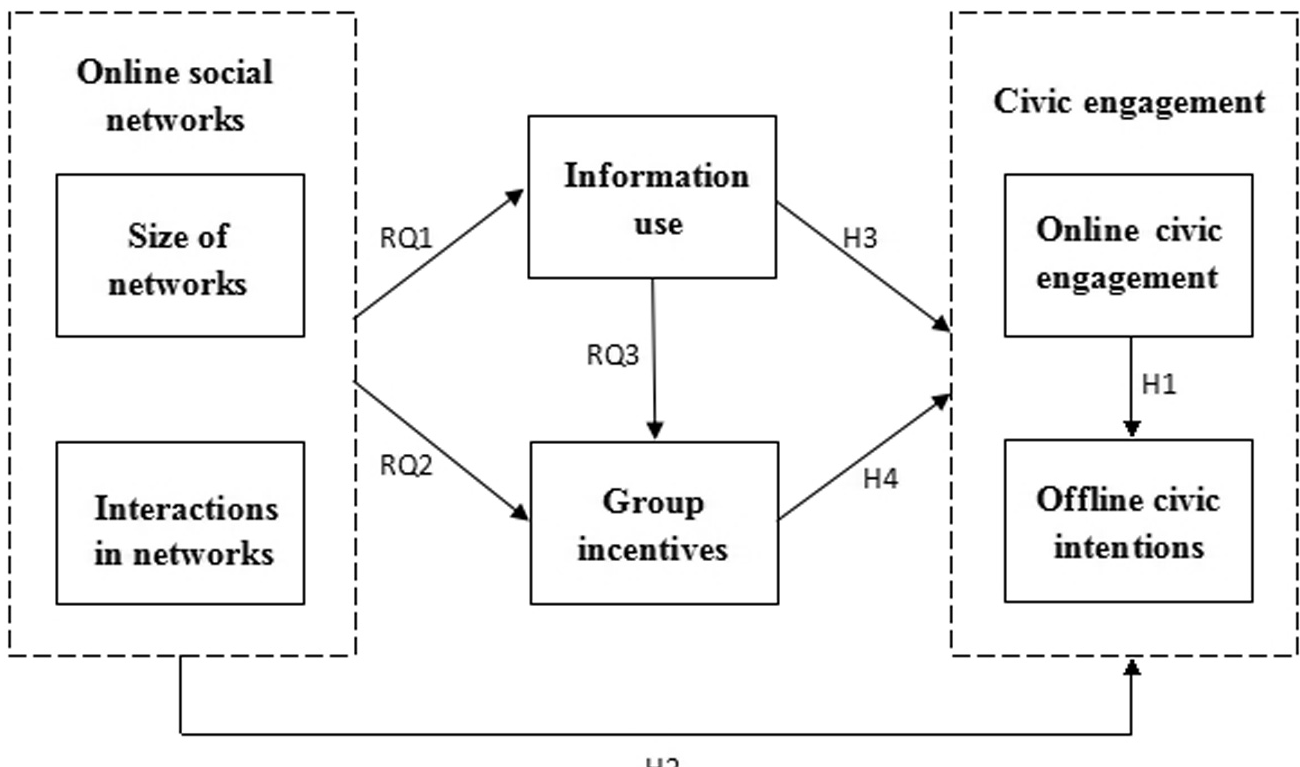
The study adopts Communication Infrastructure Theory (CIT), viewing WeChat as a modern "neighborhood storytelling network." The researcher proposes that simply having friends isn't enough; it is the interaction within those networks that sparks change.
The model tests two main mediators:
- Information Use: How much (quantity) and how deeply (quality) users engage with civic news.
- Group Incentives: The psychological feeling that engaging in social issues benefits the nation or community.
Key Results: From "Likes" to Life-Changing Actions
The data revealed a complex but clear hierarchy of influence:
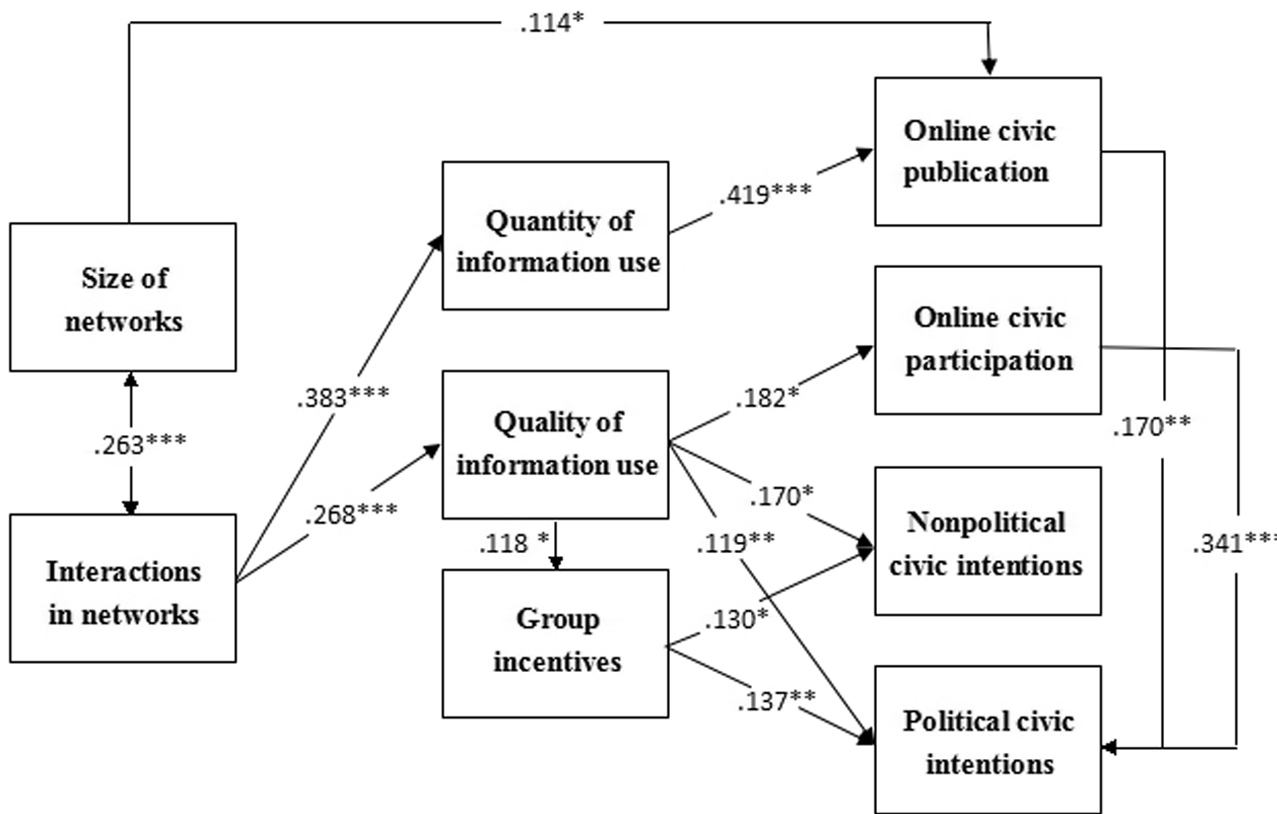
- Network Size vs. Interaction: Merely having a large friend list (Network Size) only leads to "Online Publication" (sharing posts). However, active Interactions (chatting, commenting) lead to higher-quality information consumption.
- The Power of Information: The quality of information use is a powerhouse. It doesn't just prompt online clicks; it significantly boosts intentions for offline volunteer work, donations, and even communicating with government officials.
- Bridging the Gap: Online civic participation is a "gateway drug" for offline engagement. Those active on WeChat develop the skills and habits that make them more likely to take real-world action later.
Deep Insights & Critical Analysis
The most striking takeaway is the rejection of the "slacktivism" myth in this context. In WeChat, "online publication" (posting opinions) and "online participation" (donating or petitioning online) were both strong predictors of Offline Political Intentions.
Why does this work? It's about Normative Influence. Because WeChat is a circle of friends, we are more influenced by what our peers share than by what a random stranger or celebrity says. When a friend shares a petition or a volunteer opportunity, it carries a social weight that broadcast media lacks.
Limitations to Consider
- Sample Bias: The study heavily skewed toward highly educated city-dwellers. We don't yet know if WeChat has the same "mobilizing" effect on young adults with lower socio-economic status.
- Directionality: It is possible that people who are already civically minded simply use WeChat more to stay connected. Future longitudinal studies are needed to prove that the app causes the engagement.
Conclusion
WeChat is more than just a messaging app; for young Chinese adults, it is a digital infrastructure for citizenship. As digital tools become the primary lens through which young people see the world, the "storytelling" that happens in private group chats may be the most important factor in the future of civic society.