
VivoSpace: Why Most Health Social Networks Fail and How to Fix Them
Online social networks for health behaviour change: Designing to increase socialization
This paper introduces VivoSpace, an online social network (OSN) built on the Appeal Belonging Commitment (ABC) Framework, designed to promote health behavior change through socialization. While a 3-month field study (n=35) achieved improvements in individual self-efficacy and attitudes, it revealed a significant gap in active social interaction, leading the authors to propose "interest-driven" design strategies for health-tech socialization.
TL;DR
Health behavior change is famously difficult. While we've mastered "tracking" through pedometers and calorie logs, we haven't mastered "socializing" that data. This paper reviews VivoSpace, a theoretically-grounded social network that succeeded in boosting individual confidence (self-efficacy) but initially failed to spark a social revolution. The authors' subsequent deep-dive reveals the missing ingredient: Social Interest Intelligence.
Background: The Social Gap in Digital Health
Medical science knows that social factors—peer support, group norms, and collective accountability—are the strongest drivers of long-term health change. Yet, most health apps feel lonely. Despite adding "comment" buttons, they often fail because looking at a friend’s raw calorie log is, frankly, boring. This paper bridges the gap between HCI (Human-Computer Interaction) and Health Behavior Theory using the ABC (Appeal Belonging Commitment) Framework.
The VivoSpace Experiment
The researchers developed VivoSpace, integrating:
- Logging: Meals, activity, and weight with nutritional feedback via Wolfram Alpha.
- Socialization: A newsfeed, friending system, and group goals.
- Gamification: Experience points (XP) and 10 levels of character progression.
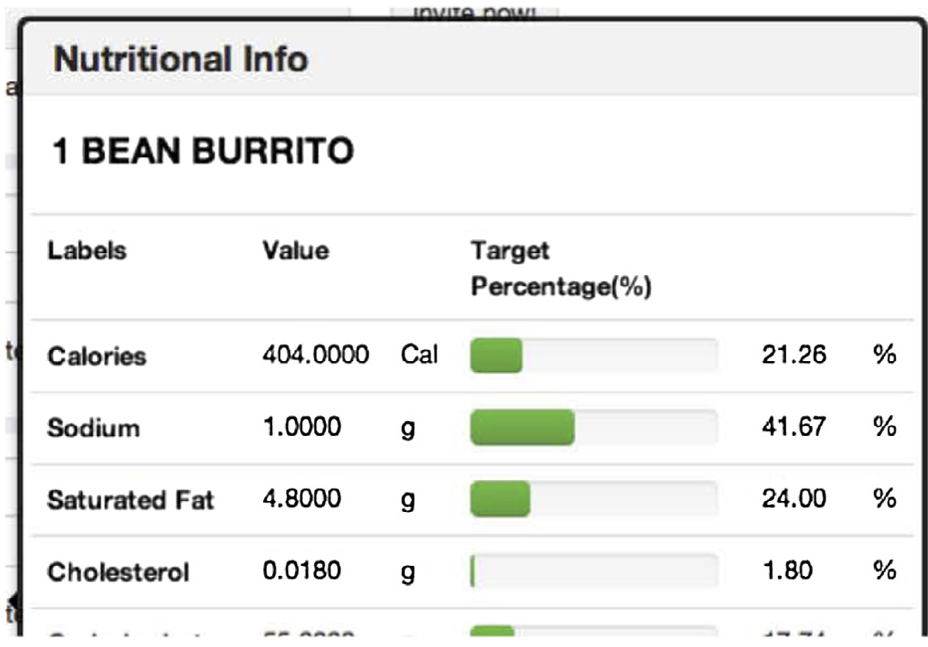 Figure 1: The VivoSpace dashboard, balancing personal metrics with a social newsfeed.
Methodology: The Theoretical Foundation
Unlike many "build-it-and-they-will-come" apps, VivoSpace was mapped directly to behavioral determinants.
| Determinant | Design Element in VivoSpace |
|---|---|
| Self-Efficacy | Viewing historical trends and seeing others succeed (Social Modeling). |
| Social Enhancement | Visibility of friend's levels and shared achievements. |
| Group Norms | Participating in group goals to mimic healthy behaviors. |
The Harsh Reality: Results from the Field
The field study (n=35) across Chicago and Vancouver yielded a "Good News / Bad News" scenario:
- Good News: Clinical participants saw significant jumps in Individual Determinants. Attitude toward activity and self-efficacy (confidence in one's ability to stay healthy) improved significantly (p < 0.05).
- Bad News: The Social Determinants didn't budge. Users found the newsfeed cluttered and felt no "inclination" to comment on a friend's raw data.
 Figure 2: Statistical evidence showing improvement in individual psychology (Self-Efficacy) but a lack of social movement.
The Pivot: Creating "Interesting" Health Data
Why didn't people talk? Participants noted that scrolling through a log of what someone ate felt like being "spammed." To fix this, the authors conducted focus groups and identified 6 Design Strategies to Increase Socialization:
- Contextualized Goals: Don't just say "Rob walked 2km." Say "Rob is 50% closer to his weekly marathon goal!"
- Gamification Visibility: Link logs to status. "This salad just pushed Sarah to Level 5!"
- Visual Evidence: Mandatory photo support. A picture of a healthy meal is worth more than a calorie count.
- Social Nuance: Status updates to allow "mmm, this hit the spot" style context.
- External Connectivity: Sharing recipes and links to make the feed a resource, not just a log.
- System Interpretation: The system should act as a "translator." Is 500 calories a lot for this specific person? The AI should tell the friends so they know when to cheer.
Critical Insight & Future Outlook
This work highlights a fundamental truth in Technical HCI: Data is not Social. For data to become a "Social Object," it must be interpreted and contextualized.
If we look at modern successes like Strava, we see these exact 2014 insights in action: the map (Visual), the PR/Crown (Intelligence/Interpretation), and the photo-sharing. The future of health behavior change lies in System Intelligence—using algorithms to find the "highlights" in a sea of mundane health logs, effectively telling the user's social circle: "Hey, this moment matters—cheer now!"
Conclusion
VivoSpace proves that while technology can easily track what we do, it requires a much more "intelligent" design to make us care about what others do. By moving from Passive Logging to Active Interpretation, we can finally turn the "Social" in social networks into a real tool for public health.