
Transforming the Classroom: The Dual Edge of Social Networks in Secondary Education
Online Social Networks Impact in Secondary Education
This paper investigates the integration of Online Social Networks (OSNs) into secondary education, specifically analyzing the educational platform Edmodo. Through a two-year field study involving 425 students, the authors validate the potential of OSNs to boost student motivation and collaborative learning while proposing a new tool, Tweacher, to address existing functional gaps.
TL;DR
Social networks are no longer just distractions; they are the primary communication infrastructure for the digital native generation. This research explores how platforms like Edmodo can be harnessed to increase student motivation, while identifying critical functional weaknesses that prevent these tools from reaching their full academic potential.
The Paradox of Engagement
The study begins with a stark reality: students are already online. In the Spanish secondary system (E.S.O.), 88% of students are active on platforms like Tuenti or Facebook, spending an average of 1.5 hours daily. However, there is a disconnect between "socializing" and "learning." The authors argue that instead of banning these environments, educators must migrate students to "controlled OSNs" that provide the social affordances (likes, walls, sharing) without the cognitive overload of non-academic distractions.
Methodology: Analyzing Edmodo and Student Habits
The researchers conducted a dual-track investigation. First, they performed a "feature-gap" analysis of Edmodo, the leading educational OSN. Second, they tracked the behavior of 425 students over two academic years.
The Edmodo Functional Audit
While Edmodo successfully replicates the "look and feel" of a social network, the authors identified several Weaknesses and Not Allowed Features:
- Lack of Synchronous Chat: No real-time interaction modules.
- No Private Student Messaging: Limits peer-to-peer collaboration.
- Content Fragmentation: No clear "subject structure" or index, making it hard to follow a formal curriculum.
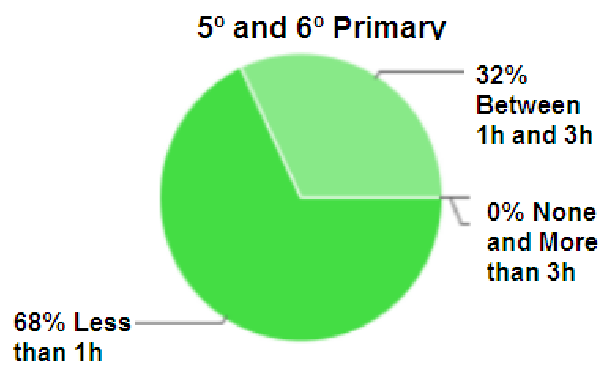 Fig 1. Data showing the high daily usage of social networks among secondary students, indicating their readiness for digital interaction.
Experimental Insights: Bachelor vs. E.S.O.
The most intriguing finding of the field study was the behavioral divide between age groups:
- Bachelor Students (Ages 16-18): Showed high autonomy. 70% were active weekly, and 50% logged in outside of school hours. They used the platform to debate and share news spontaneously.
- E.S.O. Students (Ages 12-16): Participation was strictly "task-oriented." They only posted when explicitly asked by a teacher, suggesting that younger students lack the intrinsic motivation to use OSNs for academic purposes without heavy guidance.
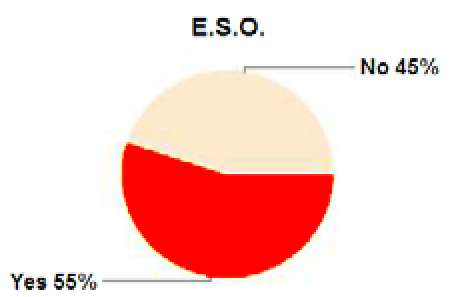 Fig 2. Survey data on parental concern, highlighting that nearly 45% of parents do not monitor their children's OSN usage, emphasizing the need for protective educational environments.
Deep Insight: From Edmodo to "Tweacher"
The authors conclude that existing tools are too "static." To solve this, they propose Tweacher (a hybrid of Twitter and Teacher). This new paradigm aims to:
- Improve Teacher Buy-in: Only 14.3% of teachers in the study were willing to use Edmodo. Lowering the technical barrier is essential.
- Leverage Inter-School Collaboration: The study showed that connecting classes from different cities via a shared OSN group significantly boosted excitement and participation.
- Parental Integration: Implementing usage counters and alerts to help parents manage the "overuse" of digital tools.
Critical Analysis & Conclusion
While the paper successfully proves that OSNs can act as a "motivator and enabler of social capital," it also exposes a pedagogical bottleneck. The effectiveness of an educational social network is not determined by its code, but by the social design of the teacher.
Future Outlook: The next generation of educational OSNs must move beyond being "Facebook-lite" and instead incorporate structured learning paths (indexing) and robust moderation tools that allow for private collaboration without the risks of cyber-harassment.