
Digital Shadows: How Soviet History and Cultural Trauma Shape Facebook Privacy in Hungary
Online Social Networks in a Post-Soviet State: How Hungarians Protect and Share on Facebook
This research-article presents a qualitative case study exploring how socio-political history and the migration from local to global social networks influence Facebook privacy attitudes in Hungary. Using 19 semi-structured interviews, the study uncovers how the legacy of the Soviet era and the failure of the local network iWiW shape modern digital sharing behaviors.
TL;DR
When we think of "online privacy," we often focus on encryption or terms of service. However, for Hungarians, privacy is a reflex shaped by nearly half a century of secret police and political turmoil. This study reveals a massive generation gap in digital sharing: while Gen Z treats Facebook like an open book, older users—haunted by the "neighbor’s report" in the Soviet era—treat every post like a potential interrogation file.
Background: The Ghost of the Secret Police
Hungary's 20th century was defined by the ÁVH (secret police) and the failed 1956 Revolution. For those who grew up under Communist rule, the concept of "documentation" is inherently dangerous. In this culture, a photograph or a recorded opinion wasn't just social media—it was a liability. The study positions Hungary as a unique laboratory to observe how a society transitions from a "culture of caution" to a globalized digital landscape.
Methodology: Listening to the Voices of Budapest
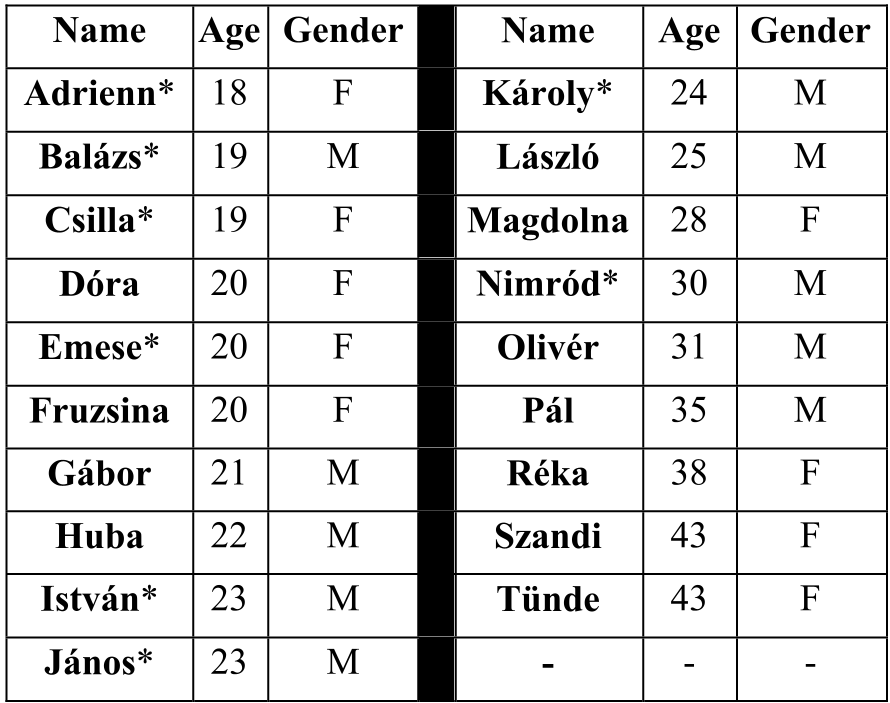
The researchers conducted 19 deep-dive interviews in Eastern Hungary. By categorizing participants from students (born after the fall of communism) to professionals who remember the transition, they mapped how political history translates into clicks, likes, and blocks.
Core Insight: The Generation Gap
The most striking finding is the Generation Gap.
- The Younger Generation (Under 24): They view Facebook as a stage. While they utilize "Friends Only" settings (an Inductive Bias toward Facebook's tools), they have few qualms about sharing intimate photos or social lives.
- The Older Generation (Over 30): They are "Facebook Stalkers"—passive participants who use the site to see others' updates but share almost nothing themselves. For them, not documenting one's life is a survival trait inherited from parents who lived through the "era of fear."
The Political Taboo
In the United States, Facebook is a battleground for political debate. In Hungary, it is a no-go zone. Across all ages, political opinions are considered "too sensitive" for the platform.
The reasons, however, differ by age:
- Older users fear the abstract "eye of the state," rooted in the legacy of Communism.
- Younger users fear contemporary consequences, such as job loss or retaliation from radical-right groups, noting that "the government so far hasn't tolerated if someone expresses their opinions."
The "Bentley vs. Trabant" Comparison: Trust and iWiW
A fascinating aspect of the Hungarian experience is the death of iWiW, the local social network. Users described iWiW as an amateur "10-year-old Trabant" (a shoddy East German car) compared to Facebook’s "Bentley."
Interestingly, because iWiW was locally managed and perceived as vulnerable to hackers and police data-grabs, Hungarians transferred a massive amount of "unearned trust" to Facebook. Because Facebook looks professional and international, users mistakenly assume it is intrinsically more secure, despite rarely reading the privacy policy (which isn't even available in Hungarian).
Critical Analysis: The Illusion of Freedom
The study highlights a distinct paradox: Hungarians are skeptical of their own government but remarkably trusting of a foreign corporation. This "Global Trust" likely stems from a desire to move toward "European" norms, even if they don't fully understand the data-mining implications of the platforms they are joining.
Takeaway & Conclusion
This paper serves as a reminder that Privacy is Cultural. Designing global platforms requires more than just translating the UI; it requires understanding the historical scars of the user base. For Hungarians, the "Friends Only" button isn't just a setting—it's a shield against a history they hasn't quite forgotten.
Limitations: As a qualitative study of 19 individuals, it cannot represent the entire nation, but it provides the "Why" that large-scale surveys often miss. Future Outlook: As the "Post-Soviet" generation ages, will the culture of caution vanish, or will contemporary political pressures create a new, digital version of the "silent citizen"?